
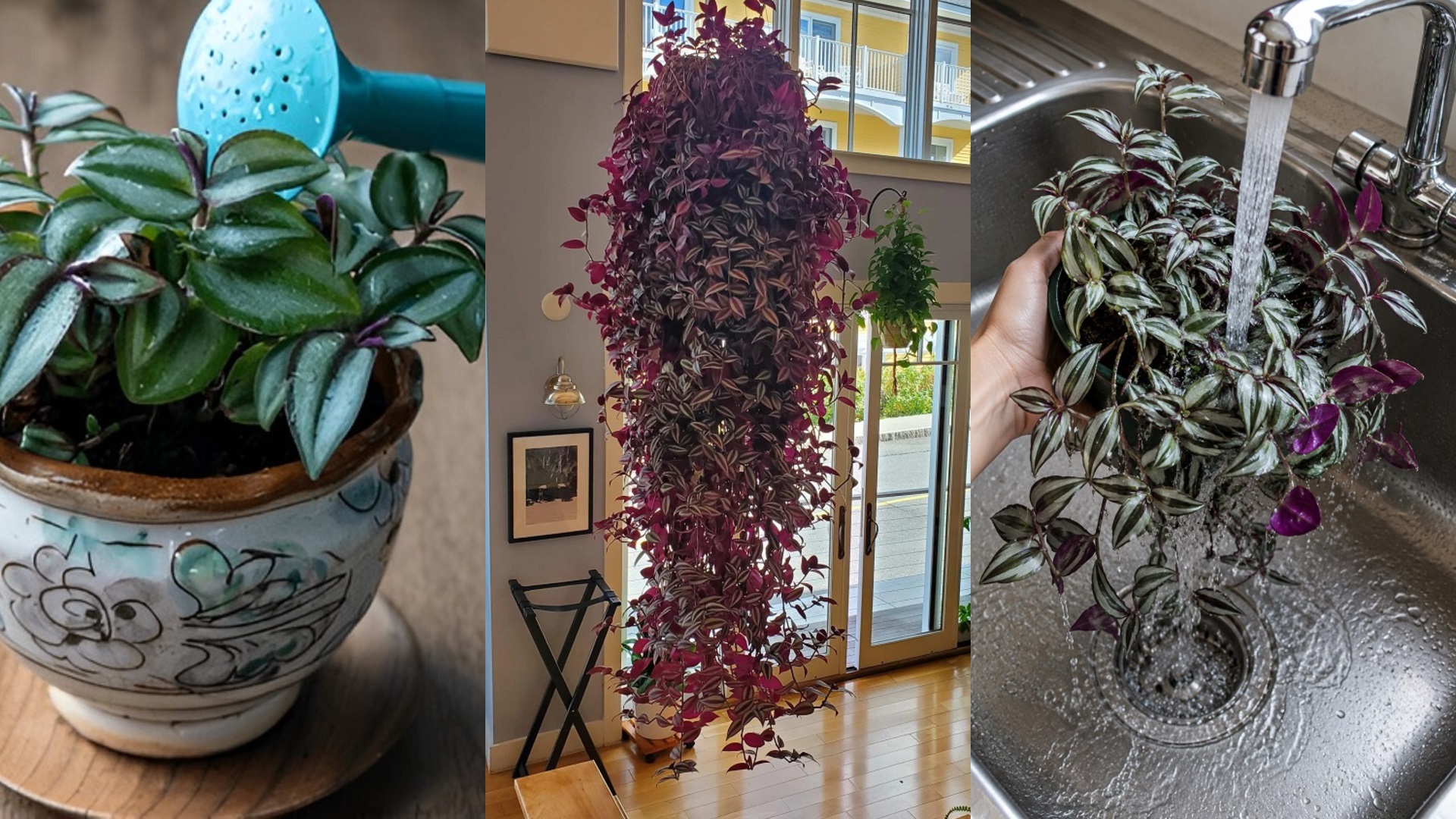
Learn how to water a Wandering Jew plant properly so it stays full, colorful, and fast-growing without running into common watering problems!

A Wandering Dude is one of those plants that rewards good care almost immediately. During the warm months, its vines spill beautifully over hanging baskets and containers, showing off rich shades of purple, green, and silver. Give it what it needs, and it will grow with surprising speed.
One thing many gardeners learn the hard way is that watering makes all the difference. Too much water can rot the roots, and too little can leave the plant sparse, dull, and leggy. So here’s what to do!
How the Root System Affects Tradescantia’s Watering
These plants develop a fibrous root system made up of many thin roots that spread quickly through the pot. These roots stay relatively close to the surface rather than growing deep like those of shrubs or trees. Because of this, they absorb moisture efficiently but have very little capacity to store it for later use. That explains why this plant reacts quickly to watering mistakes.
Let the soil become bone dry for too long, and the leaves start curling, fading, or dropping. And if you keep the soil constantly wet, oxygen disappears from the root zone, creating ideal conditions for root rot. However, the plant still loves to live on the drier side.
The goal is simple! Give it steady moisture without creating soggy conditions and let the soil dry out. Once you understand that balance, caring for a Wandering Jew becomes much easier.
How to Water a Wandering Jew So It Thrives Forever

People usually say you should water your Inch plant every 7–10 days, and that’s a good starting point. But rather than sticking to a set schedule, let the soil tell you when it’s thirsty. Push your finger about an inch into the potting mix. If that top layer feels dry, it’s time to water. If it still feels cool and slightly damp, wait another day or two before checking again. Simple, right?
This small habit is far more reliable than watering every few days because temperature, sunlight, humidity, and pot size constantly change how quickly the soil dries (more on that below).
Now, is there a way to pour the water? Of course! Do it thoroughly but slowly around the entire surface of the soil until excess water begins draining from the bottom holes.
Pro Tip: A useful trick many experienced gardeners follow is watering in two passes. Add a little water first, wait thirty seconds, then water again. Dry potting mixes often repel water at first, and this method helps the soil absorb moisture more evenly.
Here is the moisture meter that you need to prevent root rot for every plant you have.
The Best Water For a Wandering Jew
Tradescantia plants become sensitive to mineral buildup over time. That’s because tap water often contains chlorine, fluoride, and dissolved salts that gradually accumulate in the soil and over the foliage if you do overhead watering. This buildup shows up as brown leaf tips, pale foliage, or a white crust on the soil surface.
You should use rainwater, filtered water, or distilled water. Rainwater is especially beneficial because it contains no added chemicals and closely matches what the plant would receive in nature. Also, avoid watering with very cold water. Roots function best when watered with water that is close to room temperature.
No rainwater? No problem! If you’re using tap water, just let it sit uncovered overnight before watering. It helps some of the chlorine dissipate and allows the water to reach room temperature.
What Changes Your Wandering Jew’s Watering Needs?
1. The Size of the Pot

Pot size has a bigger impact on watering than most people realize. Small pots hold less soil, so they dry out much faster and usually need watering more often, especially during summer.
On the other hand, larger pots hold moisture for longer, which can be helpful but also increases the chance of soggy roots.
What to do? Choose a pot that is only one or two sizes larger than the root ball, and always pick one with drainage holes.
Here are aesthetic ceramic pot options with drainage holes that you can go for!
2. The Soil It’s Growing In

A Wandering Dude grows best in a light, airy soil mix that allows water to move through freely. So a combination of quality potting soil, perlite, and coco coir helps keep the roots evenly moist without trapping excess water around them.
Here’s the trick: if the soil feels dense, sticky, or takes a long time to drain after watering, it is probably holding too much moisture. Healthy soil always feels loose and crumbly.
3. The Temperature Around It

When conditions are warm, the plant grows more actively, and the soil dries out faster. But during cooler periods, growth slows down and moisture remains in the pot much longer. Seems familiar?
So what’s the sweet spot? The ideal range is between 65 and 80 F (18 and 27 C). If temperatures rise above this range, check the soil more often, as your plant may need water sooner than usual.
4. Humidity Levels in Your Home

Wandering Jew grows best when humidity levels stay between 50 and 60 percent, though it can handle average household conditions with ease. In fact, it isn’t too fussy about humidity and generally prefers things a little on the drier side compared to many tropical houseplants.
But when the air becomes too dry, especially below 40 percent, the leaf edges start turning brown, and the foliage starts losing its lush appearance. It can also tolerate as low as 20 percent, but it will be in survival mode and not grow it’s best.
A simple gardener’s trick is to place companion houseplants near each other. As they release moisture into the air, they create a more comfortable environment that benefits them all. You can also go for a pebble tray this way!
5. Where You Keep the Plant

A Wandering Jew placed near an east-facing window or a few feet away from a south or west-facing window with filtered light will grow quickly and use moisture faster. In these spots, you may find yourself checking the soil every few days.
But the ones kept in a dim corner, hallway, or near a north-facing window usually use water much more slowly because growth is reduced. You can also grow it outdoors in frost free climes.
Best place your plant where it receives several hours of bright, indirect light each day. If you move it outdoors for summer, keep it in a spot with morning sun and afternoon shade, and expect the soil to dry much faster than it would indoors.
One Last Wandering Jew Watering Tip Most Plant Owners Miss

Even if you’re watering correctly, minerals from tap water and leftover fertilizer salts slowly build up in the soil over time. It shows up as brown leaf tips, dull foliage, or slower growth, even when the plant seems to be getting everything it needs. So what can you do?
Simply place the pot in a sink, shower, or outdoor spot and slowly run water through the soil until plenty of it drains from the bottom. And let all the excess water drain away completely before putting the plant back in its usual spot.
This simple soil flush helps wash away built-up salts before they become a problem. Doing it once every 2-3 months keeps the roots healthier and allows your Tradescantia to make better use of the water and nutrients it receives. Here’s how to do it right!
Every Wandering Jew grows a little differently depending on where it’s placed and the conditions around it. That’s why the healthiest plants are usually cared for by gardeners who watch the soil, not the calendar. And if you notice your Inch plant dripping, here’s what it means!


