
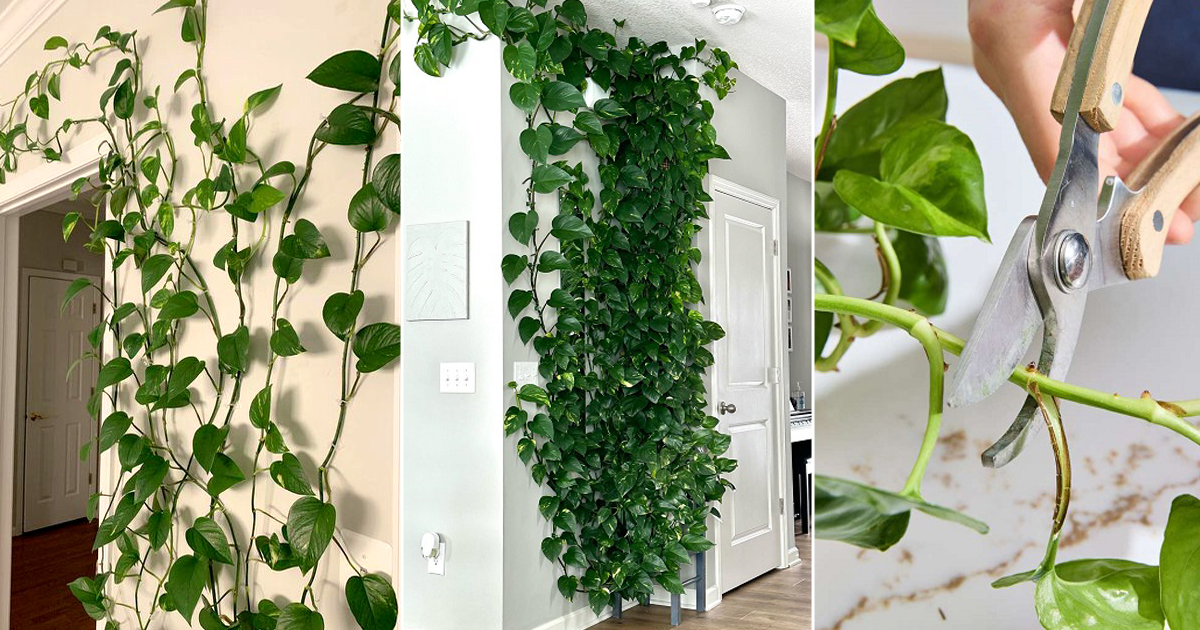
Learn how to train your pothos to cover a wall and create a lush indoor green display with these effective techniques.

Training pothos to cover your wall is one of the easiest ways to turn a plain room into a breathing piece of art. With the right guidance given in this article, you can learn to transform your space with a climbing lush pothos!
How to Train Pothos to Cover a Wall
Before you start, make sure the pot is stable. Wall-trained pothos get vine-heavy, and a weighted pot or wall bracket prevents tipping later.
1. Give Your Pothos a Vertical Cue

Nothing gets your pothos more excited than a clear direction to grow, and that starts with offering it something vertical to cling to. When your pothos senses a sturdy surface nearby, it naturally sends out aerial roots to grip and climb.
This simple shift from trailing to climbing will dramatically boost leaf size and growth speed, which makes wall coverage easier. To do this, position your pot right next to the wall, or mount a small trellis panel at the bottom to guide the first few vines upward.
Rough or matte surfaces work better than glossy paint. Plus, wood, fabric-backed supports, or lightly textured walls help aerial roots grip.
Pro Tip: Use a moss pole at the base for the first 1–2 feet, and once the plant learns to climb, it will transition to the wall much faster.
2. Use Wall Hooks or Adhesive Clips

Your pothos won’t magically stick to the wall indoors, so you should give it tiny anchors. These hooks or adhesive clips will act like mini stepping stones that will tell the vine exactly where to go. This approach will train the vines neatly and also help you sculpt the look in a curvy or fully spread fashion.
You can place hooks every 6–12 inches along the route you want the vine to follow and gently tuck the stems under them. Leave a little slack at each hook since tight bends can slow growth or cause the vine to snap as it thickens.
Always choose plant-safe removable hooks as pothos grows fast, and you may want to reposition your layout later.
3. Encourage Coverage by Dividing the Vines

Once your pothos gains a bit of length, you should split the vines in different directions. It will give you twice the coverage in half the time. This method will work perfectly because each vine will grow independently, while producing its own set of leaves and aerial roots. Remember that the more branches you guide, the faster your wall starts looking lush.
All you need to do is gently separate the stems and direct each vine to a different hook or corner of the wall.
4. Boost Growth With Bright Indirect Light

If your pothos seems slow, the issue is almost always light. You should know that bright indirect light will encourage larger leaves, quicker vine growth, and stronger aerial roots. All of these are essential for wall coverage. Your dim corners may keep the plant alive, but they won’t create that leafy and decorative impact.
It is best to place your pothos near a bright window (east or west is ideal) or supplement with a grow light if your room is dark. Don’t forget to rotate the pot every 10–14 days so all sides grow evenly and you don’t end up with one oversized vine and three skinny ones.
If leaves stay small after 4–6 weeks, the plant still needs more light. Move it closer to the window, not higher up.
5. Trim Strategically to Encourage Dense Coverage

Pruning isn’t about losing vines; it’s about gaining fuller ones. If you cut just above a leaf node, it tells the plant to branch out, which gives you more stems to cover the wall. This trick is what will turn your sparse vine into a textured and fuller plant.
You can use sharp scissors to trim the ends every few months and redirect new shoots as they emerge. Also, don’t waste trimmed vines, as you can propagate them in water and plant the new babies at the base of the pot for extra fullness.
6. Keep Aerial Roots Hydrated

Aerial roots are your plant’s climbing tools, and hydrated ones will cling faster and grow stronger. The dry indoor air can slow their development, which eventually delays wall training. You can use a little moisture to encourage them so that they grab onto supports more confidently.
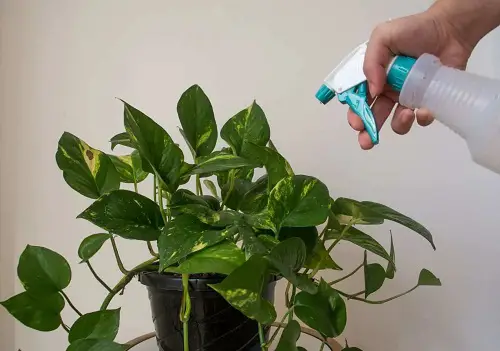
You can do it by simply misting the aerial roots lightly every few days or by placing a small humidifier nearby. In both ways, you will end up with better hydration and healthier aerial roots that make it climb the wall easily.
Caution: Avoid over-misting the leaves and focus only on the aerial roots to prevent fungal issues. And remember, wiping aerial roots with a damp cloth works better than heavy misting and keeps dust from building up.
7. Feed Your Pothos for Wall-Filling Growth
A well-fed pothos grows like it’s on a mission, which makes fertilizer a silent superpower in wall coverage. You should give it balanced nutrition to encourage quicker vine elongation and bold foliage that serves as perfect wall décor. Without fertilizer, growth may stall, and vines may look thin and leggy.
We suggest using a balanced liquid fertilizer (like 10-10-10) once a month during spring and summer. Dilute your fertilizer more than the label suggests, as pothos prefers “light meals” over heavy feeding.
Pro Tip: Even a trained pothos loves sneaking in new directions when you’re not looking. A quick weekly check will keep the layout neat and prevent tangling or trailing where you don’t want it.
Follow these steps consistently, and you will enjoy a full, cascading green masterpiece in just a few months.


