
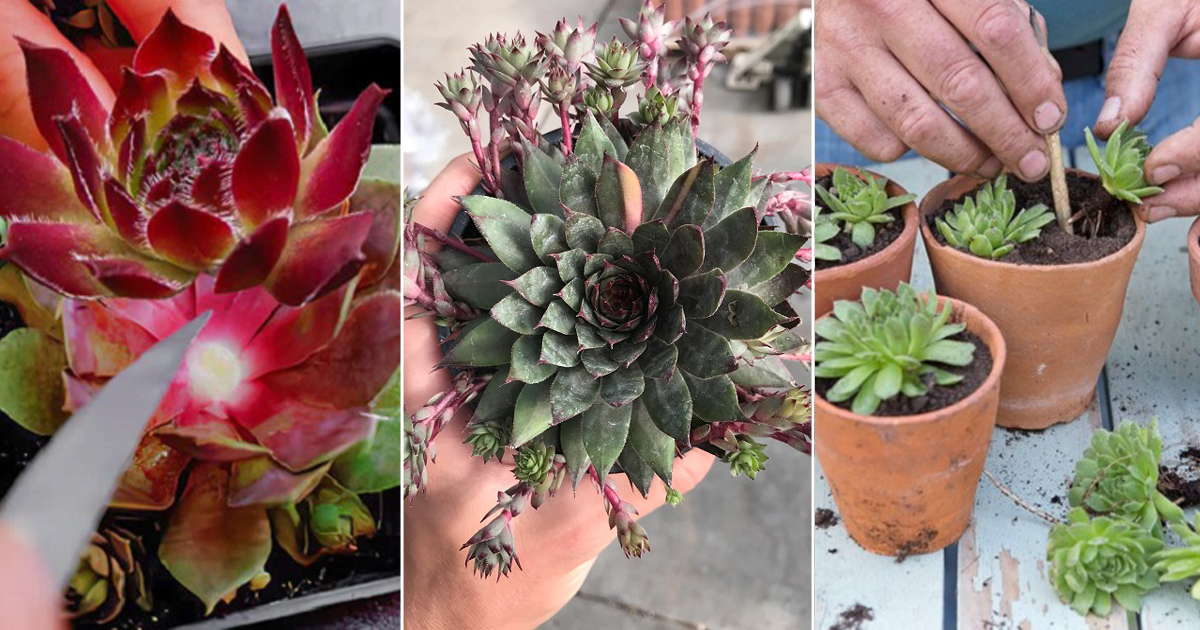
Here are the best ways to encourage your Sempervivum plant to produce more pups and grow into a thriving cluster.

Offsets are the easiest way to multiply your hens and chicks collection without spending a dime. But if your mother plant is being stingy with pups, we will share with you a few growing tricks that can force it to multiply.
How to Get More Sempervivum Pups With These Tips
1. Keep The Roots Slightly Cramped

Believe it or not, Sempervivums thrive when you keep their roots a little cramped. When the roots fill the pot or growing space, the plant feels “stressed” just enough to trigger pup production as a survival mechanism. Once it runs out of space for root development, the plant starts producing babies to spread above.
Just plant your Sempervivum in a slightly snug pot rather than an oversized one. Also, avoid repotting too often; rather, let the roots grow dense and reach the edge before upsizing.
This trick also works because tight root space mimics the plant’s natural mountainous habitat, where space is limited, which pushes it to multiply quickly.
Pro Tip: Choose shallow, wide containers to maximize surface area for offsets to emerge. Also, make sure the pot has excellent drainage, as Sempervivums hate soggy soil.
2. Use Low-Nitrogen, Potassium-Rich Fertilizer

Most people overfeed succulents with general-purpose fertilizer, which causes more leaves but fewer pups. What Sempervivums really respond to is a low-nitrogen mix with higher potassium. Such a combo will promote healthy root systems and encourage pup development over foliage.
You should use a diluted cactus or succulent fertilizer with an NPK like 2-7-7 or 3-8-8. Apply once in spring and once in early summer for best results. This change shifts the plant’s energy from growing lush leaves to producing offsets, which is what you are after.
You can also mix in a bit of wood ash or banana peel powder into the topsoil as a natural potassium booster. Avoid over-fertilizing; once every few months is plenty, or you risk burning the roots.
3. Give it Cold Winter Rest

If your Sempervivum never sees a cold chill, it might not feel the seasonal trigger to reproduce. These hardy succulents are used to alpine climates and actually need that winter dormancy to “wake up” with vigor in spring, while producing more pups.
Keep your Sempervivum outdoors or in a cool (but frost-free) spot during winter. Ideal resting temperatures are between 30 and 45°F (-1 to 7 °C).
Don’t water during this period and let the soil stay dry to mimic natural winter conditions. When spring returns and temperatures warm up, you’ll often see a pup explosion within weeks.
Avoid bringing them into a warm room too early. This confuses their growth cycle and can delay pup production.
4. Remove the Central Rosette

This tip may seem drastic, but removing the central rosette once it’s matured and sends a flower stalk can encourage faster pup growth around its base.
As sempervivum is monocarpic it eventually dies after flowering and if you cut the main rosette as soon it forms flowers, then you can expedite this dying process of mother plant, helping the connected offsets to grow bigger faster.
When you interrupt this process by snipping the central rossette, it redirects energy into pup production.
Remember to use a clean and sharp blade to remove the center rosette once it looks mature and hasn’t flowered fully yet. Leave the offsets intact and water very lightly for a couple of weeks as they adjust.
Pro Tip: This trick works best on a healthy, established mother plant that’s already shown pup potential.
5. Go for the Full Morning Sun

Sempervivums are sun lovers, but too much harsh heat can stress them without encouraging pup growth. If you give them full morning sun with some protection during scorching afternoon hours, these will thrive with fresh pup production.
Place your plant where it gets 4–6 hours of early sunlight. A spot that gets the cooler, gentler rays between 7 AM and 11 AM is ideal. If you are growing it indoors, give it a bright east-facing windowsill.
This level of sunlight will trigger healthy growth hormones in the plant, nudging it to expand through new rosettes. If indoors, rotate the pot weekly to prevent lopsided growth.
6. Divide and Replant the Offsets Early

Instead of letting offsets crowd the mother plant, you can divide and plant them early. This will trick the main rosette into thinking it still needs to produce more pups. Think of this as a psychological and botanical nudge to keep reproducing.
However, don’t hurry, wait until the pups are at least about 1 inch wide with tiny roots forming, then gently separate and replant them nearby. For best results, use well-draining soil and water lightly after planting. This keeps the propagation cycle going while encouraging the original plant to form more offsets.
With the right light, nutrients, and a little calculated stress, your Sempervivum can go from a lone rosette to a dense, beautiful cluster of pups.


