
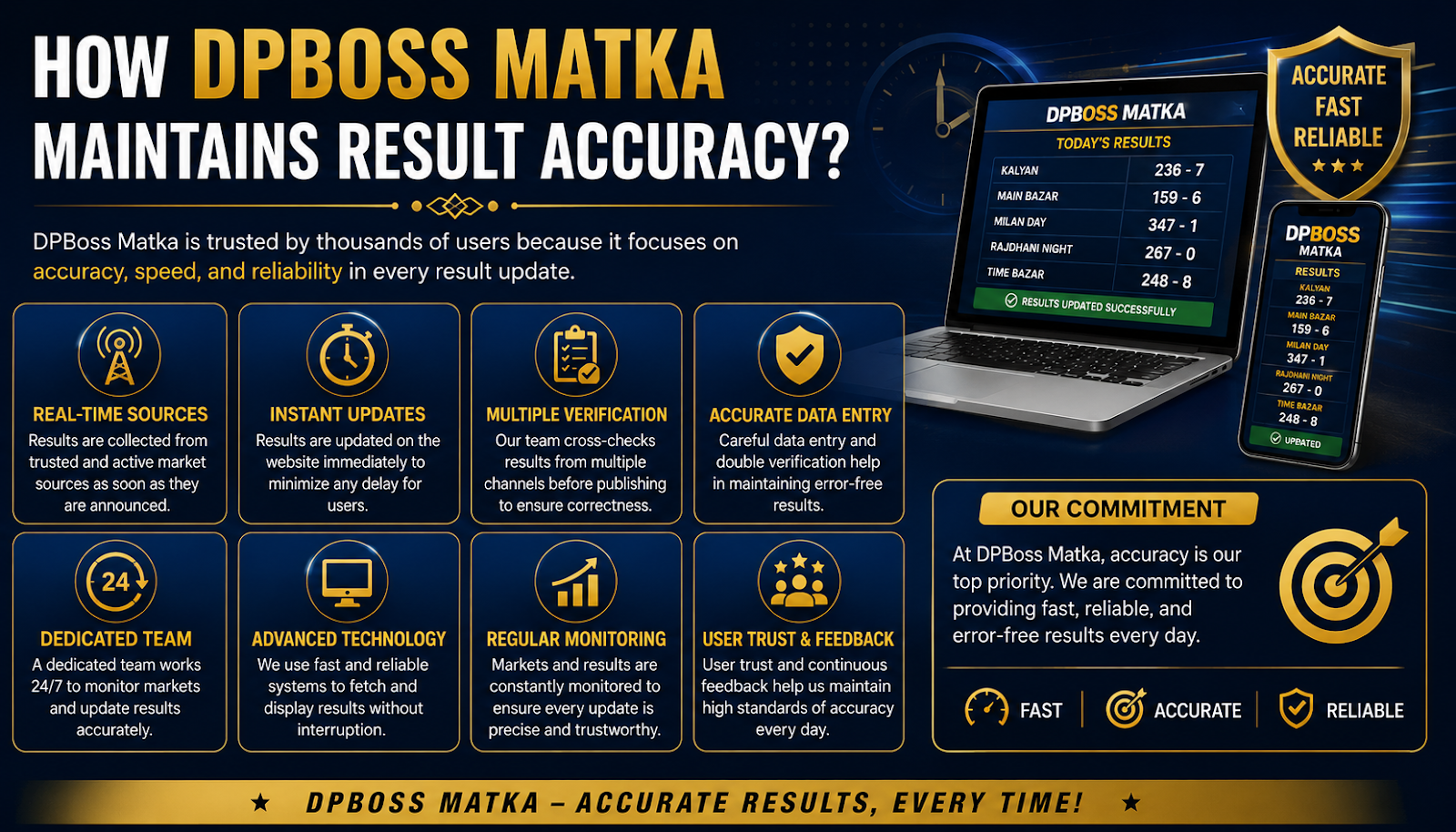
Accurate result reporting remains one of the most important factors for any platform that publishes number-based updates. People expect timely information presented in a clear and organized format without unnecessary confusion. DPBoss Matka attracts regular visitors because it focuses on consistency, structured result presentation, and organized record management. While users often pay attention to the published figures, the process behind maintaining accuracy deserves equal attention. A disciplined verification system, careful data handling, and consistent publishing practices together help reduce errors and improve reliability.

Why Result Accuracy Matters
Reliable results build confidence among regular visitors. Even a small mistake can create confusion because many people compare daily numbers with previous records before reviewing trends. Therefore, maintaining precision is not simply about publishing figures quickly.
Moreover, accurate reporting offers several practical advantages:
-
Reduces confusion among regular users.
-
Maintains consistency across daily updates.
-
Helps users compare current and historical records.
-
Prevents unnecessary corrections after publication.
-
Supports long-term credibility through dependable information.
Consequently, a structured process becomes essential for every published result.
How Information Moves Through a Verification Process
Publishing accurate results requires more than entering numbers into a database. Every stage should include checks that minimize human mistakes before information becomes publicly available.
Before publication, a reliable workflow generally includes:
-
Collecting the result from the designated source.
-
Comparing received information with recorded entries.
-
Reviewing numerical formatting.
-
Confirming sequence accuracy.
-
Publishing only after final verification.
Furthermore, separating verification from publication reduces the possibility of accidental errors. Instead of depending on a single review, multiple checkpoints improve consistency and strengthen overall accuracy.
Multiple Verification Layers Improve Reliability
One review often fails to identify every possible mistake. Consequently, several verification layers provide greater confidence before results appear online.
Cross-Checking Numerical Entries
Cross-checking remains one of the simplest yet most effective methods of preventing incorrect updates. Instead of accepting the first recorded number, the system compares entries against the original source.
This process helps identify:
-
Typing mistakes.
-
Missing digits.
-
Reversed numbers.
-
Duplicate entries.
-
Formatting inconsistencies.
However, verification does not stop after matching numbers. The complete sequence also requires confirmation before publication.
Review Before Final Publication
After successful comparison, another review confirms that every result appears in the correct position. This additional inspection reduces the chance of displaying information under the wrong heading or date.
Moreover, organized reviews improve presentation quality because visitors can quickly locate the required result without confusion.
Importance of Consistent Update Timing
Accurate reporting depends not only on correct numbers but also on disciplined publishing schedules. Consistent timing prevents uncertainty and keeps records properly organized.
When updates follow a predictable routine, users receive several benefits:
-
Easier daily tracking.
-
Better comparison with previous records.
-
Improved confidence in published information.
-
Reduced confusion caused by irregular updates.
In contrast, inconsistent schedules often create unnecessary speculation. Therefore, maintaining both timing and accuracy supports a smoother user experience.
Organized Record Management Supports Accuracy
Maintaining historical records requires careful organization. Without a structured archive, verifying older results becomes much more difficult.
A well-maintained database allows administrators to compare newly received information with previously published records whenever required. Moreover, archived entries provide an additional reference if questions arise regarding earlier updates.
Proper record management generally includes:
-
Date-wise organization.
-
Clearly labeled result categories.
-
Consistent formatting standards.
-
Secure storage of previous records.
-
Easy retrieval for future verification.
Consequently, organized data strengthens both present accuracy and future reference quality.
How Clear Formatting Reduces Errors
Presentation plays an important role in accurate communication. Even when numbers remain correct, poor formatting can confuse readers.
Simple layouts improve readability by separating dates, result categories, and numerical values clearly. Furthermore, consistent formatting helps reviewers notice irregularities during the verification process.
Several formatting practices contribute to better accuracy:
-
Uniform number alignment.
-
Clear spacing between entries.
-
Consistent date presentation.
-
Logical arrangement of result sections.
-
Easy visual distinction between current and previous records.
As a result, structured formatting supports both publishers and readers by reducing avoidable misunderstandings.
Quality Control Practices That Strengthen Accuracy
Accuracy improves when quality control becomes part of every publishing stage rather than a final step. A structured review process allows administrators to identify inconsistencies before they reach users. Moreover, routine monitoring helps maintain stable performance over time.
Several quality control practices contribute to dependable reporting:
-
Regular review of published entries.
-
Standard operating procedures for updates.
-
Consistent formatting across all result pages.
-
Immediate correction of verified mistakes.
-
Periodic inspection of archived records.
Consequently, these practices reduce avoidable errors and promote greater consistency.
Common Errors That Careful Verification Prevents
Even organized systems can face occasional challenges. However, a disciplined verification process minimizes the possibility of common publishing mistakes before they affect users.
Incorrect Number Entry
Typing errors may change an entire result. Therefore, careful comparison with the original information remains essential before publication.
Date or Category Mismatch
Sometimes correct numbers appear under the wrong date or heading. Moreover, reviewers must verify placement alongside numerical accuracy to avoid confusion.
Duplicate Updates
Repeated entries can mislead visitors who compare records. Consequently, reviewing published pages before posting new updates helps eliminate unnecessary duplication.
Why Consistency Builds User Confidence
Visitors often return because they expect dependable information delivered in a familiar format. When updates remain accurate and well organized, confidence naturally increases. Furthermore, consistent presentation allows users to locate results quickly without searching through cluttered pages.
Reliable reporting also creates several practical advantages:
-
Faster access to required information.
-
Easier comparison between different dates.
-
Better readability across devices.
-
Reduced confusion caused by inconsistent layouts.
-
Greater trust in regularly published records.
As a result, consistency becomes just as valuable as numerical accuracy.
The Role of Continuous Monitoring
Accuracy requires ongoing attention rather than a single review. After publication, monitoring helps identify unexpected issues that may require correction. Moreover, regular inspections ensure archived records remain consistent with current information.
Continuous monitoring typically focuses on:
-
Published result accuracy.
-
Archive consistency.
-
Formatting quality.
-
Record completeness.
-
Timely correction of confirmed issues.
Therefore, regular supervision strengthens the reliability of every published update and supports long-term consistency for DPBoss Matka.
Best Practices for Maintaining Reliable Result Records
Maintaining dependable records requires a combination of discipline, organization, and careful review. Instead of relying on speed alone, successful result management balances efficiency with accuracy.
Important practices include:
-
Follow a consistent publishing schedule.
-
Verify every numerical entry before posting.
-
Keep archives organized by date.
-
Review formatting before publication.
-
Compare records during every update cycle.
-
Correct verified mistakes promptly.
-
Maintain clear separation between current and historical results.
Moreover, following these practices helps reduce unnecessary confusion while improving overall reliability.
Conclusion
Accurate result reporting depends on careful verification, organized records, consistent publishing schedules, and continuous quality control. Each stage contributes to reliable information that users can review with confidence. Moreover, disciplined formatting and routine monitoring reduce avoidable mistakes while supporting long-term consistency. By following structured verification practices, DPBoss Matka maintains dependable result accuracy through clear processes rather than chance, ensuring information remains organized, precise, and easy to follow.
FAQs
What makes result accuracy important for DPBoss Matka?
Accurate results help users access dependable information without confusion. Moreover, properly verified records support easier comparison with previous entries and reduce the possibility of mistakes. Consistent publishing standards also improve readability and strengthen confidence in regularly updated information.
How do verification checks improve result quality?
Verification checks compare numerical entries, confirm formatting, review dates, and inspect placement before publication. Consequently, these steps reduce typing mistakes, duplicate entries, and incorrect categorization. Multiple reviews provide greater confidence that published information remains accurate and properly organized.
Why is record management necessary?
Organized records simplify comparisons between current and previous results. Furthermore, well-maintained archives support future verification whenever questions arise. Clear storage methods also improve retrieval speed and help maintain consistency across different dates and result categories.
Can formatting affect result accuracy?
Yes. Clear formatting makes numerical information easier to read and review. Moreover, consistent layouts help identify misplaced numbers, incorrect dates, and missing entries before publication. Proper presentation reduces confusion while supporting a smoother verification process for both publishers and readers.


