
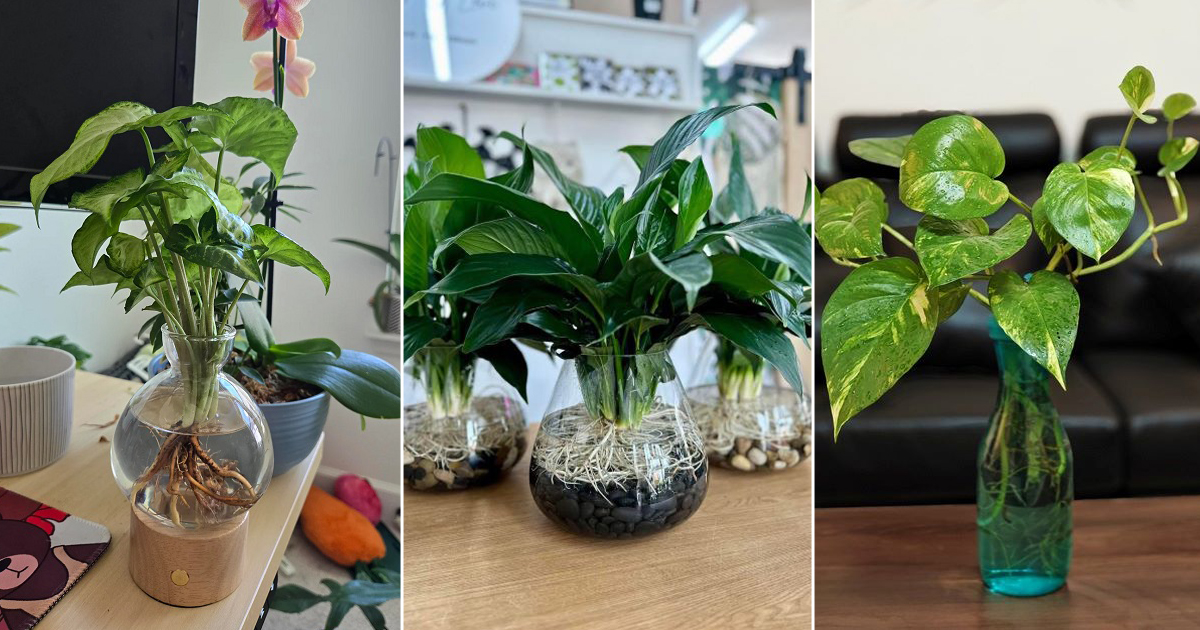
What better way to have fresh air without much work than going with these air-purifying houseplants you can grow in just water!
If you love the look of indoor plants but would rather skip the mess of potting soil, you’re in luck. Many tropical houseplants naturally develop aerial roots along their stems in the wild, which makes them well-suited for life in water. Here are some of the best air-purifying houseplants that can thrive in water with very little effort.
Air-Purifying Houseplants You Can Grow in Just Water
This post contains affiliate links. As an Amazon Associate, we earn from qualifying purchases, which support our website. You can check out our Amazon storefront here for all kinds of essentials you’ll need.
Before you get started, make sure you have a clear propagation vase or water-growing container. Being able to see the roots makes it much easier to monitor plant health and know when it’s time to refresh the water. Check out these stylish propagation vases here.
1. Pothos

Botanical Name: Epipremnum aureum
Pothos grows particularly well in water because each stem contains nodes, which are small growth points capable of producing roots. Simply cut a healthy vine just below a node and place the cutting in water. New roots usually begin developing within a few weeks.
It has been shown to absorb small amounts of pollutants such as formaldehyde and benzene through its leaves and root system, making it a popular choice for indoor spaces. Cool, right?
Pro Tip: Make sure at least one node remains below the water line. That’s where your new roots will emerge. Here are ideas you can take inspiration from!
To have faster and healthier growth, this balanced houseplant fertilizer is your best buy.
2. Heartleaf Philodendron

Botanical Name: Philodendron hederaceum
Like pothos, this plant naturally produces roots from its nodes. A simple stem cutting placed in water will usually root quickly and continue growing for years with minimal care.
One of its biggest advantages is its ability to tolerate lower light levels than many other houseplants. This makes it suitable for bedrooms, offices, and other areas where sunlight may be limited. Its dense foliage can also help capture dust particles from the surrounding air.
Gardener’s Note: If you allow the plant to climb a moss pole or support, you’ll often notice larger leaves developing over time.
3. Peace Lily

Botanical Name: Spathiphyllum wallisii
Although Peace Lilies are commonly grown in soil, established plants can adapt to growing in water when handled properly. The key is keeping only the roots submerged. The crown of the plant, where the leaves emerge, should remain above the water line to prevent rot.
They are often associated with indoor air quality because they absorb volatile organic compounds (VOCs) through their foliage and root systems. Their broad leaves also contribute to a fuller, greener appearance indoors.
Using decorative river rocks will help stabilize the roots while keeping the crown of the plant safely above the water line.
Fun Fact: The white structure most people think of as a flower is actually a modified leaf called a spathe. The true flowers grow on the central spike.
4. Arrowhead Plant

Botanical Name: Syngonium podophyllum
Arrowhead plant gets its name from its distinctive arrow-shaped leaves. And just like many tropical vines, it naturally develops roots along its stems. This makes water propagation simple and reliable.
Just place a cutting with at least one node in water, and wait a couple of weeks. Its broad foliage contributes to natural air filtration, removing benzene, xylene, and toluene, and creates a lush appearance indoors. As the plant matures, you may notice the leaf shape becoming more complex and deeply divided.
Important: Syngonium contains calcium oxalate crystals and should be kept out of reach of pets and young children.
5. Spider Plant

Botanical Name: Chlorophytum comosum
Spider plant has earned its reputation as one of the most beginner-friendly houseplants you can grow. These plantlets already contain tiny root structures, which makes water propagation incredibly easy.
Plus, they are great for improving indoor air quality as they absorb trace amounts of pollutants (formaldehyde and carbon monoxide). Their rapid growth and abundant foliage also make them effective at quickly adding greenery to a room.
Pro Tip: If you notice brown tips on the leaves, minerals and salts in tap water may be the cause. Using filtered water often helps solve the problem.
We suggest buying a water filter pitcher that will help reduce minerals and chlorine.
If you’re planning to grow several plants in water, a multi-tube propagation station can turn a windowsill into an attractive indoor garden. You can see popular propagation stations here.
6. Prayer Plant

Botanical Name: Maranta leuconeura
This plant is admired for its beautifully patterned leaves, often marked with shades of green, red, and cream. Although it is typically grown in soil, stem cuttings root readily in water and can remain there for extended periods with proper care. Just keep it in one of these spots!
Its broad foliage helps capture airborne dust particles and release moisture into the air, helping combat dry air problems.
Fun Fact: Prayer plant leaves move throughout the day in response to changing light levels, a natural behavior known as nyctinasty.
7. Swedish Ivy

Botanical Name: Plectranthus verticillatus
If you’re looking for a fast-growing trailing plant, Swedish Ivy is an excellent choice. It roots exceptionally quickly in water because its stems naturally produce roots at the nodes.
With regular water changes and occasional feeding, it can continue growing vigorously without soil. The lush, waxy foliage helps trap airborne particles and adds a lush, green presence to indoor spaces. It also helps reduce VOCs, just like spider plants.
8. English Ivy

Botanical Name: Hedera helix
You could also go with an English Ivy. Just snip a healthy vine just below a leaf node, remove the lower leaves, and place the cutting in a clear vase. The roots will begin forming within a few weeks. We have a detailed guide on it here.
It’s well known for helping to reduce airborne pollutants such as benzene, formaldehyde, xylene, and toluene, making it a favorite for improving indoor air quality. Plus, its cascading vines also look beautiful on shelves, windowsills, or hanging displays.
A few glass jars, fresh water, and the right plant are all you need to bring more greenery into your home. Pick your favorite from this list and enjoy a thriving air-purifying indoor garden without ever dealing with a bag of potting soil.
What you need next is this “Air-Purifying Houseplants” book to clean the air in your home. It’s a great buy for all the plant lovers out there.


