
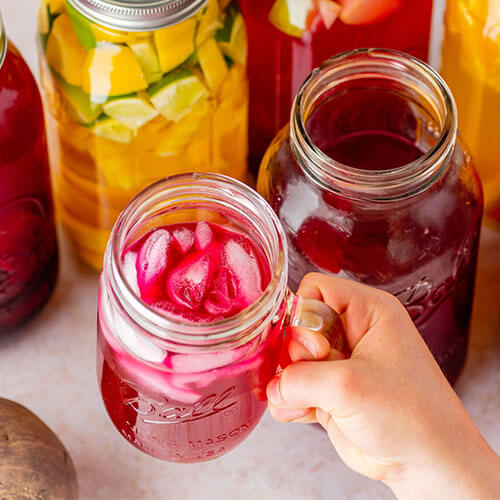
Bold, salty, and earthy, beet kvass is a thousand-year-old traditional fermented beverage renowned as a health tonic! Here’s how to make it and flavor it so it actually tastes good!
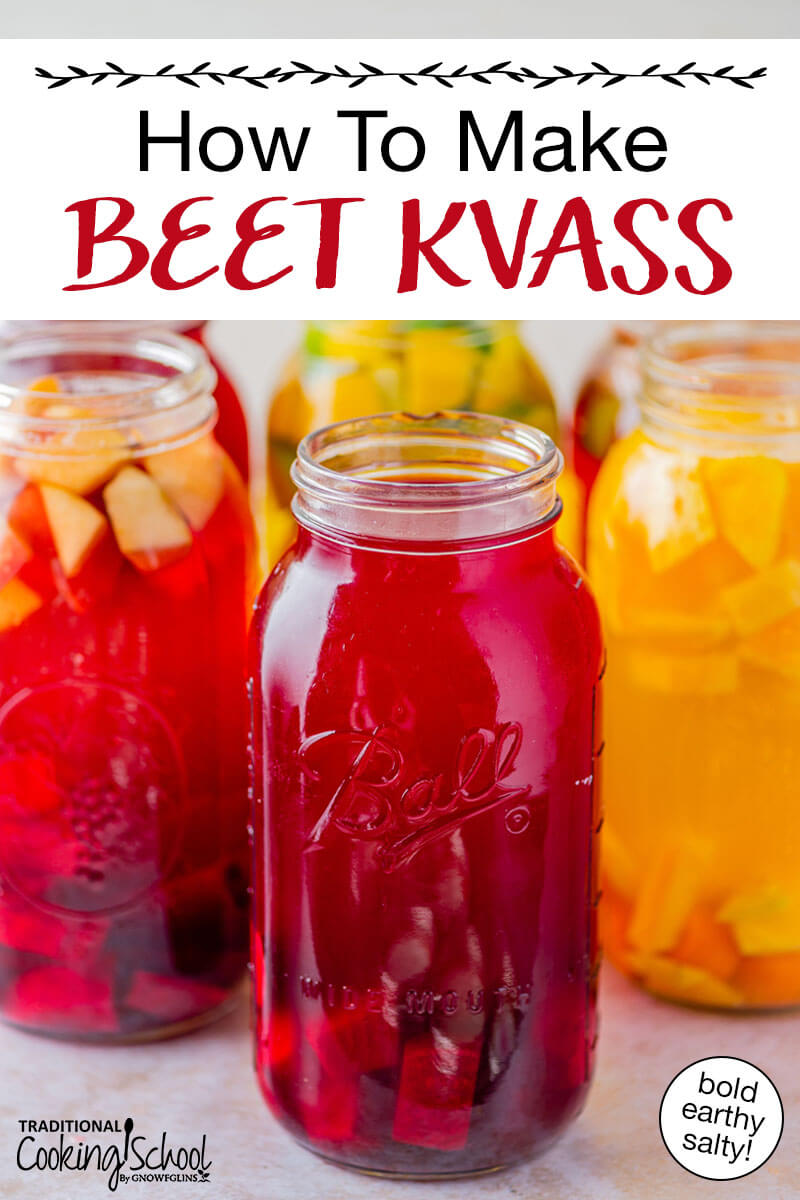
Table Of Contents
What Is Beet Kvass?
Kvass is a traditional beverage from eastern Europe made by fermenting (usually rye) bread. People would make it from berries or other foods as well — and in the Ukraine, every household would make it from beets.
In kvass, beneficial bacteria called Lactobacilli consume the beet sugars, producing beneficial lactic acid, increasing vitamins and enzymes, and multiplying throughout the beverage to make it extremely probiotic.
The end result is a rich, salty, earthy superfood.
And, you can make at least two batches of beet kvass out of the same beets. It’s very frugal! 🙂
Health Benefits of Beet Kvass
According to Nourishing Traditions, beet kvass is an “excellent blood tonic, promotes regularity, aids digestion, alkalizes the blood, cleanses the liver and is a good treatment for kidney stones and other ailments.”
I can vouch for some of those health benefits being practically instantaneous! So my husband and I take a little shot of it every morning. Just a few ounces a day is all that’s needed.
Ingredients
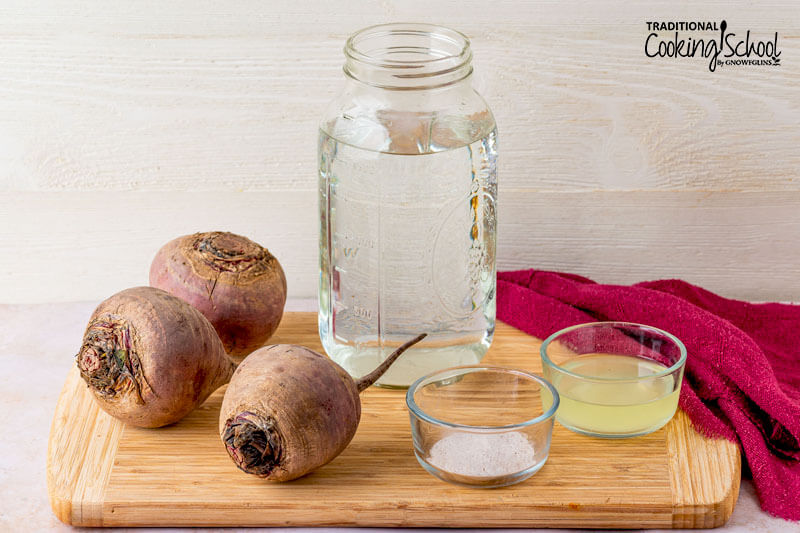
- Beets – Organic and/or local, if possible.
- Sea salt – Choose a high-quality, fine-grain, mineral-rich salt. Don’t use store-bought, commercial iodized salt. Salt is not optional since it protects the fermenting foods from putrefying bacteria while allowing the beneficial bacteria necessary for proper fermentation to thrive. It’s essential, in the amount written below, for safe fermentation.
- Starter culture – Use whey (learn how to make it here!), finished kvass from a previous batch, or another fermenting liquid such as sauerkraut or pickle juice. Other dairy-free substitutes for whey can be found here. You could also double the salt and omit the starter culture, but I find that makes too salty a beverage.
- Pure water – Use mineral-rich, chlorine-free water rather than contaminated well water or straight city water which may contain chlorine, chloramine, and/or flouride, etc. Mixing chlorinated water with cultures can affect your lacto-fermentation recipes. If your water is not clean or you don’t filter it, I recommend purchasing spring water or filtered water (here’s how to choose the best water filter for your family!). If your water is filtered and does not re-add minerals back, consider fortifying it with natural mineral drops. I discuss using reverse osmosis water for fermenting in this #AskWardee.
Equipment/Supplies Needed
No fancy equipment required!
- Glass jars – You will need a half-gallon glass jar, preferably wide mouth, for fermenting the kvass, and a quart-sized glass jar for storing the finished kvass after fermentation.
- Metal bands and lids – For covering the jars of fermenting and finished beet kvass.
Directions
For a video demonstration of this recipe, be sure to check out my Lacto-Fermentation eCourse.
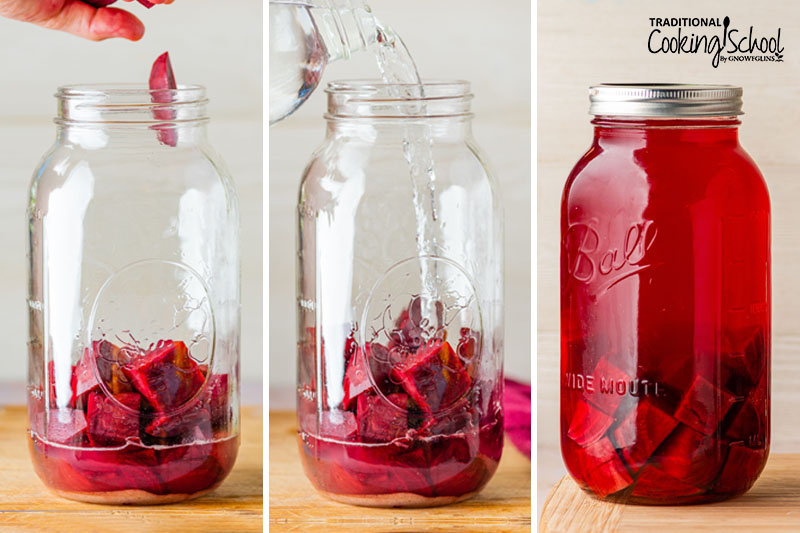
1. Combine peeled and chopped beets, salt and whey in a half-gallon jar.
2. Add water to fill, leaving 1-inch space at the top. Cover tightly with lid or airlock.
3. Leave at room temperature for two to three days.
4. Leaving the solid ingredients behind, pour all but about 10 percent (does not have to be exact) of the liquid into a wide-mouth quart jar.
5. Cover quart jar and transfer to refrigerator. This is the first batch.
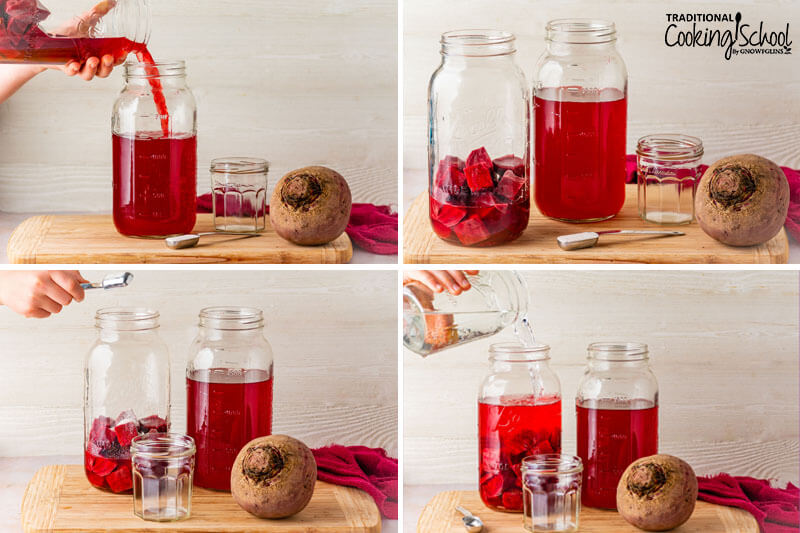
6. To make a second batch, add additional salt to the half-gallon container that contains the other ingredients.
7. Add water to fill, leaving a 1-inch space at the top. Cover tightly with lid or airlock.
8. Leave at room temperature for two to three days.
9. Pour all the liquid into a wide-mouth quart jar. Cover jar and transfer to the refrigerator. This is the second batch, and it will probably be weaker than the first.
10. You can repeat the process again to make a third batch (much weaker), or you can discard or compost the solid ingredients and start over with new ingredients.
How to Drink Kvass
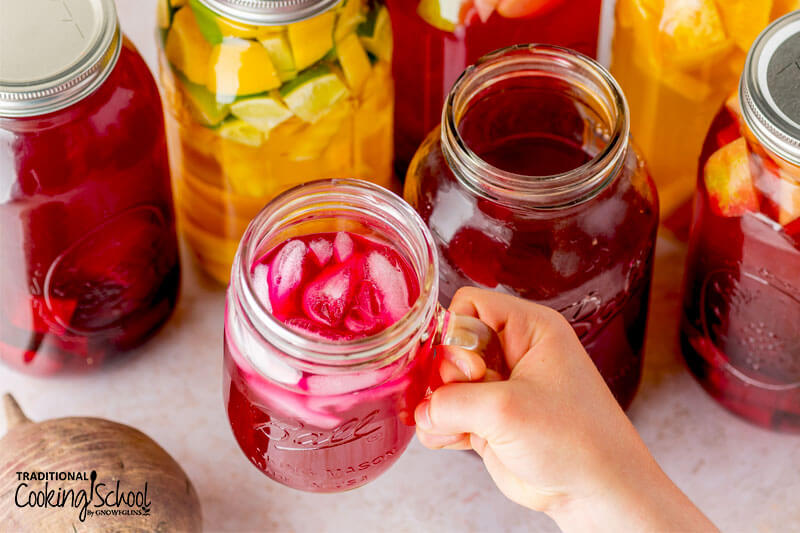
With any ferment, it’s important to start slow and work your way up to larger amounts if you’re not used to consuming probiotic-rich foods. Start with a few teaspoons a day of beet kvass, drunk in the morning with breakfast, and gradually build up to an ounce or two a day.
It’s a delicious accompaniment to your busy days — the perfect way to hydrate and refresh in the morning!
Kvass Flavor Options
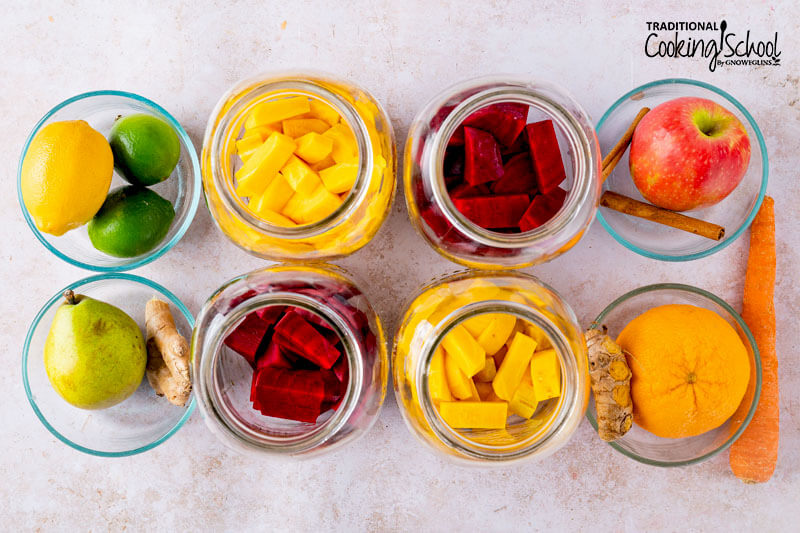
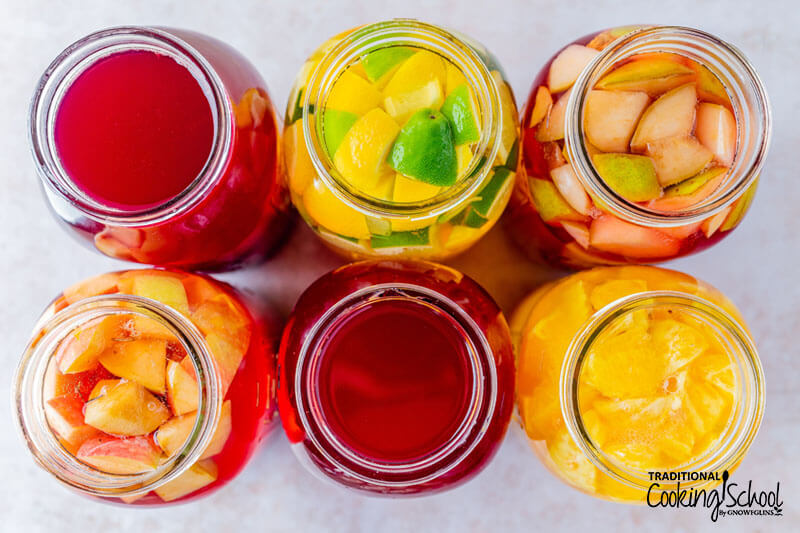
For some, beet kvass is an acquired taste. It is bold, earthy, salty, rich… not sweet, fruity, or mild! If that’s a hard sell for you or any family members, consider adding fruit or spices to make it more palatable. Any of the options below would be delicious!
- Apples
- Pears
- Oranges or other citrus fruits
- Carrots
- Strawberries
- Raspberries
- Ginger
- Cinnamon
You can also sweeten your kvass to taste with maple syrup or honey after fermentation.
Frequently Asked Questions & Troubleshooting Tips
There’s a film on my beet kvass?
A film is harmless, as long as it’s white and thin (not thick and fuzzy like mold… here’s what to do if your ferment is moldy). This is a yeast overgrowth called kahm yeast that occurs at the top of the ferment where it is exposed to oxygen. Though we all prefer to skim it away, it is not harmful if ingested.
Kahm yeast can leave an off-flavor in your kvass, though, so skim it away and move the kvass to cold storage so it doesn’t grow back.
I share tips for how to reduce the likelihood of this happening again, including what to do if it does happen, in this #AskWardee.
Keeping your ferment warm enough.
Most fermentation happens best around room temperature, or 72 degrees Fahrenheit. If your house is on the cool side, here’s what you can do to keep your ferment happy and the beneficial bacteria thriving:
- Insulate your ferment by wrapping it in towels.
- Keep your ferment on a seedling warming mat.
- Keep your ferment on top of a warm appliance, such as the fridge.
This #AskWardee has even more ideas for you!
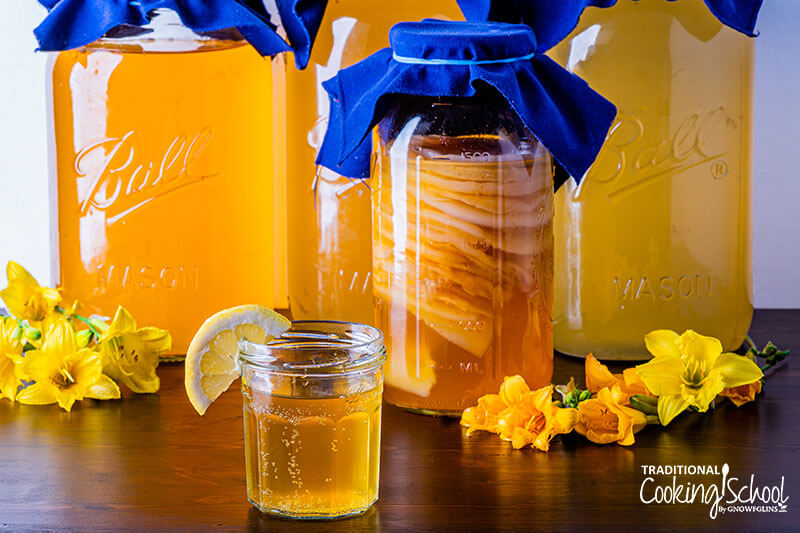
Other Fermented Beverages
- How To Make Kombucha (pictured above)
- The ULTIMATE Kombucha Guide
- The ULTIMATE Water Kefir Guide
- 50+ Probiotic & Fermented Drinks Beyond Kombucha & Kefir!
- Is Jun Right For You? All Your Questions Answered!
- Honey-Sweetened Ginger Beer {probiotic, non-alcoholic, GAPS-friendly natural soda!}
- Spontaneously Fermented Sparkling Apple Cider
- 5-Minute Probiotic Mixed Berry Switchel {Paleo, GAPS, AIP}
- Fermenting Trouble Shooting FAQ’s
Did you make this beet kvass recipe? If so, please give us a rating on the recipe card below. Then snap a photo and tag us on social media so we can see how you chose to flavor it!
Beet Kvass
Adapted from the recipe in Nourishing Traditions. For a video demonstration of this recipe, be sure to check out my Lacto-Fermentation eCourse. This recipe yields 1 quart of beet kvass per batch, so 2 quarts total.
Ingredients
-
3
medium
beets
about 3″ to 4″ diameter, peeled and chopped into 3/4″ to 1″ wide pieces (not shredded) -
1-1/2
tablespoons
sea salt
first batch, plus scant 1 tablespoon (second batch) -
1/4
cup
whey
* - pure water
Instructions
-
Add peeled and chopped beets.
-
Add water to fill to within 1 inch of the top of the container.
-
Cover tightly.
-
Let ferment at room temperature for 2 to 3 days.
-
Leaving the beets behind, pour all but about 10% of the finished kvass into a glass jar and transfer to the refrigerator. That is what you’ll drink, a few ounces at a time, daily or twice daily. The remaining 10% of kvass is the “starter” to get your next batch going.
-
To make your second batch, add additional salt to the remaining kvass and beets in your fermenting vessel.
-
Fill with water to within 1 inch of the top of the container.
-
Cover tightly.
-
Let ferment at room temperature for 2 to 3 days.
-
Now, pour all the finished kvass into a glass jar, transfer to the fridge, and send the beets off to the compost… or make a third (very weak) batch of kvass.
-
If you’d like start a 3rd batch, do it exactly as you did the 2nd.
Recipe Notes
*Here’s how to make whey, including dairy-free substitutes.
Calories from Fat 9
This post was featured in 56 Fermented Probiotic Drinks {beyond kombucha & kefir!}.
This post was originally published and written by Wardee Harmon on 8/12/11. It was updated and republished on 6/30/21.


