
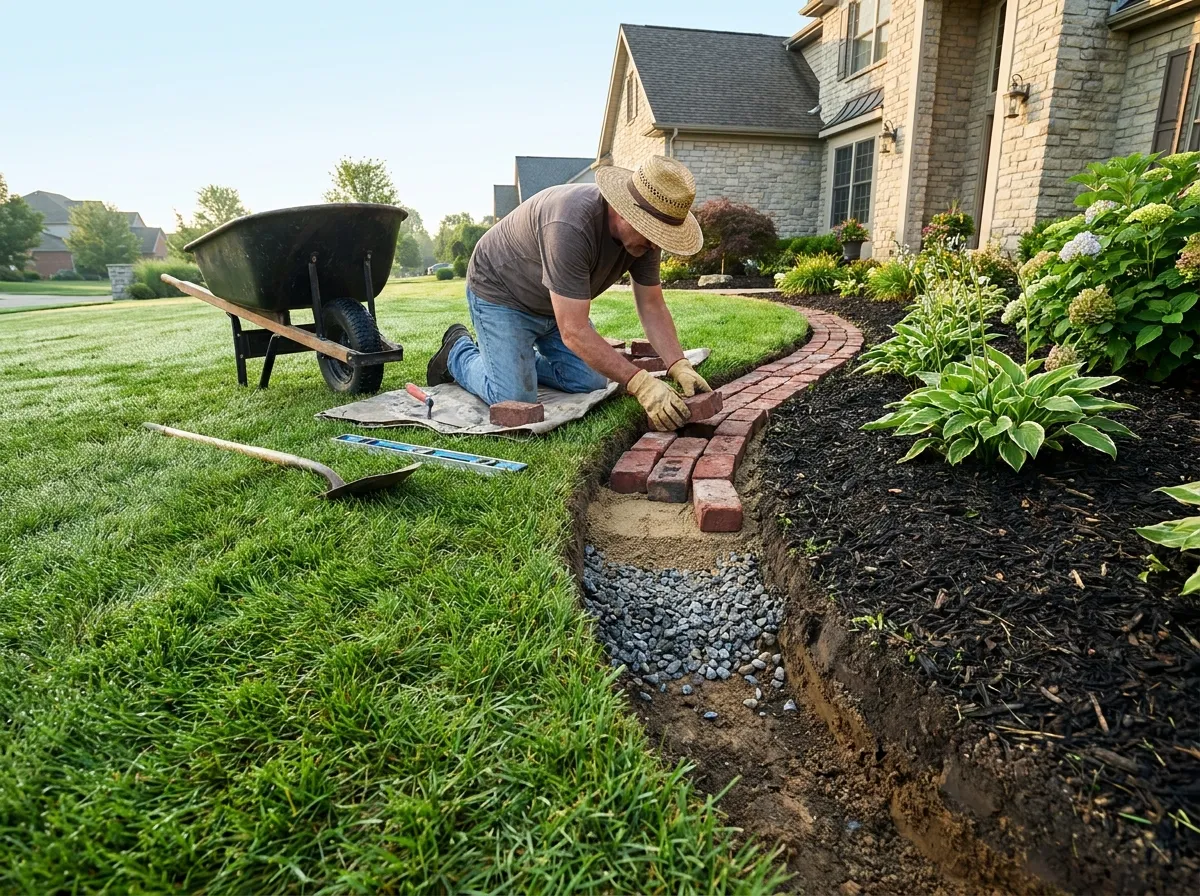
How Deep to Dig and Why Subsoil Matters
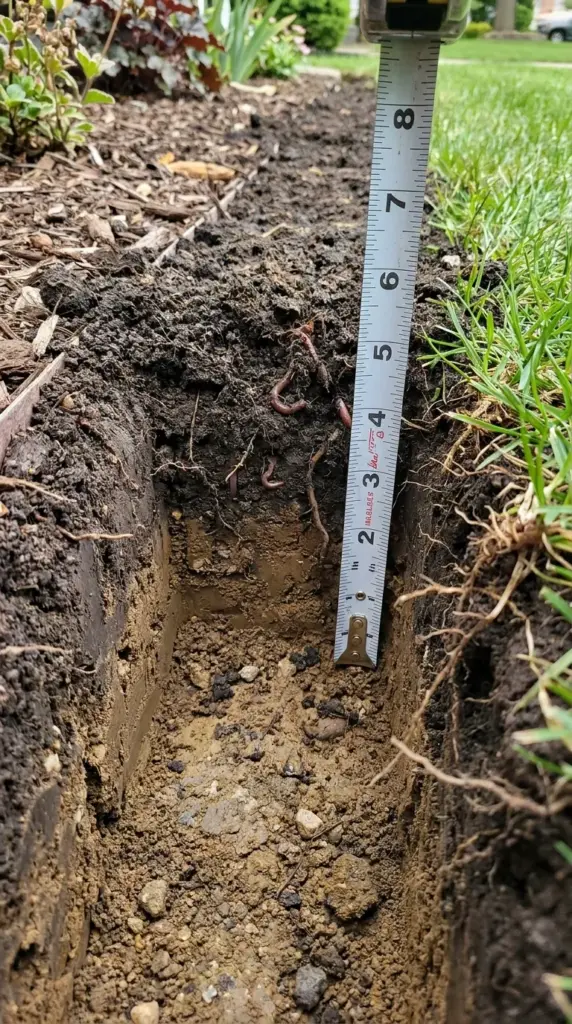
The trench usually needs to be deeper than you think
For a true deep-set brick rule install, I usually think in terms of roughly a 6-inch edging trench, sometimes more depending on brick thickness and base depth.
That sounds like a lot if you’ve only ever scraped out a shallow groove. But that extra depth is what gets you below unstable topsoil.
Topsoil is the weak layer
Topsoil is great for roots. It is terrible for structural support.
It’s full of decomposing material, air pockets, and moisture changes. Once you reach firmer subsoil, the edging has a much better chance of staying put.
Trench width matters too
Don’t dig a trench that hugs the brick too tightly. You need room for the paver base, leveling material, and small adjustments.
I like a trench wide enough that I’m not fighting the sides every time I place a brick. Trust me, that gets old fast.
Wet sites need extra attention
If the area stays soggy, don’t ignore it. Persistent water can soften the base and lead to settling even with good materials.
Sometimes the fix is better grading, sometimes it’s a thicker stone base. Next, I’ll break down exactly how to build a base that actually supports the brick instead of just looking busy under it, so hit the next button below.


