
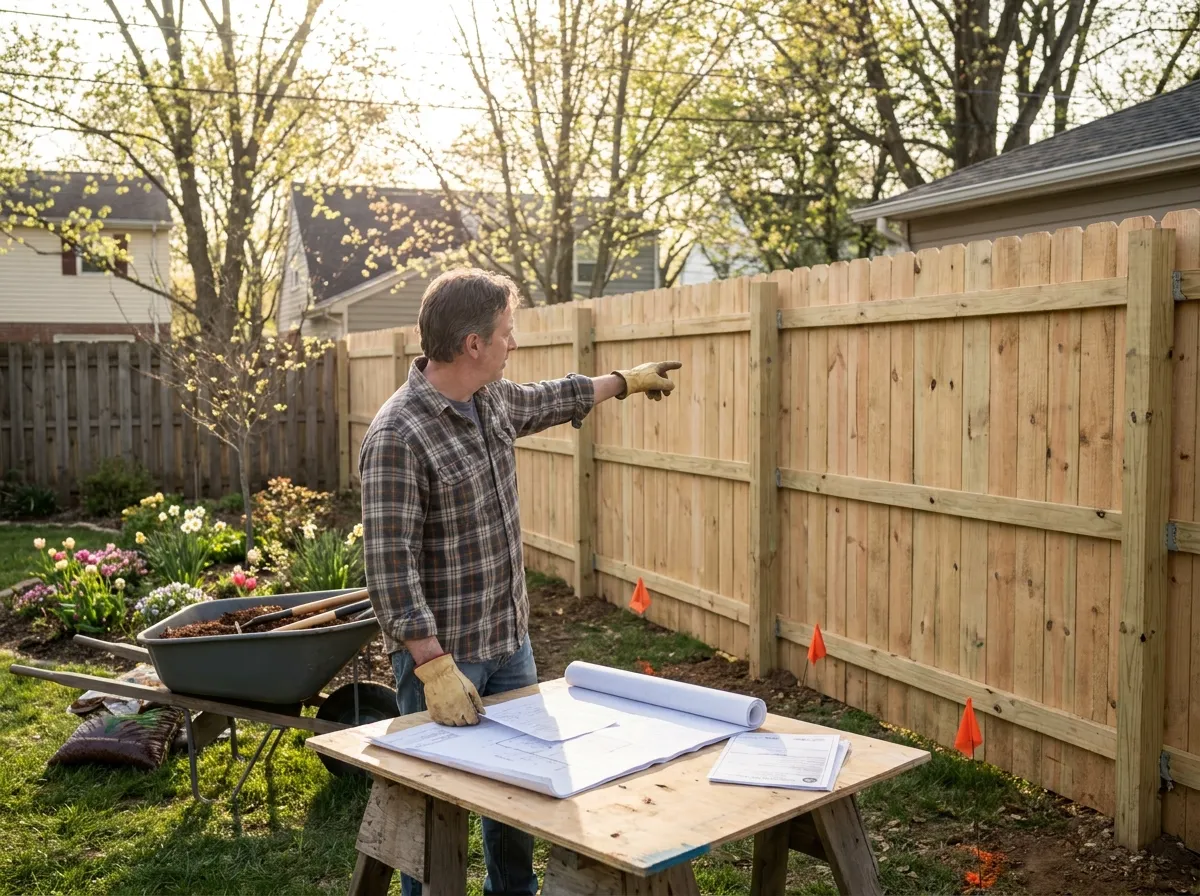
Watch the code traps that catch homeowners most often
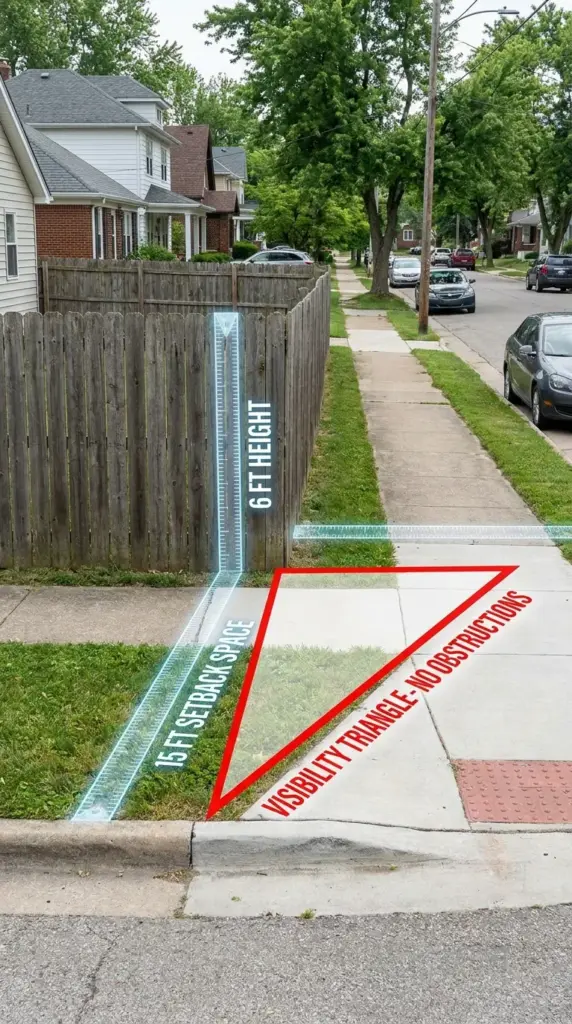
The fence is too tall or in the wrong place
This is probably the most common problem.
A fence that’s fine in the backyard may violate front yard fence height limits, and a fence near a street corner may run into sight triangle or corner lot visibility rules.
It doesn’t have to be wildly wrong, either.
Sometimes being just a few inches over height or slightly inside a restricted setback is enough to trigger a correction notice.
The wrong style can still be a violation
A lot of neighborhoods care about more than height.
They may regulate material, color, opacity, or the finished side facing out, also called the good side out rule.
That means the prettier side of the fence often has to face the neighbor or the street.
It annoys some DIYers, but it’s a common standard for appearance.
And yes, HOA boards especially love this rule.
What happens if you get reported
Usually it starts with a notice.
Then you may get a deadline to fix, modify, permit, or remove the fence, and fines can follow if you ignore it.
That is why I’m such a broken record about checking code first.
Fixing violations after the fact is almost always more expensive than getting it right the first time.
And honestly, it’s stressful in a way that sucks the fun right out of the project.
Speaking of stress, let’s talk about people. Hit the next button below, because neighbors, shared boundaries, and HOA drama can turn a simple fence into a full emotional subplot.


