
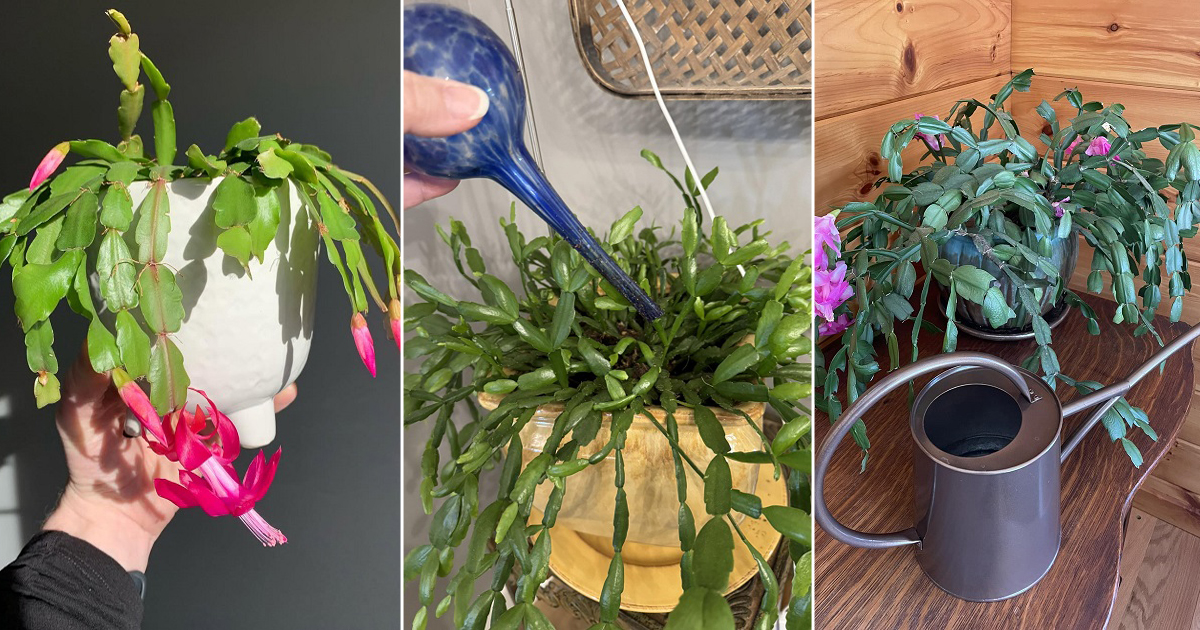
Learn how to care for your Christmas cactus in November with simple yet effective tips to ensure a stunning holiday bloom.

As buds begin to form in November, this month’s care routine can make or break your holiday bloom display. With proper care and by following the tips below, your plant will thrive with a burst of color just in time for the season.
Christmas Cactus Care in November
1. Stop the Dark Routine

If you started giving your Christmas cactus long nights in September or October, November is the time to end the darkness treatment gradually. Once you notice buds forming, your plant will no longer need extended dark hours.
At this point, it benefits more from bright and indirect light that supports bud growth and flower development. Remember that more light in November will help your cactus build energy through photosynthesis and ensure long-lasting blooms.
How to Do It: Move your cactus to a bright east-facing window, away from direct harsh sunlight. A south or west window can also work in winter if you live in a cool climate. Just a few hours of gentle morning light will work wonders for the color and bloom of your plant.
2. Keep Temperatures Steady and Mild

November is when buds are maturing, and sudden temperature shifts can cause them to drop before blooming. Keep the daytime temperature no lower than 54 F (12 C) and no higher than 80 F (26 C), with slightly cooler nights to mimic its natural rhythm.
Why such a specific range? These moderate conditions mimic its native Brazilian rainforest habitat, where it has warm days and cool nights. Consistency keeps your plant steady, avoiding the stress and shock that often cause buds to fall.
Many people know not to expose the plant to direct cold drafts, but few realize that warm air currents from heaters or ceiling vents can shift humidity right at the leaf surface and trigger microstress in buds as well.
Pro Tip: Avoid placing your cactus near heaters or drafty windows. If your indoor air gets too dry from heating, move the plant a few feet away and maintain even warmth around it. Otherwise, it won’t bloom well!
3. Monitor Ethylene Exposure

This one’s rarely mentioned, but ethylene gas, which is released by ripening fruits like apples, bananas, and tomatoes, can cause trouble for your Christmas cactus. If it is placed near a fruit bowl regularly, the gas will act as a plant hormone, signaling the plant to accelerate the aging of buds, form abscission layers, and drop its flower buds prematurely.
This process results in flower buds aborting, drying up, or falling off before they even get to bloom, which ultimately shortens the plant’s display period and reduces the ornamental value of the cactus.
What experts do: Keep blooming or budding Christmas cacti away from fruit bowls, pantries, or kitchens where ethylene can accumulate.
4. Water with Caution

By November, your Christmas cactus will shift from resting mode to blooming mode, so it needs water but not too much. If you push for more water at this stage, it can cause buds to rot. On the other hand, underwatering will lead to shriveled flowers.
Remember that moist, well-drained soil will help your plant focus its energy on blooms. The trick is to give it enough hydration to keep buds plump but not soggy.
The best way is to check the top inch of soil; if it feels dry, you should water thoroughly until it drains from the bottom.
A few expert growers intentionally slightly reduce watering (not to full dryness, just less frequently) once buds are visible, as it encourages tighter, more colorful flowers. Such mild stress mimics the natural rhythm of its native environment, where early seasonal drying coincides with budding. The trick is subtlety, though. Soil should never stay too dry for more than 2–3 days.
Here’s a trick: Use sugar water to get blooms faster on your Christmas cactus. We’ve explained everything in this quick read!
5. Maintain Enough Humidity

Warm indoor air in November is comparatively drier, but your Christmas cactus thrives in humidity levels of 50–60%, and if it is too low, the buds shrivel. Your cactus will struggle to maintain moisture balance through its stems, which will lead to premature wilting.
You should ensure keeping humidity up, and you will see how it benefits the flowers, and also the overall plant health.
How to Do It: Use a pebble tray filled with water under the pot, mist the plant lightly every few days, or use a humidifier in the same room.
6. Hold the Fertilizer

November is not the month to feed your Christmas cactus, because fertilizing now can push your plant to grow new leaves instead of focusing on buds. Your plant needs to use stored energy for blooming, not foliage development, so stop the fertilizer.
Nutrients like nitrogen will promote vegetative growth, which can interfere with the hormonal signals that trigger flowers. This is why feeding in November often results in fewer blooms or delayed flowering.
Pro Tip: Stop all fertilizers until the flowering season ends (usually January). Once blooming is over, you can resume light feeding to help with recovery.
7. Avoid Moving or Rotating Once Buds Form

One of the biggest mistakes people make in November is constantly moving their Christmas cactus around the house. Once buds form, the plant gets sensitive to light direction and position. Even a small shift can confuse its orientation and cause buds to drop off.
How to Do It: Once your cactus has visible buds, leave it in one spot until it finishes blooming, as we explained in point 1. If you need to move it for watering, return it to the previous place.
With a little consistency, your Christmas cactus will flourish through November and into the holidays. Follow these tips closely, and you will be celebrating the season with beautiful blooms.
And if you love adding more to your collection, here are Christmas cactus colors you shouldn’t miss out on!


