
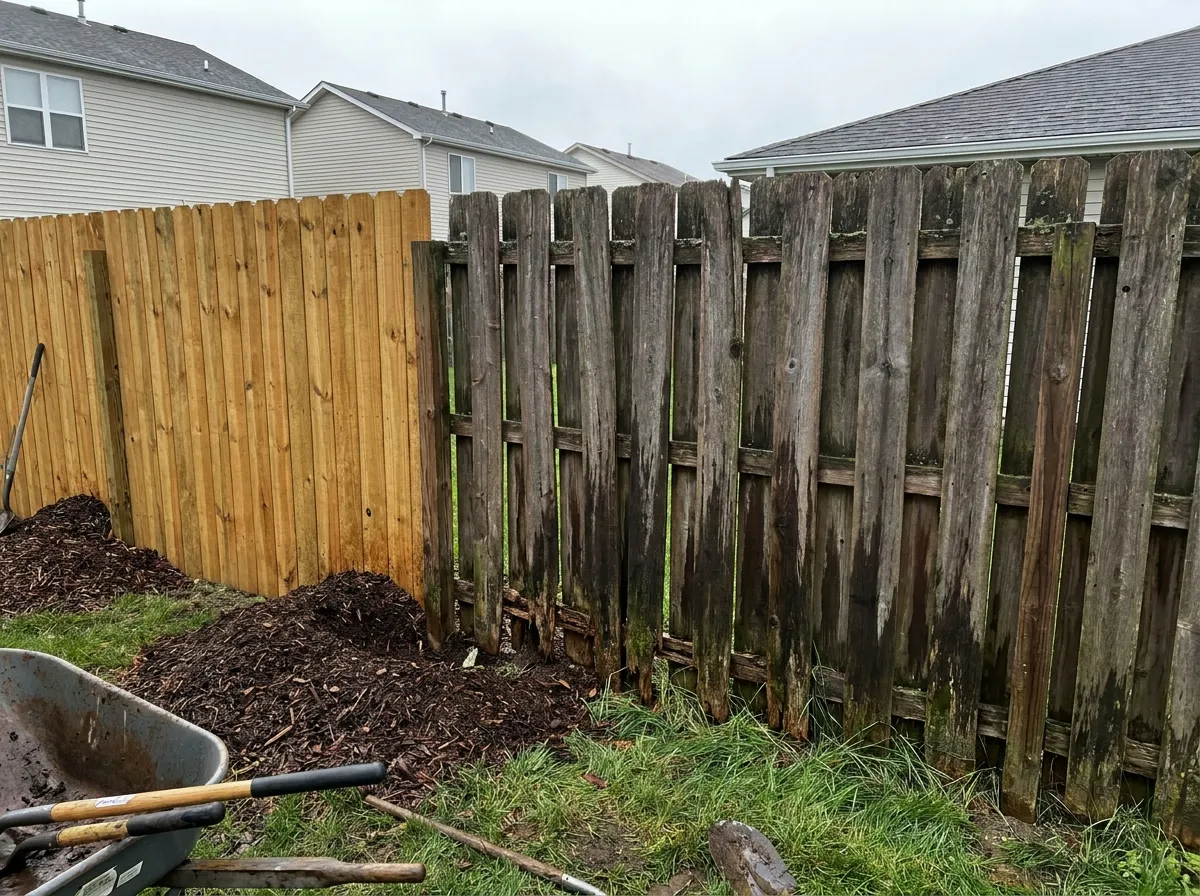
Hidden Design Flaws That Keep a Fence Wet
Fence Caps, Rails, and Trim That Collect Water
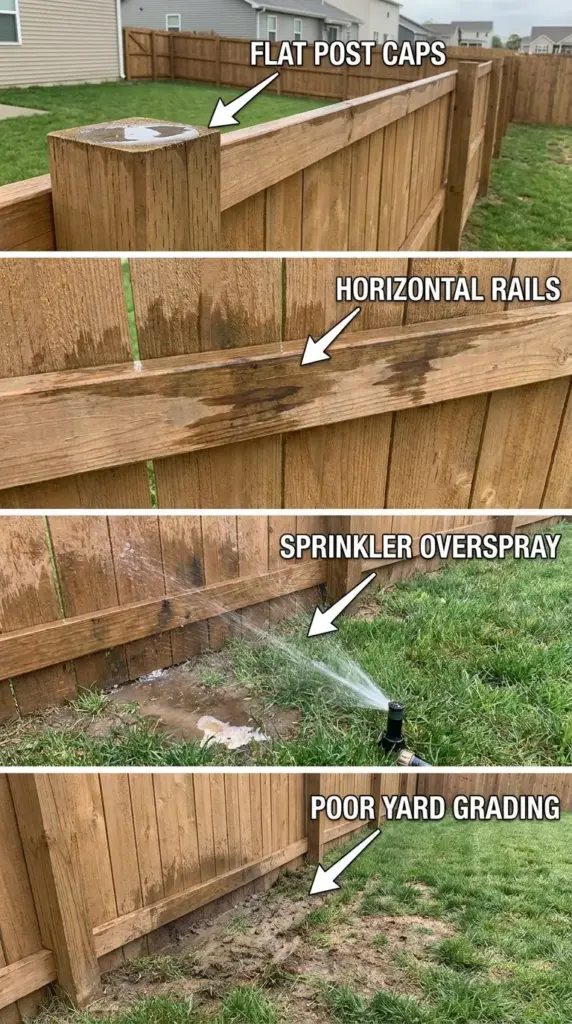
Flat post tops and decorative trim can look great, but they often hold water.
That’s why fence cap protection matters. A slightly peaked cap or a properly fitted cover can help shed water instead of letting it soak into the top grain.
Why Horizontal Surfaces Fail First
Any surface where water sits is a red flag.
Top rails, trim ledges, and poorly angled board tops stay wet longer, and those are often the first places I see wood checking and cracking turn into deeper moisture damage.
A tiny design tweak, like angling the top edge, can make a surprising difference.
The Impact of Poor Grading and Sprinkler Overspray
If the yard slopes toward the fence, water collects at the base.
Add daily sprinkler spray and you’ve got a recipe for constant saturation, especially in low spots. Yard grading around a fence is not glamorous, but it matters a lot.
Drainage Fixes Without a Full Rebuild
You may not need to tear the whole thing out.
Sometimes improving grade, redirecting downspouts, adjusting sprinkler heads, or adding a fence kick board can protect the main structure and buy you years.
Before you assume the damage is already done, hit the next button below because I want to show you the early warning signs that tell you what’s happening right now.


