
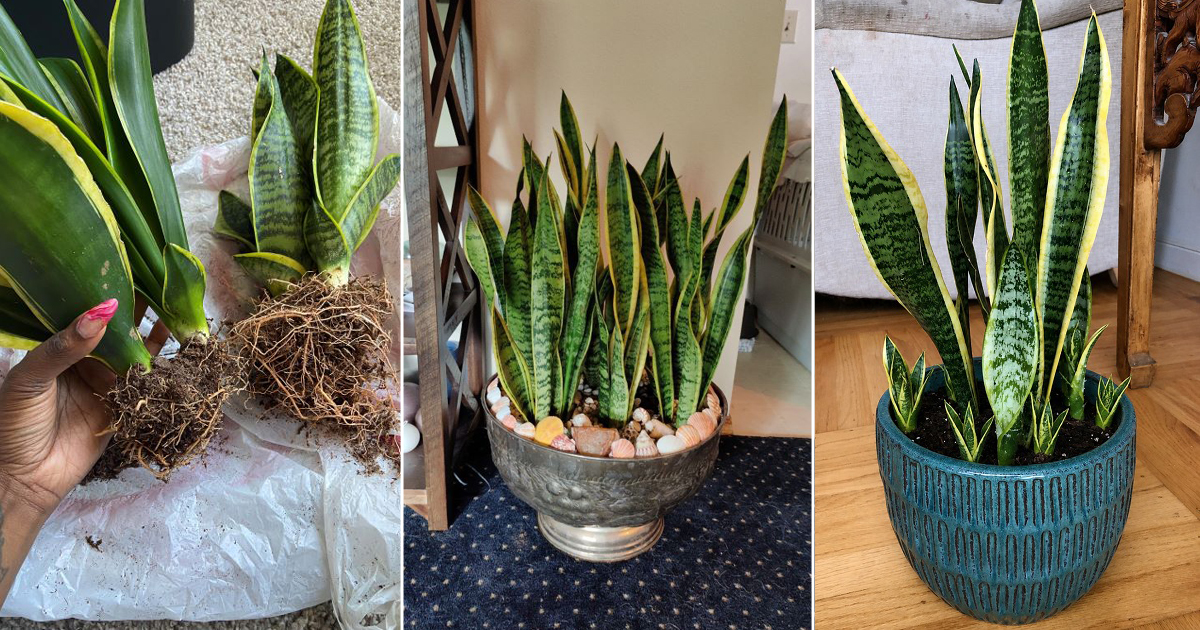
Want your snake plant to grow faster and produce more pups? Try these lesser-known tricks that encourage stronger roots and quicker growth!

Snake plants are often labeled as slow growers, but that’s usually because they’re being kept alive rather than encouraged to grow. A few small changes below the soil line can noticeably affect how quickly your plant produces new leaves and pups.
Here are tricks that focus on the factors most growers overlook and can help turn a stagnant snake plant into a much more active grower.
Why Most Snake Plants Stay the Same Size for Years

Most snake plant care advice focuses on the leaves, but the real action happens underground. New growth comes from rhizomes, the thick horizontal stems that spread beneath the soil and eventually push up new shoots.
If the rhizomes aren’t comfortable, growth slows down no matter how healthy the leaves look.
That’s why two snake plants sitting in similar light conditions can grow at completely different rates. The one with warmer roots, better soil structure, and a slightly compact pot will almost always produce more growth over time.
Snake Plant Growth Tricks That Actually Work
This post contains affiliate links. As an Amazon Associate, we earn from qualifying purchases, which support our website. You can check out our Amazon storefront here for all kinds of essentials you’ll need.
1. Use a Wide Pot Instead of a Deep One

Snake plants spread sideways before they grow upward. Their rhizomes spread horizontally through the soil, seeking space to form new pups.
When repotting, move your plant into a container that is about 2-4 inches (5-10 cm) wider than the current pot rather than choosing a significantly deeper one. A wide, shallow container gives rhizomes more room to travel and often results in faster pup production.
Another benefit of a wider pot is that new pups emerge closer to the soil surface, where conditions are warmer and better aerated. In deep pots, much of the extra soil remains unused for long periods, increasing the chances of excess moisture lingering around the roots.
How about buying this ceramic plant pot with drainage holes? It is a shallow round succulent planter that will give the rhizomes more space to spread.
2. Keep the Root Zone Warm

Many snake plants spend their lives on cold floors or near drafty windows. Even if the foliage appears healthy, cool roots can slow growth considerably. So try to keep the root zone between 70-85 F (21-29 C).
You don’t need direct sun or a heating mat. Simply moving the plant away from cold surfaces and placing it in a consistently warm area can make a surprising difference over a growing season.
This is one reason snake plants often seem to “wake up” in late spring and suddenly start producing new growth. Warmer soil speeds up root activity, allowing the plant to absorb water and nutrients more efficiently.
3. Improve Soil Oxygen with a Simple Skewer Trick

Potting mix naturally settles and compacts over time. As that happens, airflow around the roots decreases, making it harder for them to function efficiently.
Every few weeks during spring and summer, gently insert a wooden skewer or chopstick into the soil in several spots around the pot. Don’t force it through thick roots.
The goal is simply to create small air channels that help oxygen reach the root zone. You can also till your soil from time to time with these skewers.
This technique is particularly useful for older plants that haven’t been repotted in a few years. It also acts as a quick refresh for the root zone without the stress of disturbing the entire root ball.
Buying simple bamboo plant stakes can be really useful for aerating compacted soil while not disturbing the roots.
4. Water for Growth, Not Just Survival

Many people underwater snake plants because they’re afraid of root rot. The result is a plant that survives but doesn’t actively grow. We don’t want that, do we?
Instead of frequent light watering, soak the soil thoroughly and then allow it to dry before watering again. This deep wet-dry cycle encourages roots to spread throughout the container, creating a stronger foundation for faster growth and pup production.
Here are some of the best snake plant watering tricks you should know as a plant parent!
You can buy a long-spout watering can and directly water where it is needed the most.
5. Add More Minerals to the Potting Mix

A standard houseplant mix is fine for Sanseverias; after all, they are one of the toughest houseplants. It can also become dense over time. However, for the best result, mix in pumice, lava rock, coarse sand, or decomposed granite to improve drainage and keep the soil structure open for longer.
Snake plants often respond very well to these gritty, mineral-rich conditions because they more closely resemble their natural environment.
Horticultural pumice for plants is one of the best ways to improve drainage and increase airflow.
Many experienced growers use mixes that contain nearly 50% mineral ingredients. Faster drainage encourages healthier roots and reduces the risk of soggy conditions that often stall growth.
6. Divide Before the Plant Becomes Extremely Root-Bound

Snake plants love being crowded, but extreme crowding eventually slows things down.
If roots and rhizomes are packed tightly throughout the pot, you should divide the plant during spring or early summer. Newly divided sections often enter a fresh growth cycle and begin producing roots and new shoots much faster than an overcrowded mother plant.
You’ll also have an opportunity to inspect the rhizomes and remove any damaged or aging sections before they begin affecting new growth. It also helps to revive a dying snake plant!
7. Stop Rotating the Plant So Often

Snake plants don’t need constant repositioning. Every time the light source changes, the plant has to adjust its growth pattern.
Once you’ve found a bright location, leave the plant there for at least half of the growing season. Stable conditions allow it to spend more energy on producing roots, leaves, and pups instead of adapting to a new orientation every few weeks.
Learn more about the best plant rotation tips right here!
8. Feed the Soil Biology, Not Just the Plant

Healthy soil contains beneficial microorganisms that help make nutrients more available to roots. Most indoor gardeners focus entirely on fertilizer and ignore this side of plant health.
A monthly application of diluted compost tea, a light top dressing of high-quality compost, or even a small amount of leaf mold can help support microbial activity in the pot. Over time, healthier soil biology often leads to stronger root systems and steadier growth.
Basically, it’s improving the soil ecosystem rather than feeding the plant directly. When beneficial microbes are thriving, roots can access nutrients more easily and recover faster from stress.
Bonus Trick: Give the Pot a Slight Seasonal Tilt

Some experienced growers believe that temporarily changing the plant’s orientation can encourage dormant rhizome buds to become active.
This is actually an old grower’s trick that occasionally encourages dormant rhizome buds to wake up. A very slight tilt changes the plant’s orientation and can alter how growth hormones move through the rhizomes.
What to do? Place a thin wooden shim, folded cardboard, or a flat stone under one side of the pot to raise it by about ½ to 1 inch (1-2.5 cm). The tilt should be barely noticeable and only used for a few weeks during the active growing season. Avoid anything dramatic that could make the container unstable.
Pro Tip: None of these tricks will make a major difference if your snake plant is sitting in a dark corner. For the fastest growth and more pup production, keep it in bright, indirect light for most of the day, such as near an east-facing window, a few feet from a south-facing window, or beside a bright west-facing window with filtered sun.
Snake plants grow fastest when their roots and rhizomes have the right conditions to expand. Focus on what’s happening below the soil, and the growth above it usually takes care of itself.
Remember, snake plants may tolerate low light, but they don’t grow quickly in it. If your goal is faster growth, more pups, and even the occasional flower, bright indirect light throughout the day is one of the most important pieces of the puzzle.
What you need next is this book on snake plant care; it’s the perfect buy for anyone who owns a snake plant.


