
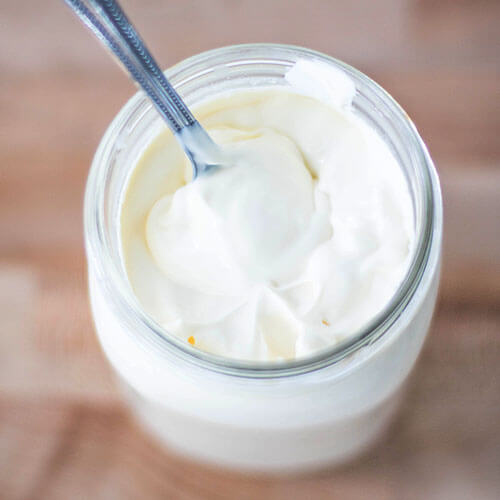
Homemade sour cream is rich, tangy, and alive with probiotics. Here’s how to make it with 5 minutes of prep time and only 2 ingredients. It’s delicious drizzled on tacos or chili recipes, or turned into cultured butter!
The best part of making your own cultured dairy products (soft and hard cheeses, yogurt, cultured cream cheese, milk kefir, cultured butter, and more…) is that you begin with ordinary milk or cream, and end with an indulgent, tasty food teeming with probiotics and other microflora!
Whether you start with raw milk from your local dairy farmer or pasteurized milk from the store, you’re making whatever milk you get better!
With sour cream, the name says it all — sour cream is “soured cream.” The cream has been thickened and flavored from the acids produced by the proliferating natural organisms.
Or, have you heard of crème fraîche? That’s a European style sour cream, a bit thinner than the American style of sour cream, but otherwise very similar.
Homemade sour cream is rich, tangy, and delicious drizzled on fresh fruits or soups, stews, and more!
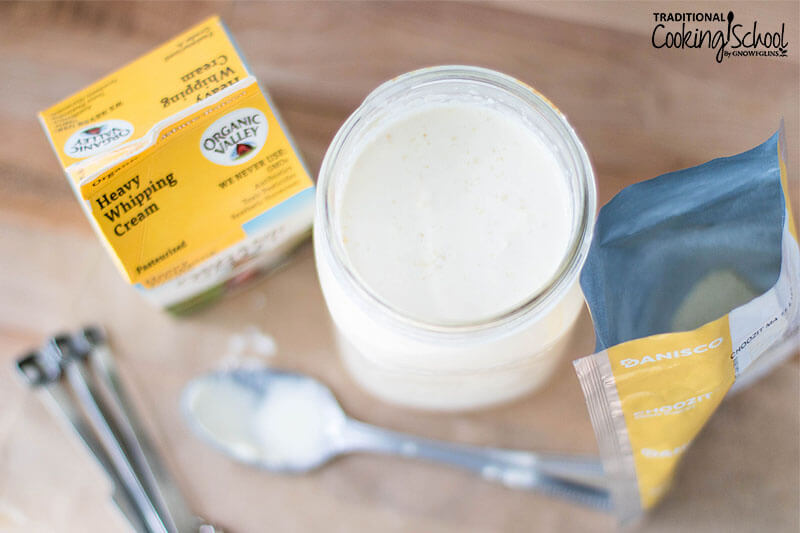
Table Of Contents
Ingredients
- Heavy cream – This can be raw or pasteurized, but not ultra-pasteurized. Choose the best quality you can, preferably raw cream from a grass-fed animal. Yet if this is not possible for you, remember that if you’re culturing dairy at home, you’re making whatever milk you are able to get better!
- Culture of choice – If using raw cream, you don’t have to add a mother culture (though you may choose to do so!) because the beneficial organisms in the cream will proliferate over time themselves, producing a cultured cream or sour cream. You definitely need to add a starter culture if using pasteurized cream because it contains no beneficial organisms to proliferate and/or protect against spoiling. Choose a mesophilic cheese culture such as this one, or plain yogurt, dairy kefir, buttermilk, store-bought sour cream with active cultures, or dairy kefir grains.
Supplies Needed
- Glass jars – You will need a pint-sized glass jar for culturing the cream.
- Paper towel or cloth napkin, plus rubber band – For covering the cream while it cultures.
How To Make Sour Cream
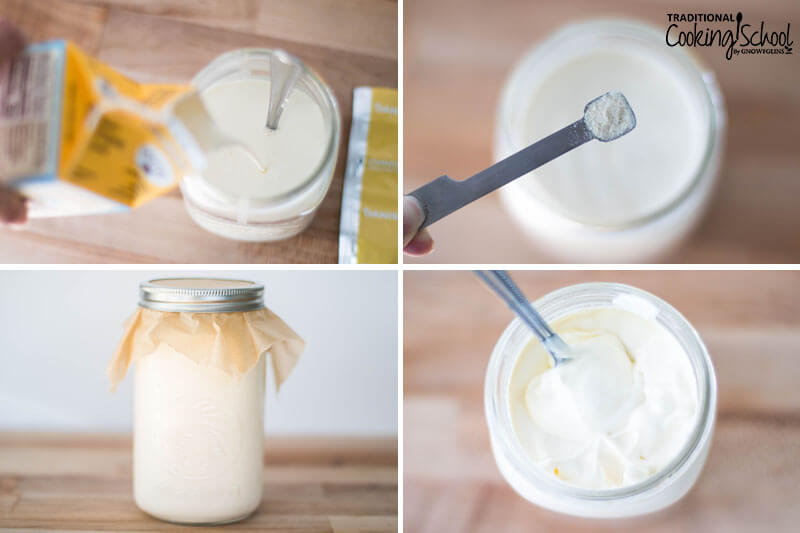
- If using raw milk and you haven’t already, skim the cream from the top. Here’s how!
- Culture the cream, either by letting raw cream culture spontaneously at room temperature, or by adding a starter culture of your choice to a quart of raw or pasteurized cream.
- Stir the culture in well.
- Cover the jar with a cloth napkin or paper towel, and secure with a rubber band.
- Let the cream culture, or ripen, at room temperature for about 24 to 48 hours.
- Check every 12 hours to see if it’s set up or not. Peel back the top layer of cream to see if it is thick all the way through the jar. There also may be bubbles throughout the cream, showing that a fermentation has taken place.
- When it’s set up to a thick cream throughout the entire jar, it’s done. Cover with a regular lid and put in the refrigerator to chill it thoroughly.
Alternate Method: Clabbered Milk
By far the easiest method of making sour cream is to clabber milk first. Clabbered milk is raw milk that is allowed to sour spontaneously and thicken over time. When you clabber milk, the cream naturally rises to the top and sours as well, yielding “sour cream” once skimmed.
I recommend this method for those who enjoy the stronger, more sour flavor that clabbered sour cream has, particularly if you have a milk cow and you just need to do something with all that milk! This method is so easy and you can clabber a large amount of milk and cream at once.
Once you skim the sour cream off the top, you can feed the rest of the clabbered milk to your chickens or other animals.
In this video excerpt from the Cultured Dairy & Basic Cheese eCourse, I show you this alternate method of making sour cream.
- Start clabbered milk with raw milk that is warm from milking or at room temperature, or with pasteurized milk.
- Either let raw milk sour spontaneously at room temperature, or add a starter culture to pasteurized milk (it lacks the naturally present microorganisms to clabber by itself).
- If using, stir culture in well.
- Cover milk with a cloth napkin or paper towel, and secure with a rubber band.
- Leave to culture at room temperature for 1 to 2 days, or longer in the winter.
- Once the culturing time is over, both the cream and milk are thickened from the acids produced by the proliferating natural organisms.
- The cream has also conveniently risen to the top. Skim off the cream — it’s now sour cream — and chill.
- Compost or feed to animals the remaining clabbered milk.
Sour Cream FAQs
Do I need a starter culture?
If you’re using raw milk or cream, then no. If you’re using pasteurized milk or cream, then yes… however it doesn’t have to be dry powdered culture such as this one. You can also use yogurt, dairy kefir, buttermilk, store-bought sour cream with active cultures, dairy kefir grains, or even a previous batch of your homemade sour cream*.
The advantage to using a dry powdered starter culture is, if they are new and not degraded from being stored too hot, you can ensure a better result. Having said that, either can be used in this instance and if one option is much more economical for you, you can go with that!
*You can use your homemade sour cream to make more sour cream, however (if you use raw cream) it won’t work indefinitely. After a few (or more) times it will probably stop working and/or not taste so good. This is because of the competing cultures in the raw cream. So at that point, you can either buy fresh sour cream from the store to start the culturing process over, buy a mesophilic culture… or, if you’re a member, we do have instructions for how to make a culture that DOES culture sour cream indefinitely in our Cultured Dairy and Cheese eCourse.
Why is my sour cream thin/runny?
Depending on how long you culture your sour cream at home and what starter culture you use, you may end up with a crème fraîche consistency or a thicker sour cream. It’s all normal — and with experimentation, you will find the thickness you like!
Ideally, it would be set up for you in 3 days or less. Toss it if it’s not set up by 3 days, and if you didn’t use a starter culture this time, use one next time.
My sour cream tastes or smells funny. Why?
I’m sorry to hear that! It would have do with the original cream and its quality and/or age. Try to find a high-quality source of fresh raw milk, if possible, and use a starter culture to ensure better results next time.
How long will my sour cream be good for?
The sour cream will continue to “age” in the fridge after culturing. For the best flavor, it is best to eat within a week or two.
After that, it is not necessarily bad, because it has the protection of the culture, but some people don’t care for the stronger taste that develops. I don’t have a rule of thumb for the expiration date because it does depend on many factors, one of which is personal preference.
How to store sour cream: can I freeze it?
Yes, you can freeze it. Store in the refrigerator for up to two weeks, or freeze in a zip-top bag for long-term storage.
The consistency might not be as smooth and creamy once it is thawed, but especially if you’re using it in baked goods, this won’t matter.
How to use sour cream.
There are so many ways to use sour cream!
- Drizzle on fresh fruit.
- Make lemon sour cream for dolloping on salmon patties.
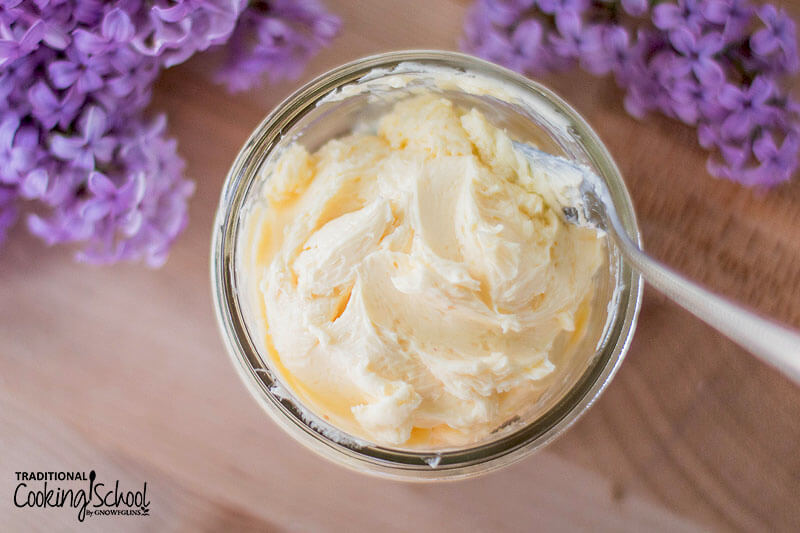
- Turn it into cultured butter! (pictured above)
- Whip up a batch of salad dressing, like this one or my favorite ranch dressing.
- Make potato salad or cauliflower potato salad.
- Dollop onto chili, tacos, enchiladas, quiche, etc.!
- Add to beef stroganoff.
- Use as the acidic medium for soaking overnight blueberry scones.
Other Cultured Dairy Recipes
Sour cream is just the tip of the iceberg when it comes to cultured dairy, and we’re adding more recipes to the TCS blog all the time, so click here to browse our Cultured Dairy archives! Here are a few of our favorites…
- The ULTIMATE Milk Kefir Guide (how to make it, troubleshooting tips & MORE!)
- How To Make Thicker Milk Kefir
- Cultured Cream Cheese (+5 flavor options!)
- How to Make Raw Milk Mascarpone: Soft, Probiotic Cheese
- How To Make Cultured Butter
- Compound Butter {Butter Gets Dressed Up!}
- How To Make Homemade Buttermilk + 5 Buttermilk Substitutes
- What To Do With Soured Cream?
- Homemade Cottage Cheese From Raw Goat Milk
- Trim Healthy Mama Fuel Pull Cottage Cheese {homemade}
- Middle Eastern Kefir Cheese Balls {with free video!}
- What To Do With Soured Cream?
- Homemade Raw Cheddar Cheese
- Fermenting Trouble Shooting FAQ’s
For the very best of our cultured dairy recipes, including video tutorials, be sure to check out our Cultured Dairy and Cheese eCourse. I show you how to make the Middle Eastern cheeses of my childhood: salty, savory, and usually served with a plateful of other Mediterranean goodies (like pickles, olives, pocket bread, hummus, or eggs). Mmmm!
Did you make this homemade sour cream recipe? If so, please give us a rating on the recipe card below. Then snap a photo and tag us on social media so we can see how you enjoyed it!
Sour Cream
Homemade sour cream is rich, tangy, and alive with probiotics. Here’s how to make it with 5 minutes of prep time and only 2 ingredients.
Ingredients
-
1
pint
heavy cream
raw or pasteurized -
1/8
teaspoon
mesophilic cheese culture
or 1/8 to 1/4 cup store-bought plain yogurt, buttermilk, or sour cream with active cultures; or dairy kefir grains
Instructions
-
If using raw milk and you haven’t already, skim the cream from the top. Here’s how!
-
Culture the cream, either by letting raw cream culture spontaneously at room temperature, or by adding a starter culture of your choice to a quart of raw or pasteurized cream.
-
Stir the culture in well.
-
Cover the jar with a cloth napkin or paper towel, and secure with a rubber band.
-
Let the cream culture, or ripen, at room temperature for about 24 to 48 hours.
-
Check every 12 hours to see if it’s set up or not. Peel back the top layer of cream to see if it is thick all the way through the jar. There also may be bubbles throughout the cream, showing that a fermentation has taken place.
-
When it’s set up to a thick cream throughout the entire jar, it’s done. Cover with a regular lid and put in the refrigerator to chill it thoroughly.
Recipe Notes
Use sour cream as a topping for tacos, soup, salmon patties, and chili. It even makes the best cultured butter!


