
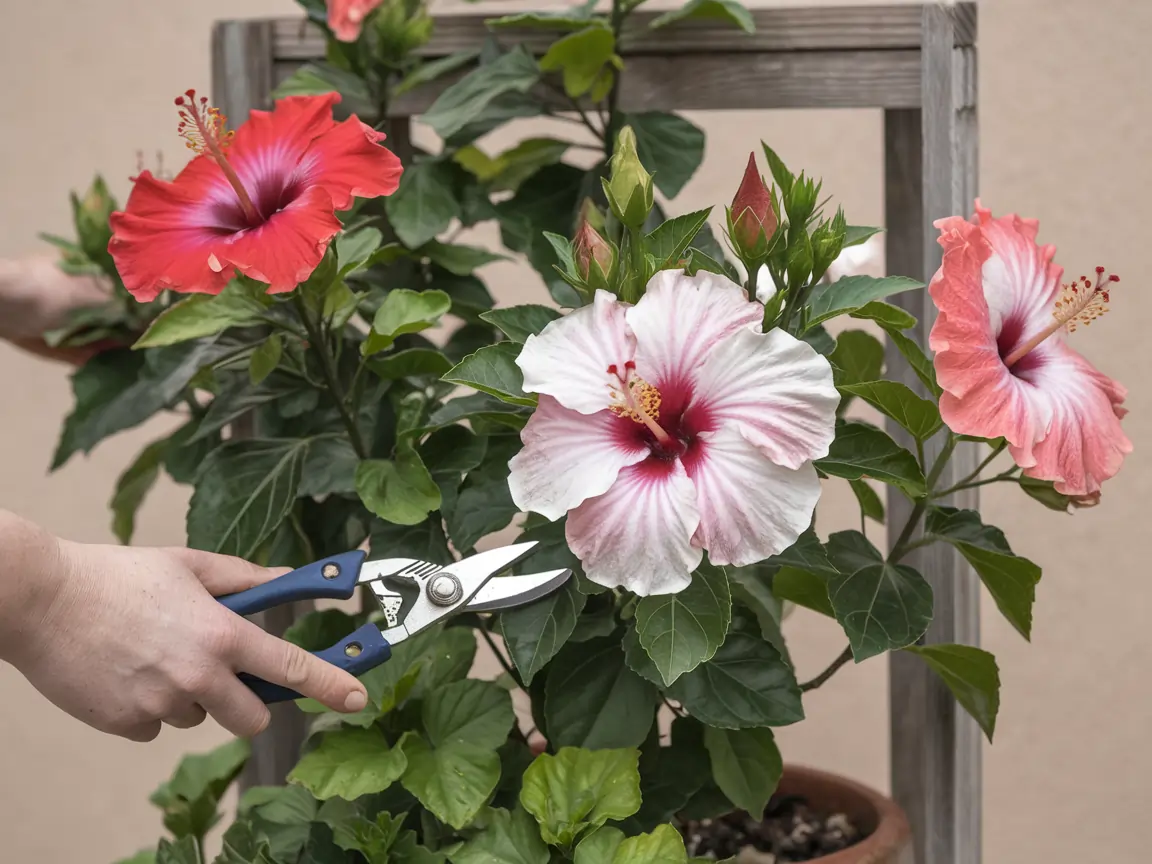
Secret #5: Shape for Maximum Blooms
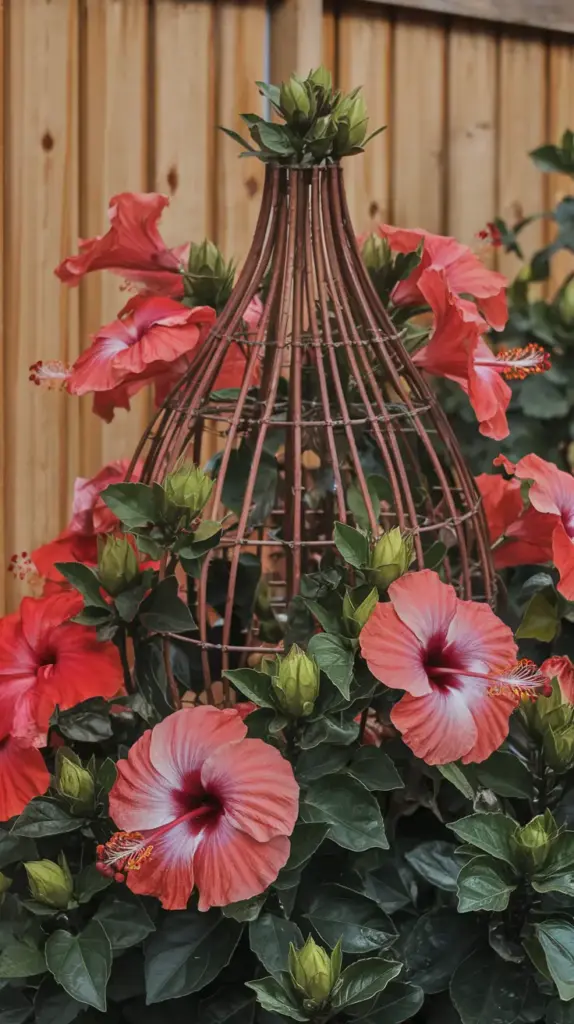
Let me tell you about my biggest “aha moment” with hibiscus shaping. After years of just randomly trimming my plants, I finally discovered why some of my hibiscus bushes were blooming like crazy while others barely produced any flowers. It all comes down to strategic shaping – and trust me, it’s a game-changer!
The Perfect Plant Structure
Creating the ideal hibiscus shape isn’t just about making it look pretty (though that’s definitely a bonus!). The key is to develop what I call the vase-shaped structure. Think of your hibiscus like a beautiful bouquet – you want the branches to spread outward from the center, creating that classic V-shape.
I learned this the hard way when one of my prized hibiscus plants became so dense in the middle that it started producing fewer blooms. Now I make sure to maintain a strong central framework with 4-6 main branches angling outward at about 45 degrees. This creates the perfect foundation for abundant flowering.
Mastering Air Flow
Here’s something that took me years to figure out: proper air circulation is absolutely crucial for healthy blooms. When I first started growing hibiscus, I’d let the branches get all tangled up, creating what I now call the “jungle effect.” Big mistake!
To promote good airflow, I follow these steps:
- Remove any branches that cross or rub against each other
- Thin out the center of the plant by removing about 25% of the interior growth
- Keep at least 6 inches of space between major branches
The Light Penetration Secret
One of my favorite techniques is what I call the window method. Just like your house needs windows to let light in, your hibiscus needs strategic gaps in its canopy. I create small “windows” throughout the plant by:
- Removing dense foliage clusters
- Creating deliberate gaps between major branches
- Ensuring sunlight can reach the inner branches
Balance and Symmetry
Think of your hibiscus as a living sculpture. Balance is everything! When I’m shaping, I step back every few cuts to check the overall symmetry. One time, I got so focused on one side that I ended up with a lopsided plant that took months to correct!
My tried-and-true symmetry tips include:
- Working in quarters around the plant
- Maintaining similar branch lengths on opposite sides
- Creating an even distribution of flowering zones
- Keeping the plant’s height about equal to its width
Remember to stand back and look at your plant from all angles while shaping. I like to take photos from different sides to help spot any imbalances – it’s amazing what you notice in pictures that you might miss in person!
Ready to take your hibiscus care to the next level? In Secret #6, I’ll show you exactly how to care for your freshly shaped plant, including my special post-pruning fertilizer recipe that’ll have your hibiscus bouncing back faster than ever. Click the “next” button below to discover these essential aftercare techniques that’ll keep your plant thriving!


