
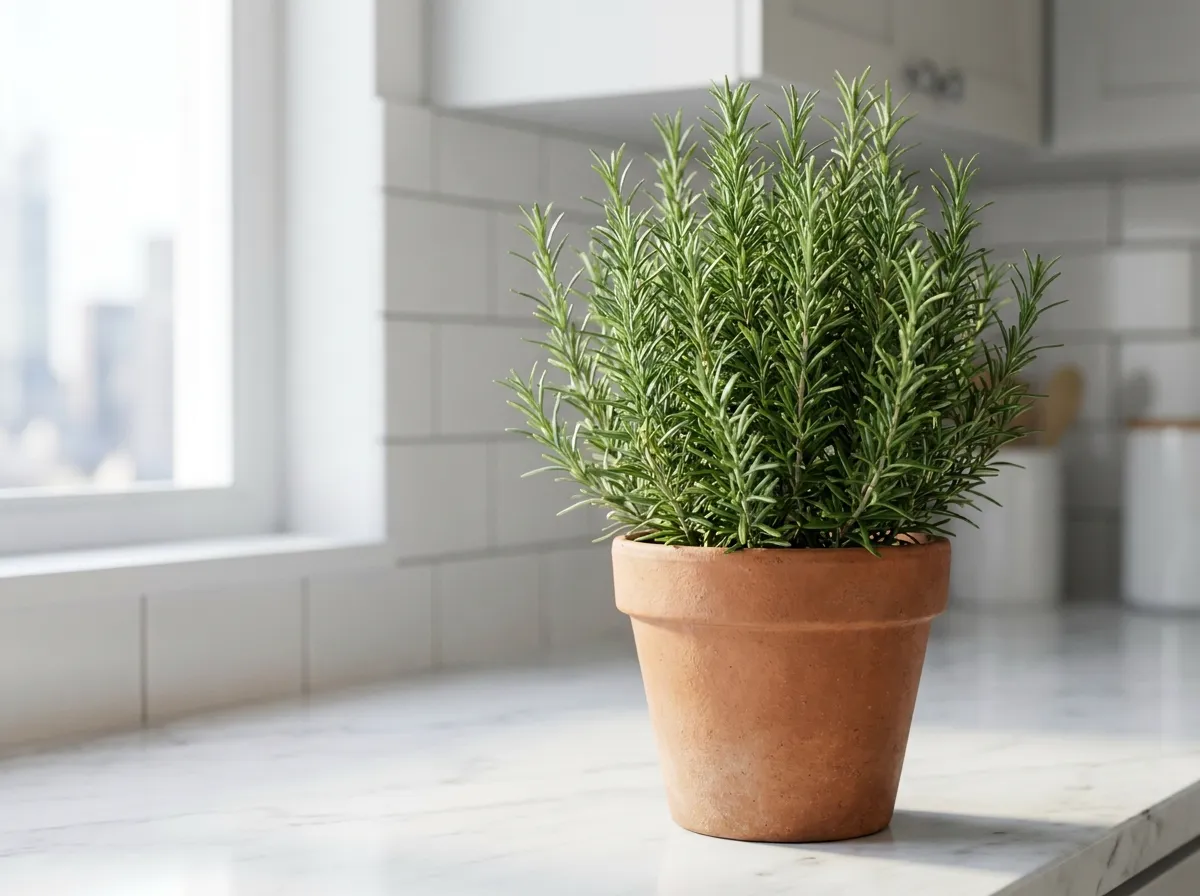
Did you know your indoor rosemary is probably suffocating in a hidden underwater swimming pool right now, even if the topsoil looks bone dry?
Today, I’m going to show you how to expose the secret structural trap hiding at the bottom of your pot and mix a flawless, cliffside-style soil recipe.
We will also overhaul your watering routine so you never have to deal with mushy, black roots again.
The big issue is that most of us fall for the classic myth that standard “bagged potting soil” is perfectly fine for these picky Mediterranean beauties. Trust me, I killed a dozen plants before I figured this out!
But here is the real kicker: the ultimate culprit destroying your plant isn’t actually how much water you pour, but a strange physics glitch that forces moisture to pool right where the roots sleep.
Don’t worry though, because this quick guide is going to give you the exact, no-fluff steps to fix your dirt and keep your indoor rosemary care completely foolproof.
The Hidden Trap in Standard Potting Mix
I remember buying a gorgeous rosemary plant years ago for my classroom windowsill, dumping it into a regular bag of premium houseplant soil, and watching it turn into a black, mushy mess within three weeks. It was incredibly frustrating because the top of the soil felt bone dry every single time I checked it with my finger.
The Secret Swamplands at the Bottom of Your Pot
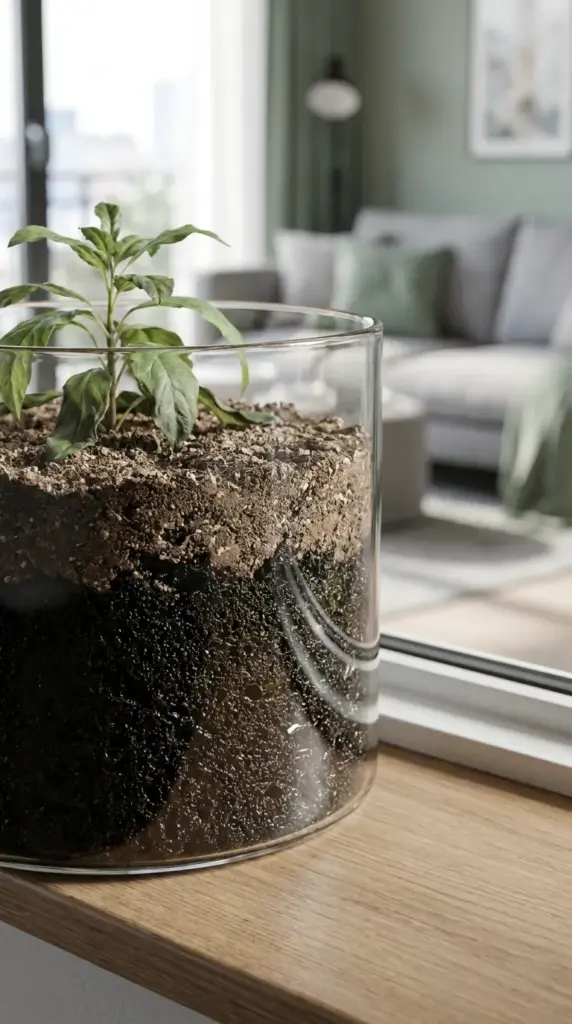
What I didn’t know back then is a sneaky piece of physics called a perched water table.
In short, water gets pulled down by gravity, but it also clings to tight soil particles through capillary action.
When water hits the bottom of a container, it stops moving and pools into a hidden, completely saturated zone.
Your potted rosemary roots end up trapped in a literal underwater swamp, completely starved of oxygen while you think everything is totally fine up top.
Why Peat-Based Mixes Are Rosemary Kryptonite
Most commercial potting bags are loaded with peat moss because it is designed to retain as much moisture as humanly possible.
That is wonderful news for a tropical fern, but it is a total death sentence for a plant native to dry, rocky Mediterranean cliffs.
If your plant has blackening lower leaves or the drainage holes smell a bit like a stinky lake, your soil is holding way too much water.
The roots are basically drowning in a dense sponge that can’t breathe, which triggers devastating potted plant root rot cycles.
And honestly, breaking out of this moisture trap is way easier than you think once you know the exact ingredients to mix up, so smash that next button because I am sharing my secret cliffside soil recipe right now!


