
Your ferment is moldy… now what? Here’s how to tell if you can still save it or if you should toss it, and 5 tips to prevent mold during fermentation in the future!
“I’m so bummed out! My first ferment in the crock was a total fail!” wrote Colleen S.
Colleen’s pickles turned soft and got moldy. 🙁
Oh, no… that bums me out, too!
How did this happen? How can she prevent it? Do these pickles need to be tossed… or not?
That’s the topic for today’s #AskWardee: troubleshooting mold (toss or not?), plus I’ll share 5 tips for how to prevent mold during fermentation so you can ensure better results in the future.
I broadcast #AskWardee live each Wednesday at 10am Pacific (1pm Eastern) on Periscope and Facebook Live. Both the podcast and video replay of this week’s show are below. Enjoy!
Subscribe to #AskWardee on iTunes, Stitcher, YouTube, or the Podcasts app.
Table Of Contents
The Question: Why Did My Pickles Get Soft & Moldy?
Colleen S. asks:
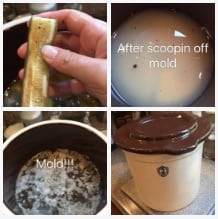
Hi Wardee. I loved your video about the fermented pickles. I was wondering if you had any insight as to what happened with my batch — my pickles went soft and moldy. It is the first time I used my crock. It is a 2-gallon one. Maybe it is too big?
I followed your directions, but doubled the amount of salt water since my crock was bigger. I’m so bummed out my first ferment in the crock was a total fail!
We keep our house a little warmer around 78, but I’m most concerned about the MOLD! Why would it be covered in mold? That can’t be good?!
My Answer:
First, I’m thrilled you tried the pickles. And I want to encourage you to keep at it! Pickles are one of the harder ferments… but it’s so worth it to get them right!
So let’s talk about how to prevent mold during fermentation.
I have 5 tips for you! Some of this information comes from my friend Shannon’s new book, Traditionally Fermented Foods.
Good Bacteria Vs. Bad Bacteria
As Shannon says, “Before you panic at the sign of something in the white, fuzzy or funky department, remember this: Yeasts and molds are everywhere. Not all mold is bad.”
Fermentation, from fermenting vegetables like pickles to cultured dairy to sourdough, wouldn’t be possible without beneficial bacteria and yeasts. If conditions are right to allow these good microorganisms to thrive, they do all the work of keeping the bad microorganisms in check.
What causes mold on ferments?
Here are a few factors that can lead to moldy ferments. Troubleshooting one or more of them should help you get your fermentation game back on track!
- too warm (fermentation happens best at around 72 degrees Fahrenheit)
- not enough salt (salt inhibits growth of bad bacteria)
- too much air getting in and out of the fermenting vessel (most ferments need to be airtight)
- not completely submerged in brine (pack your ferment down or try a fermenting weight!)
I’ll cover each of these factors in more detail, below.
How to Prevent Mold During Fermentation
What is the best way to prevent ferments from going off in the first place? Here are 5 tips to prevent mold during fermentation.
1. The Right Temperature
With fruit and vegetable fermentation, we say the ideal temperate is “room temperature”. That is 72 degrees Fahrenheit. Going lower down to 65 degrees Fahrenheit or so, is also fine.
However, much higher than 72 degrees (especially heading toward the 80s) is too warm. In warmer temps, foods will get soft instead of developing a nice crunch. Also at warm temps, fuzzy or colored molds are more likely to develop.
2. Start With Clean, Organic Foods and Pure Water
It’s really important to ferment clean, pesticide-free, herbicide-free, healthy fruits and vegetables. If the food is from your local farmer, maybe it’s not “organic” — yet do they spray? Are there pesticide residues? These poisons will mess up safe and effective fermentation. Get the best quality fruits and vegetables to ensure the best result and prevent mold during fermentation.
It’s also important to use uncontaminated, pure water. The beneficial bacteria and yeasts in ferments may have trouble thriving in water contaminated with chlorine, chloramine, or flouride (among thousands of other contaminants found in city water).
If your water is not clean or you don’t filter it, I recommend purchasing spring water or filtered water (here’s how to choose the best water filter for your family!). If your water is filtered and does not re-add minerals back, consider fortifying it with natural mineral drops.
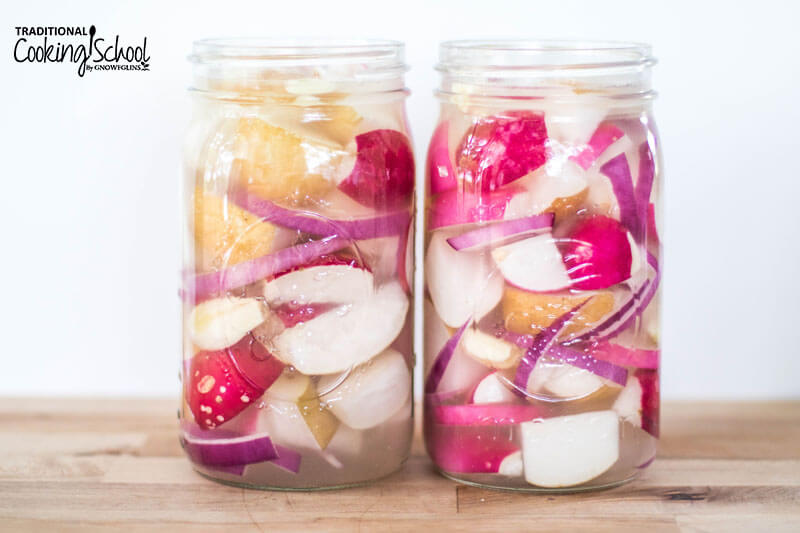
3. Clean Containers and Utensils
Mold and yeasts are everywhere; it’s impossible to get away from them. Yet, how clean are your containers? No need to be sterile, but we do need to use clean and sanitary conditions.
Washing in hot, soapy water, rinsing in hot water, and then air-drying on a clean towel is usually sufficient. Or, use a hot cycle on the dishwasher or even boil your jars and utensils.
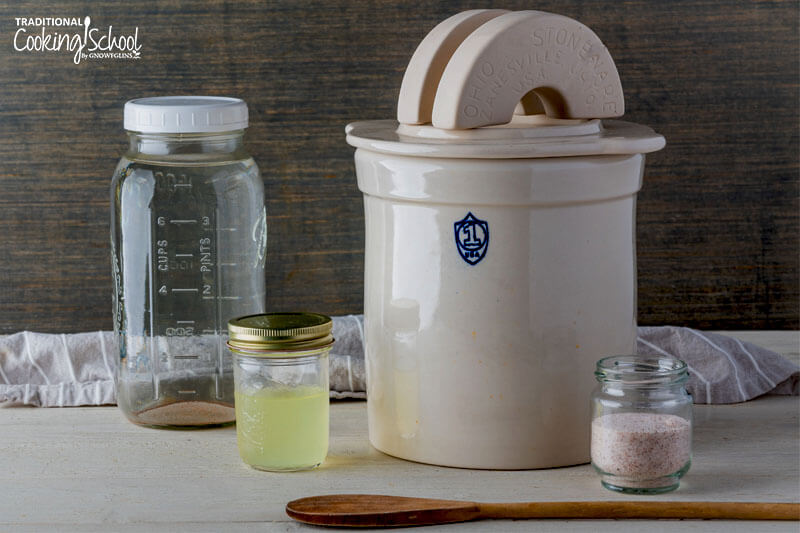
4. The Right Salt and The Right Amount of It
Not only is it important to use unrefined sea salt (like Real Salt or Himalayan Salt), it’s important to use the right amount.
My basic brine is 6 tablespoons of salt per half gallon of water. That’s what I use unless the recipe specifies differently.
Ferments that don’t call for brine? Follow the recipe instructions or get my free cheat sheet to learn basic amounts according to type of ferment.
You also need to follow recipes you can trust. Mine qualify 😉 as do Shannon’s in her book Traditionally Fermented Foods.
5. Air-Tight Containers With a Proper Seal
If you still have issues with mold, you can invest in containers that are air-tight (or pretty air-tight). The less oxygen in the ferment, the better the result.
What are the best fermentation vessels? Ideas for you:
- These Pickle Pro airlock lids fit on your Mason jars, turning them into relatively air-tight containers. I use these all the time!
- Use a fermentation crock with a water seal — like this 3-gallon stoneware crock from Ohio Stoneware. This is great when you want to make a BIG batch of kraut or pickles or other ferment.
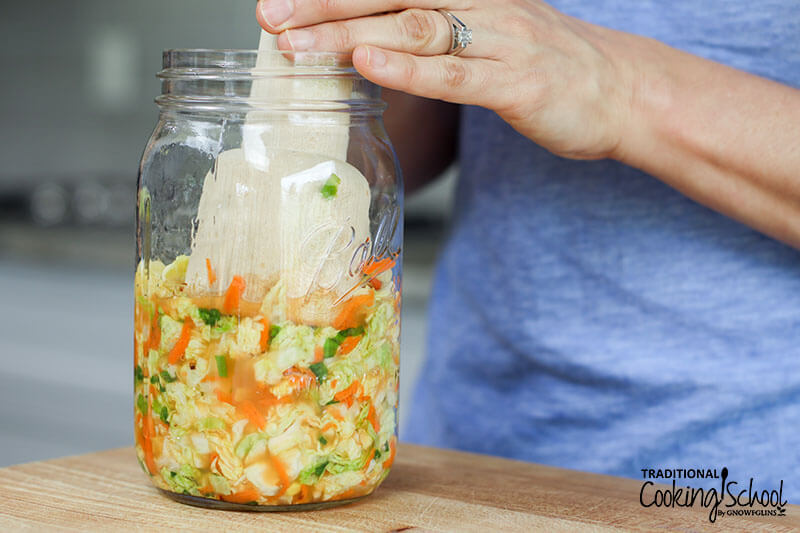
Bonus! 6. Submerge Ferments Completely
In addition to using air-tight containers, it also helps to pack your ferment down beneath the level of the brine. You can do this manually from time to time and/or use fermenting weights. If the ferment is submerged, it is less likely to go moldy.
Troubleshooting Moldy Ferments
Unfortunately, ferments still go moldy from time to time, despite our best efforts. Let’s go over what to do when it happens: is it safe to consume your ferment or should you toss it?
As Shannon, author of Traditionally Fermented Foods, says:
The key is not to panic and to know what to look for. […]
Please don’t freak out and throw out whatever fermented food you found with this stuff on top! Unless you see some of the signs to worry about… it is fine. It is normal for yeast to develop in moist, oxygen-rich environments. Scrape off your vegetable ferment, shake it into your kvass [pictured below] and remove it from your milk kefir or sourdough starter. Mother cultures can be recultured and vegetables can be eaten, so you should rest assured that if everything else looks fine, your ferment does not need to go into the wastebasket.
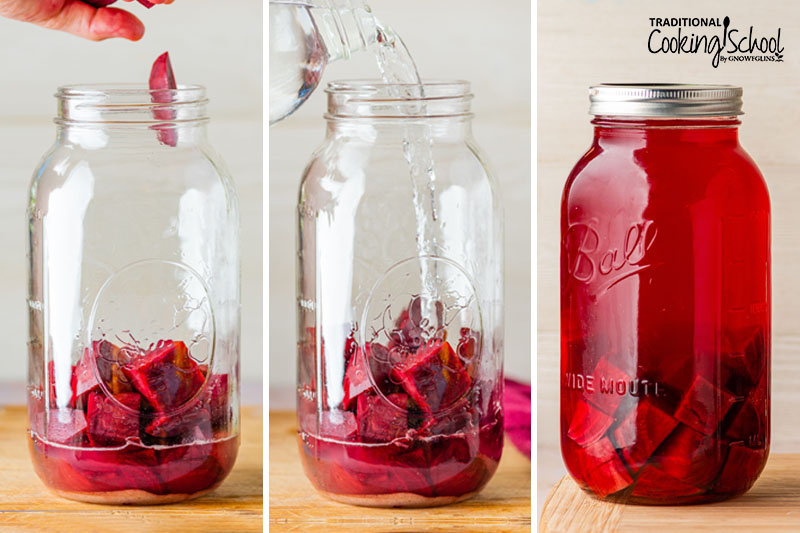
Here is a checklist you can run through if you ever have a question about a ferment:
1. Smell it. The best way to discern the health of any ferment is simply to smell it. It can smell sour, pungent, very fermented and even very yeasty. But it should not smell putrid, rotten or incredibly disgusting. If it does not pass this test, throw it out and start over. If it does, move on to the next item.
2. Check the color of the surface yeast. Is it white*? Then it’s probably fine, but you can do the smell test again. Is there any green, pink, yellow or blue? If so, I’d toss it. Even if it smells okay, this is a deal-breaker for me personally.
3. Taste it. If it smells strongly of tang or yeast, but does not smell rotten, and if it has no crazy colors to it, then it should be fine to taste it. […] It might be extra tangy or yeasty, or it might taste just as a fermented beverage or vegetable should taste. In either case, it is fine to consume. If the taste is too strong, then you may want to add it to the compost pile anyway. If it is a mother culture like milk kefir grains or sourdough starter, scrape off the mold and reculture it in fresh milk or with another feeding of flour and water.
*If the film is white and fairly flat, it is most likely kahm yeast which is a common occurrence and can be skimmed off or shaken in to the ferment.
I love Shannon’s down-to-earth advice. It rings true for me and is exactly how I handle ferments and troubleshooting. (This kind of advice peppers her book, by the way.)
Mold Vs. Other Issues
Mold isn’t the only issue traditional cooks face with their ferments!
If you’ve ever wondered what to do if your ferment is mushy, why your ferment isn’t bubbling, how to tell if your ferment is done, and many more questions… check out my in-depth guide to fermentation troubleshooting.
I answer all of your fermenting FAQs, compiled over years of helping TCS members with their lacto-ferments!
 Traditionally Fermented Foods — Now Available
Some of the tips and information you’ll find in this post come from my good friend (and food chemist) Shannon Stonger of Nourishing Days, from her brand-new, utterly beautiful book Traditionally Fermented Foods.
Shannon’s unpretentious and down-to-earth writing about the beautiful process of fermentation makes it do-able for beginners and oh-so-inspiring for advanced fermenters.
I love all her common sense tips! Only someone who has really had their hands in hundreds of ferments, as Shannon has, would know how to explain “when is it done?” (so you know what you’re looking for) and “what’s safe?” (so you can feel confident in what you make).
Traditionally Fermented Foods is available now at Amazon.com or other booksellers. Click here for more info or to buy now!
Go here to see a sample recipe from Shannon: Gluten-Free Sourdough Dinner Rolls.
Helpful Links:
- What Is Lacto-Fermentation? {Video}
- Old-Fashioned, Crunchy, Garlic-Dill Pickles
- Traditionally Fermented Foods by Shannon Stonger — new book!
- Gluten-Free Sourdough Dinner Rolls — sample recipe from Shannon Stonger
- No-Pound Sauerkraut
- FREE Fermenting Formulas Cheat Sheet
- Lactofermentation 101 Video Series
- Does Sourdough Bread Get Moldy? +Troubleshooting Dense Sourdough Bread #AskWardee 110
- How To Tell If Your Kombucha Is Moldy (And What To Do About It!) #AskWardee 103
- Pickle Pro airlock lids — fit on your mason jars, turning them into relatively air-tight containers
- 3-gallon stoneware crock from Ohio Stoneware — has a water seal to provide oxygen-free fermenting environment
- Real Salt or Himalayan Salt
What do you do if you encounter mold or yeast on your ferments? How do you prevent mold during fermenting?
This post was originally published and written by Wardee Harmon on 5/10/17. It was updated and republished on 5/13/22.


