
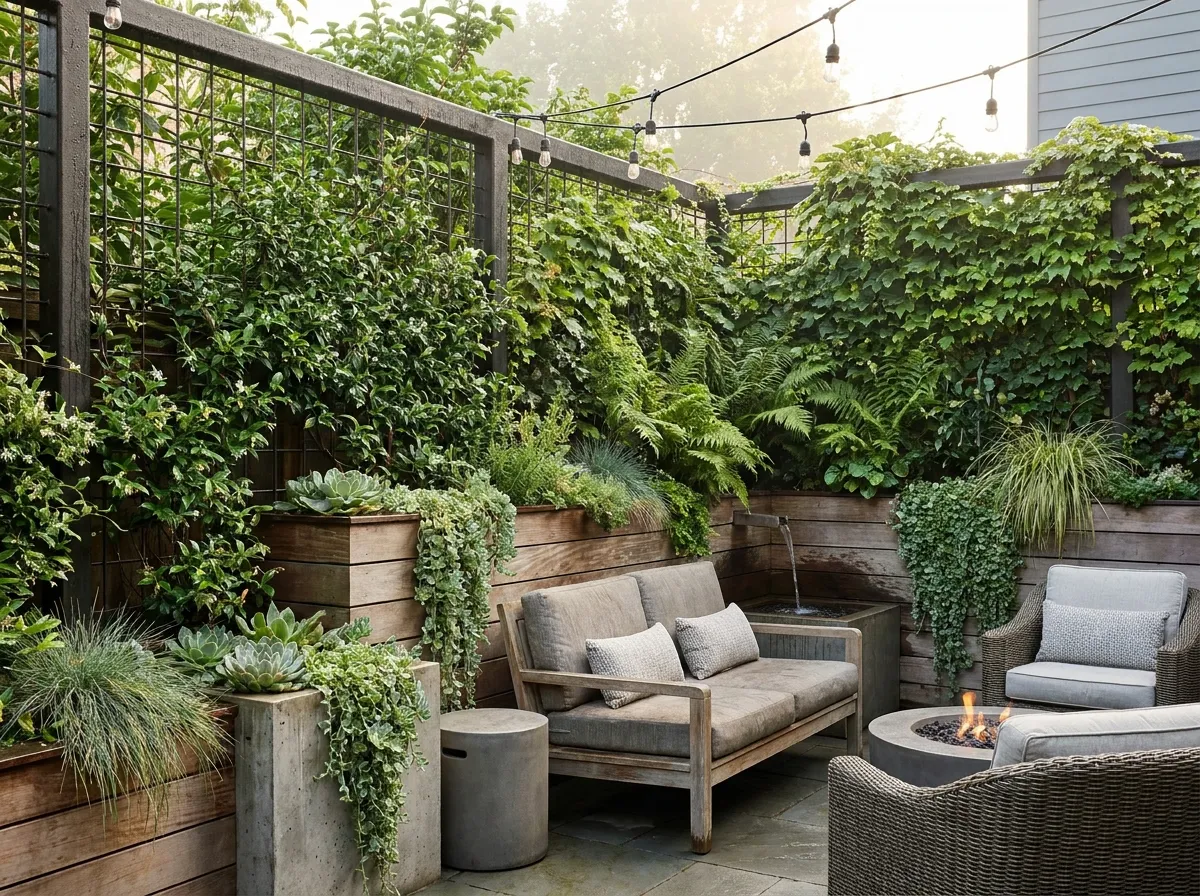
How I Designed It to Look Good in Every Season
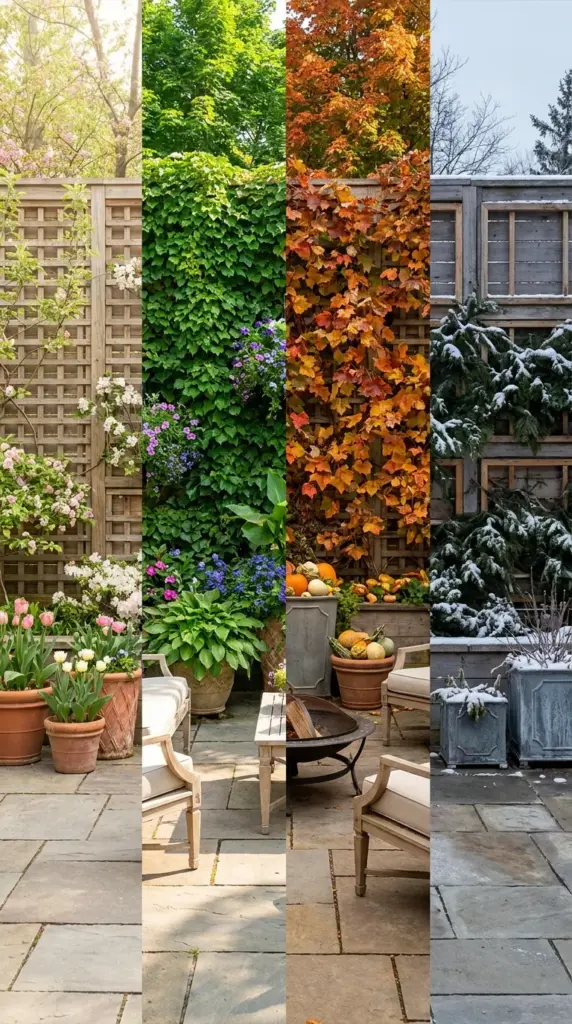
Evergreen bones came first
The backbone of this project was evergreen coverage. Without that, a living fence design can look amazing in July and kind of tragic in January.
I used permanent green structure first, then treated flowering plants like accessories. That helped the wall stay useful year-round.
I layered more than just vines
This was not a one-layer project. I used base planters, vertical supports, and nearby shrubs to create a fuller backyard screening idea.
That layering made the wall look lush faster. It also hid the “teenage phase” where young vines are still figuring themselves out.
I matched the wall to the house and patio
I kept the frame color dark and simple so it would blend with the patio furniture and exterior trim. Then I repeated leaf tones and planter finishes nearby for a more pulled-together look.
That sounds fancy, but really it just means I stopped buying random pots in random moods. Growth, honestly.
Small-space tricks made a big difference
If your yard is tight, use vertical lines, repeated materials, and lighter planting near the edges. A stuffed space feels smaller fast.
I also left breathing room around seating so the wall felt intentional, not like a leafy ambush. The design part was fun, but the build part taught me even more, so hit the next button below.


