
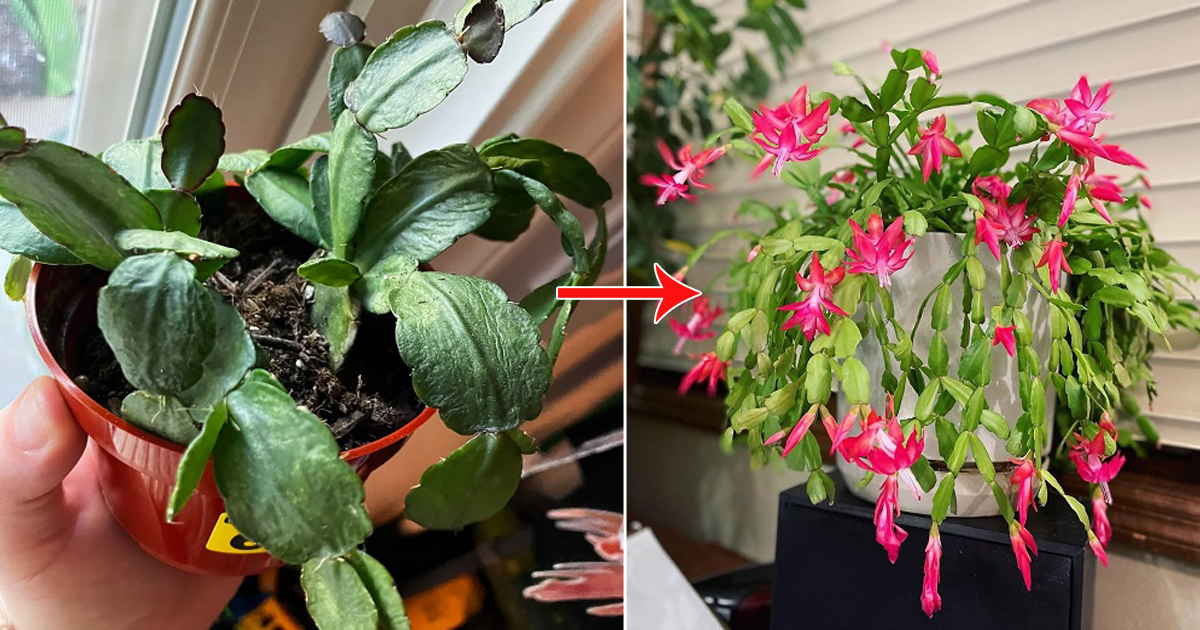
Are shriveled Christmas cactus leaves taking the sheen off your favorite holiday plant? Here are the top reasons and solutions!
Seeing your Christmas cactus leaves go limp and wrinkly can be worrying, especially when you are waiting for those bright blooms to appear. Don’t panic! The problem is fixable. We’ve listed all the main reasons and simple fixes to bring back healthy leaves and flowers.
Shriveled Christmas Cactus Leaves? Reason and Solutions
1. Underwatering Stress

One of the most common culprits behind shriveled leaves in your Christmas cactus is simply thirst. Your Christmas cacti store water in their fleshy leaves, so when they go too long without a drink, the leaves lose their plumpness and start to wrinkle.
This usually happens during the active growing months (spring and summer) or while it is blooming around the winter holidays.
The Fix: Give your plant a thorough soak until water drains out of the bottom of the pot, then let the soil dry slightly before watering again. Also, keep an eye on humidity.
Christmas cacti come from tropical forests, not deserts. They enjoy some humidity and don’t like prolonged dryness like other desert cacti. So place the pot on a pebble tray with water or lightly mist the air around it.
Pro Tip: Use your finger to check the moisture about an inch below the surface; if it feels bone dry, it’s time to water.
2. Overwatering and Root Rot

Too much water can be just as harmful. If the roots sit in wet soil, they rot. Rotten roots cannot send water to the leaves, which then look shriveled even though the soil is damp.
You should always use a pot with drainage holes, as Christmas cacti hate sitting in water. If the damage is already done, here’s what to do!
The Fix: Remove your plant from its pot and inspect the roots. Don’t forget to trim away any black or mushy sections. Then repot into fresh, well-draining cactus soil mixed with perlite or orchid bark for extra aeration.
Remember to hold off on watering until the soil is mostly dry, then resume a more careful watering schedule.
3. Too Much Direct Sunlight

Christmas cacti enjoy bright light, but avoid exposing them to direct sunlight. Too much direct sunlight in summer can dehydrate your plant and cause leaves to shrivel, and you will see them turning reddish or yellowish at the edges.
Solution: Move your plant to a spot with bright, indirect light. An east-facing window with gentle morning sun is perfect, or you can filter harsh afternoon sun with sheer curtains. Within a few weeks, you should see the leaves regain their healthy plumpness.
Pro Tip: Rotate your cactus every couple of weeks so it grows evenly and doesn’t lean toward the light source.
4. Nutrient Deficiency
If your cactus has pale, limp, or wrinkled leaves, it may lack nutrients. Magnesium and potassium are especially important for strong leaves and healthy growth.
The Fix: During the growing season (spring through early fall), feed your plant every 4–6 weeks with a balanced, water-soluble fertilizer diluted to half or one-quarter strength. Once a month, you can also add one teaspoon of Epsom salt (magnesium sulfate) to a quart of water and use it to water the plant.
Pro Tip: Stop fertilizing in late fall, just before bud set. This helps encourage blooming rather than leafy growth.
5. Temperature Stress

Christmas cacti like steady, mild temperatures between 60–70°F (15–21 °C). Sudden heat, cold drafts, or big swings in temperature can make the leaves shrivel. This is common if the pot is near a heater, radiator, or drafty window.
Christ10°Ccacti can generally tolerate temperatures as low as 50°F (10 °C) and as high as 85°F (29°C) easily, but anything outside this range can cause stress and shriveling.
The Fix: Keep your festive houseplant in a stable environment away from heat sources or icy drafts. If your home is very dry in winter, try keeping a small humidifier nearby, which helps keep both the plant and your skin happy.
Pro Tip: If you want to encourage more blooms, keep your cactus in a slightly cooler spot at night in early fall. This mimics natural conditions and promotes bud formation.
6. Pot Size and Soil Issues

The wrong pot or old soil can slowly harm your Christmas cactus. A pot that is too large holds more soil than the roots can use, promotes waterlogging.
On the other hand, a small pot promotes faster growth and flowers, as this plant has shallow roots.
When growing a young Christmas cactus, choose a 4 to 5 inches pot. It gives the roots room to grow without holding too much moisture.
Of course, soil also matters. Old soil compacts over time and loses its air pockets. Without enough air, roots weaken, and leaves start to shrink. Soil that hasn’t been refreshed in years can also run out of nutrients.
The Fix: Repot your cactus every 2–3 years. Choose a pot that is just 1–2 inches wider than the current one. Always use a light, airy mix. Cactus soil blended with perlite, pumice, or orchid bark is perfect.
Pro Tip: Spring is the best season to repot, because the plant is in its active growth stage and recovers faster.
And remember, older leaves can sometimes shrivel naturally as part of aging, so don’t worry if just a few segments look tired while the rest of the plant is healthy.
Just follow the steps above with care and patience. With the right balance of water, light, food, and soil, your Christmas cactus will reward you with firm, glossy leaves and a colorful show of holiday blooms.


