
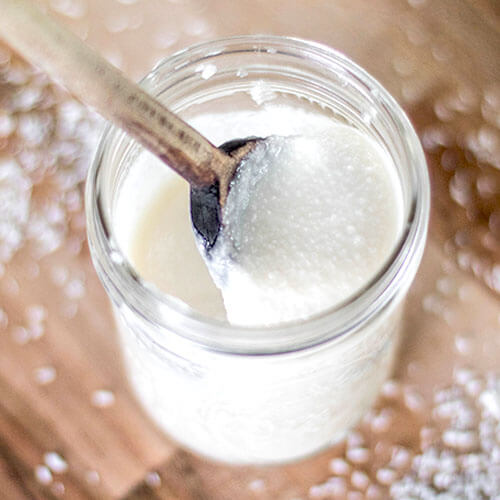
Luscious and highly nutritious, coconut butter is an allergy-friendly twist on grass-fed butter or nut butters! And while you can buy it by the jar, this homemade version is much more economical than store-bought, and just as yummy. Eat it by the spoonful, make a glaze to drizzle over your favorite cakes, or spread on toast!
Table Of Contents
What Is Coconut Butter?
Simply put, coconut butter is made from dried or desiccated coconut that has been blended until smooth and creamy.
It’s dairy-free yet creamy as butter, and nut-free yet highly satiating. This allergy-friendly spread is rich in saturated fats and oh-so-easy to make at home!
You need only 15 minutes of time to spare and a food processor. Plus, the flavor options are endless!
Ingredients
- Unsweetened shredded coconut — This is the ONLY ingredient actually required for this recipe! Shredded coconut, desiccated or dried coconut and coconut flakes may all be used, but not sweetened shredded coconut, which tends to clump instead of turning into a smooth, spreadable butter. Fresh coconut won’t work either as there’s simply too much liquid.
- Coconut oil — Batches of shredded coconut can differ, so use a few tablespoons or so of coconut oil if your particular batch is having trouble getting smooth. Otherwise, feel free to omit.
Supplies Needed For Coconut Butter
- Food processor — Although the timing and results may vary slightly, you may also use a high-speed blender such as the Vitamix or BlendTec.
- Spatula — Use this for scraping down the sides as needed!
Directions
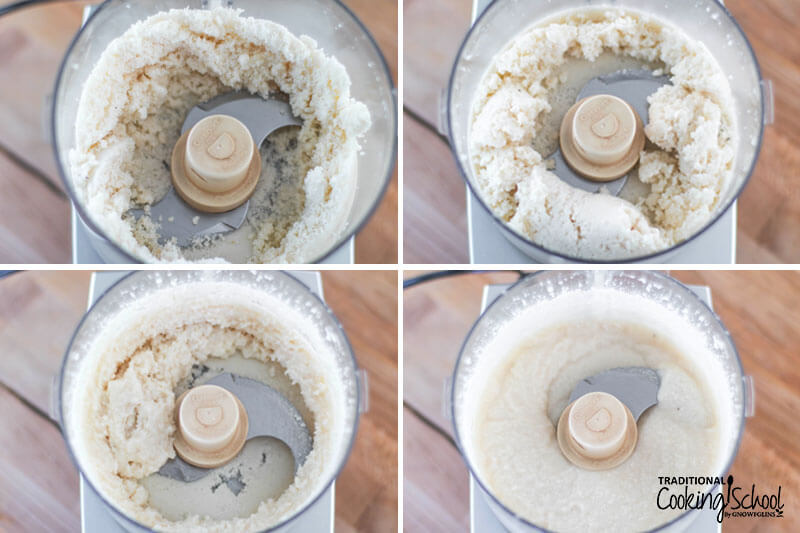
- Place shredded coconut in your food processor.
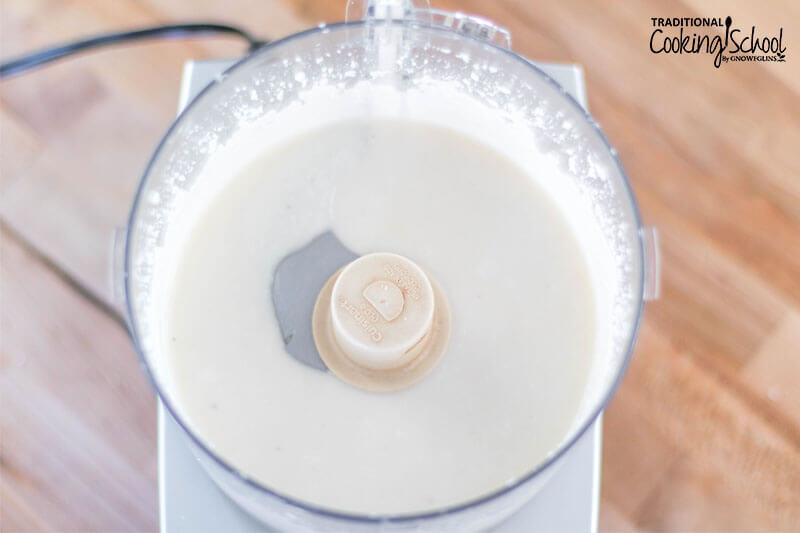
- Cover and blend. The coconut will get crumbly, then slowly become creamy, turn into a thick paste, then finally become a smooth, thick liquid spread. You may use a spatula to scrape down the sides as needed.
- Once smooth, transfer to an air-tight glass jar and keep it in your pantry. It will stay fresh at room temperature for months.
Coconut Butter Flavor Variations
Try flavoring your homemade coconut butter with any of the following combinations of ingredients. Blend them in after the butter has gone smooth yet before you transfer it to a jar.
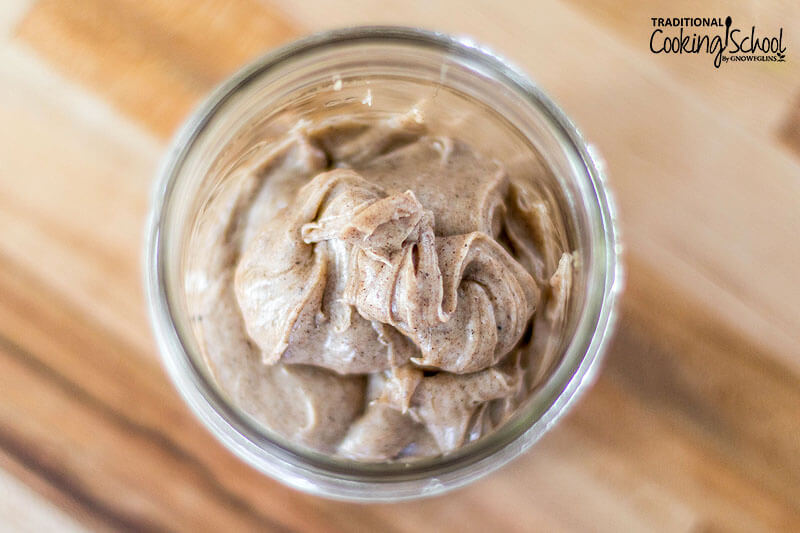
- Spiced Honey — Add 1/2 to 3/4 cup raw honey, 2 teaspoons cinnamon, 1/2 teaspoon ground nutmeg, 1/4 teaspoon allspice, 1/4 teaspoon ground cloves, and 1/2 teaspoon sea salt per 1 cup coconut butter. (pictured below)
- Maple Vanilla — Add 1/2 cup maple syrup and 1 teaspoon vanilla extract per 1 cup coconut butter.
- Chocolate — Add 1/4 cup cocoa powder and 1/2 cup maple syrup or raw honey per 1 cup coconut butter.
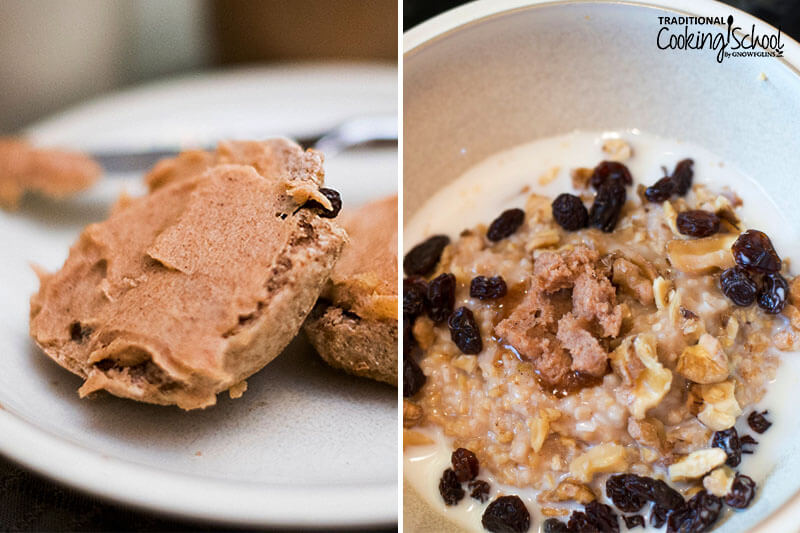
Whichever flavor you choose, spread onto your bread, biscuits, rolls, pancakes, waffles, or anything else that yearns for a welcome new flavor.
For another fun idea, top your hot cereal with it. A simple spoonful of the spread, raisins, chopped walnuts, and whole milk provides for a beautiful, comforting breakfast.
Uses For Coconut Butter
- Eat it by the spoonful!
- Add a dollop on your oatmeal, porridge, or other breakfast cereal.
- Spread on waffles or pancakes.
- Pair with jam and sandwich bread for a new take on the classic peanut butter and jelly.
- Make a vanilla or chocolate glaze to drizzle over our pumpkin spice coffee cake.
- Use it in grain-free cake pops!
- Indulge in no-bake salted caramel cookie dough bites!
- Make white chocolate candies.
- Use it in chocolate chip breakfast cookies.
- Or… make homemade fudge!
Coconut Butter FAQs
Is there a difference between coconut oil and coconut butter?
Yes! Coconut oil is the oil pressed or extracted from whole coconuts.
Also known as coconut manna, coconut butter is made by pureeing shredded coconut, which is coconut meat that has been dried and shredded. It contains some oil, and also fiber from the coconut meat.
Similarly, coconut milk and coconut cream are also different.
My coconut butter isn’t turning smooth and buttery. What should I do?
If you are blending your coconut butter and it doesn’t seem to be going smooth, feel free to add coconut oil, a tablespoon at a time until it does.
My coconut butter has gone hard. What should I do?
Depending on climate and temperature, this can happen. Place the jar in a bowl of hot water for 5 to 10 minutes until it softens.
My coconut butter is too dry. What should I do?
As mentioned above, you may stir in a tablespoon or two of melted coconut oil until it reaches your desired consistency.
Did you make this homemade coconut butter recipe? If so, please give us a rating on the recipe card below. Then snap a photo and tag us on social media so we can see which flavor variation you chose!
Homemade Coconut Butter
Luscious and highly nutritious, coconut butter is an allergy-friendly twist on grass-fed butter or nut butters! And while you can buy it by the jar, this homemade version is much more economical than store-bought, and just as yummy. Eat it by the spoonful, make a glaze to drizzle over your favorite cakes, or spread on toast! Makes about 1 to 1-1/4 cups.
Ingredients
-
4
cups
unsweetened shredded coconut
Instructions
-
Place shredded coconut in your food processor.
-
Cover and blend. The coconut will slowly get creamy, then quickly get smooth and turn into a thick liquid. You may use a spatula to scrape down the sides as needed.
-
Transfer to an air-tight glass jar. Keeps at room temperature for a long time.
Recipe Notes
Try flavoring your homemade coconut butter with any of the following combinations of ingredients. Blend them in after the butter has gone smooth yet before you transfer it to a jar.
- Spiced Honey — Add 1/2 to 3/4 cup raw honey, 2 teaspoons cinnamon, 1/2 teaspoon ground nutmeg, 1/4 teaspoon allspice, 1/4 teaspoon ground cloves, and 1/2 teaspoon sea salt per 1 cup coconut butter.
- Maple Vanilla — Add 1/2 cup maple syrup and 1 teaspoon vanilla extract per 1 cup coconut butter.
- Chocolate — Add 1/4 cup cocoa powder and 1/2 cup maple syrup or raw honey per 1 cup coconut butter.
Calories from Fat 108
This post was originally published and written by Jenna Ettlich on 4/2/14. It was updated and republished on 3/31/21.


