
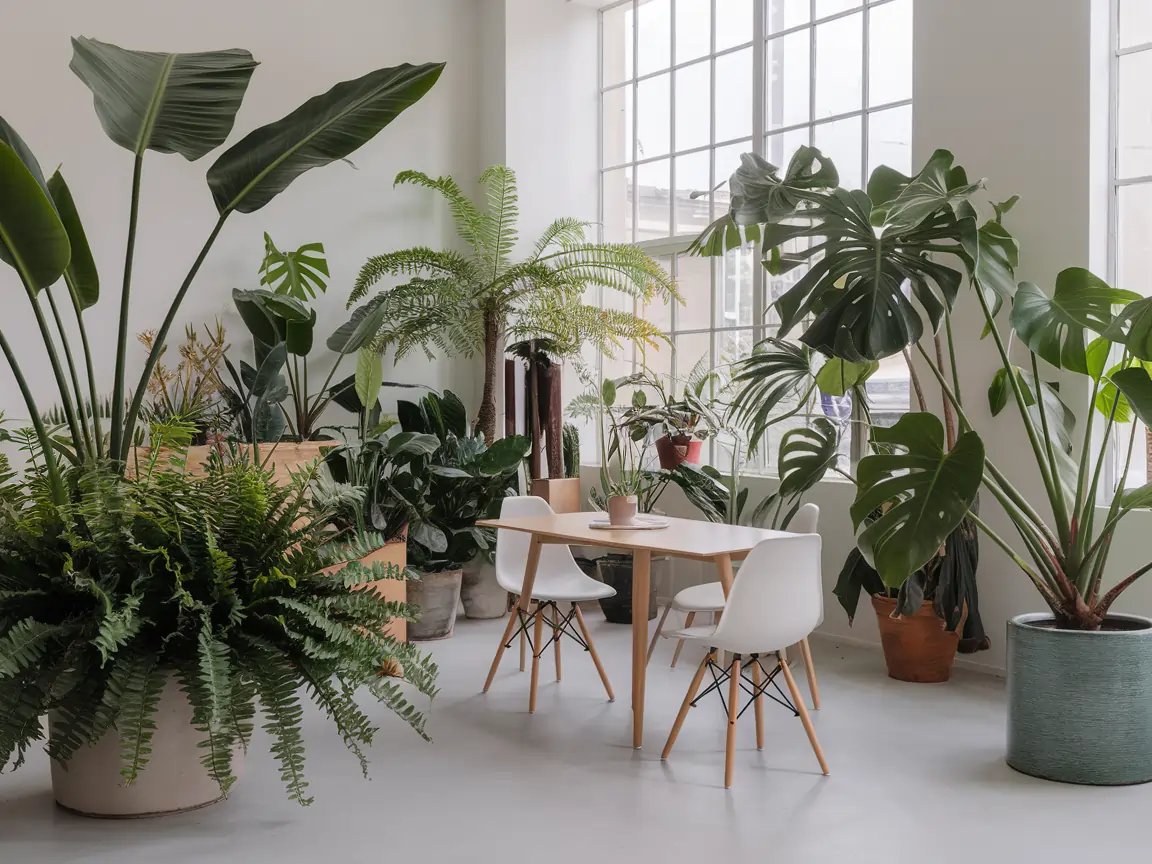
4. Kentia Palm (Howea Forsteriana): The Elegant Aristocrat
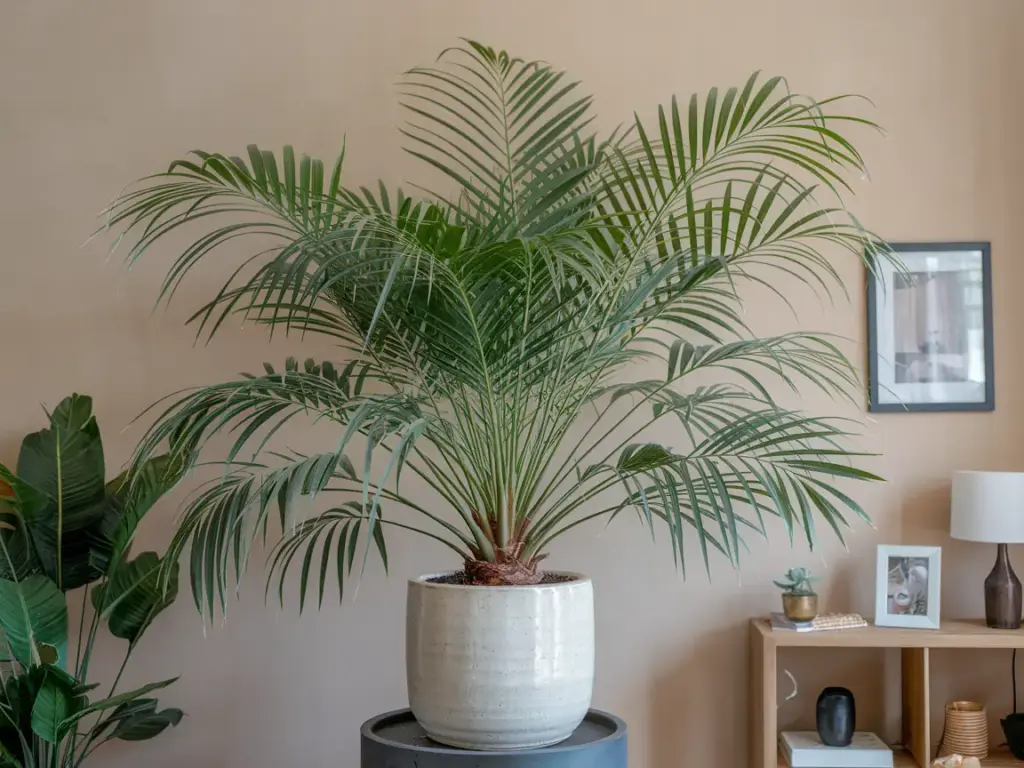
Let me introduce you to what I consider the crown jewel of indoor palms. The Kentia Palm has been my go-to recommendation for anyone wanting to add a touch of sophistication to their space. After maintaining these beauties in both my home and office for over a decade, I can tell you they’re surprisingly easy to grow once you understand their basic needs.
The Perfect Indoor Palm
There’s a reason why Kentia Palms are the preferred choice in luxury hotels – they’re incredibly adaptable and maintain their elegant appearance with minimal fuss. Mine started as a modest 4-footer and has grown into a majestic 8-foot specimen that makes my living room feel like a five-star lobby.
Light Requirements and Placement
Here’s what makes Kentias truly special – they’re one of the few palms that actually thrive in normal indoor lighting. Through my experience, I’ve found the perfect spot is about 6-8 feet from a bright window. Don’t worry if you don’t have the brightest space; these adaptable palms can handle moderate light conditions without throwing a fit.
Watering Wisdom
Let me share my tried-and-true watering technique:
- Use the knuckle test – water when soil is dry to second knuckle
- Ensure pot has excellent drainage
- Use filtered water if possible (they’re sensitive to fluoride)
- Reduce watering by 50% during winter months
- Watch for brown tips as signs of improper watering
Creating the Perfect Environment
The secret to a thriving Kentia lies in these environmental factors:
- Maintain temperatures between 65-75°F
- Provide moderate humidity (40-50%)
- Protect from cold drafts and AC vents
- Place on a humidity tray filled with pebbles
- Keep away from heating vents during winter
Growth and Development
One thing I love about Kentias is their steady, predictable growth. Unlike some faster-growing palms, Kentias take their time, typically adding 2-3 new fronds per year. This slow growth means:
- Less frequent repotting needed
- More stable, established appearance
- Lower maintenance requirements
- Better longevity indoors
Professional Maintenance Tips
Through years of caring for these palms, I’ve developed some foolproof maintenance strategies:
- Dust fronds monthly with a damp cloth
- Remove any yellow or brown fronds at the base
- Rotate pot quarterly for even growth
- Never pull off partially brown fronds – trim just the brown parts
Pro tip: Want to keep those fronds glossy? I mist mine with filtered water every few days and wipe with a microfiber cloth monthly. The results are stunning!
Troubleshooting Common Issues
Even these hardy palms can have occasional issues. Here’s what I’ve learned:
- Yellow fronds usually indicate overwatering
- Brown tips often mean low humidity
- Pale leaves suggest too much direct sun
- Slow growth is normal and healthy
Ready to discover an even more resilient plant? Click next to learn about the ZZ Plant, the ultimate survivor that I like to call “the plant that refused to die.” Wait until you hear about how my ZZ Plant thrived in my windowless bathroom for two years – and actually grew bigger! Plus, I’ll share my secret technique for propagating these beauties that works every single time.


