
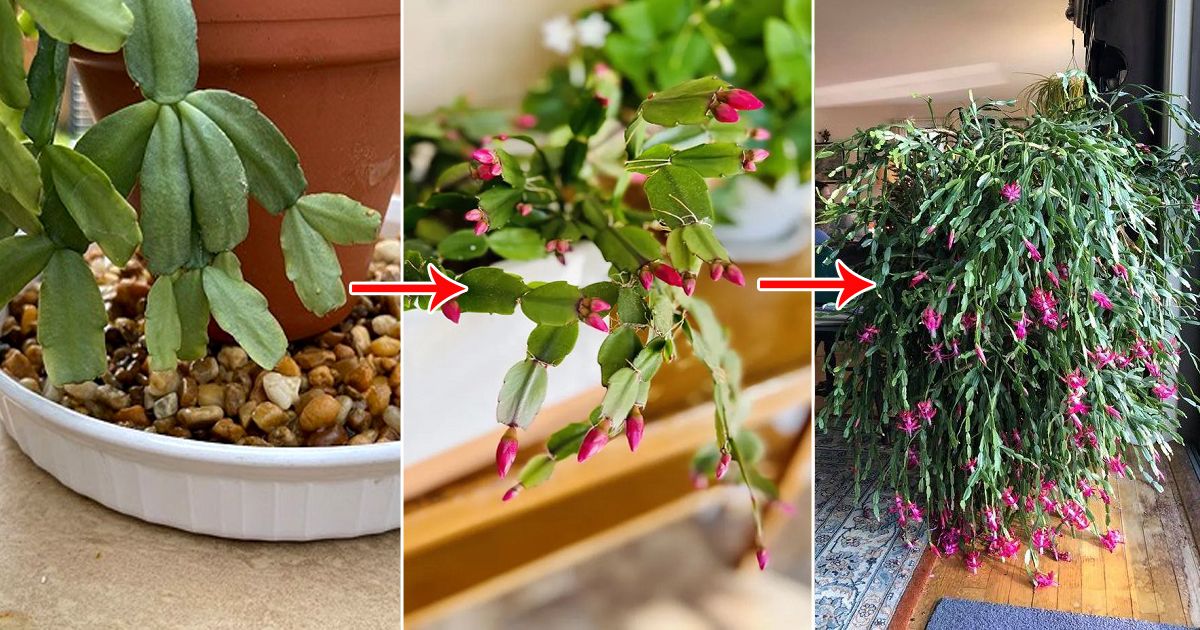
Here is what to do with your Christmas cactus in October to encourage healthy growth and prepare it for stunning holiday blooms!

October is the month when your Christmas cactus quietly gears up for its big winter show. This is when the plant starts to shift its energy from leafy growth to bloom preparation.
The way you care for it this month determines the size, color, and number of flowers it produces later. So here are simple but important steps to help your plant bloom beautifully in time for the holidays.
What to Do With Christmas Cactus in October
1. Bud Formation and Period of Darkness

By the end of October, your Christmas cactus begins to wake up from its resting phase and prepares for blooming. You may notice tiny buds forming along the stem tips if you’ve been keeping up with the right light and watering schedule. This is the plant’s most sensitive stage!
You may not see bud formation if you have skipped or missed the dark period in September; if so, don’t worry! You can still start the 12–14 hours of uninterrupted darkness routine at the beginning of October, and it will help initiate bud formation, though the bloom timeline might shift slightly.
If you do so, keep providing 12–14 hours of complete darkness every night for 5-6 weeks. Cover it with a light cloth or place it in a dark corner during those hours. Even just a few minutes of artificial light can interrupt its bud formation, so keep those away as well.
Pro Tip: Maintain steady humidity and keep the air slightly cool, around 60 °F (15 °C). This mimics the cactus’s native mountain habitat and helps buds mature evenly without drying out.
2. Use Epsom Salt for Bud Strength

One time this month, mix half a teaspoon of Epsom salt (magnesium sulfate) in a liter of water and use it instead of regular watering.
Magnesium supports chlorophyll production and helps in bud formation, which is why October is a good month to do that.
Also, it will give your Christmas cacti a subtle boost and help them grow better. Remember, not more than once, and of course, in a diluted dose.
3. Keep It Slightly Thirsty

Yes, you read that right! October watering is about control, not generosity. Your cactus still needs hydration, but overwatering now can trigger root rot and bud drop. You should wait until the top inch of soil feels dry before watering again.
As days get cooler, the plant’s saturation needs drop naturally. You’ll probably find yourself watering it deeply 2-3 times in the whole month. While doing this, avoid letting the soil go bone dry, as that can stress the roots and delay blooming too.
Pro Tip: If you tend to overwater, get a simple moisture meter. It’s inexpensive and helps you learn your plant’s rhythm. Also, make sure your pot has drainage holes; soggy roots are the quickest way to lose your buds.
4. Maintain Consistent Temperatures

Christmas cacti love steady, predictable conditions in October. Keep them in rooms where daytime temperatures stay around 60–70 F (15–21 C) and nights dip slightly cooler to 50–55 F (10–13 C). These mild nighttime drops are what actually trigger blooming, along with a fixed period of darkness
Avoid placing the plant near heaters, vents, or cold windows. Sudden shifts confuse the plant’s internal clock and may cause bud loss. If you have just brought it indoors, let it adjust for a week before making any changes.
Cooler nights also make bloom colors richer. You’ll notice deeper reds, pinks, and purples when the plant experiences that gentle temperature contrast.
5. Mildly Root-Bound Plant Blooms Better

Christmas cacti naturally grow in tight spaces. In the wild, they cling to rocks or tree crevices with roots that are snug but healthy.
When their roots have a little restriction, the plant senses that it can’t keep expanding vegetatively, so it shifts its energy toward upper growth and reproduction. Basically, it focuses on flowering instead of producing lots of new leaves.
Here’s a small checklist you should remember:
- Don’t repot in October: If you disturb the roots now, the plant may interpret it as stress and skip blooming this year.
- Slightly crowded roots are okay: A pot that isn’t oversized, where the roots fill it but aren’t overfilling, actually encourages bigger, more abundant blooms.
So, instead of thinking “bigger pot = healthier plant” at this stage, think “slightly snug = more blooms.” This is one of those counterintuitive tips that makes a noticeable difference in flowering quality.
6. Don’t Move the Christmas Cactus Around in October

Once buds appear after late October, resist the urge to shift or turn your plant. A Christmas cactus remembers its light direction and surroundings. A small move could also disrupt its orientation and cause buds to fall.
After the dark phase has been successfully completed and the plant has registered its flowering signals, keeping it in one fixed spot becomes even more crucial. Any movement now can stress the developing buds and risk flower drop.
Do this: find a stable, comfortable spot with bright indirect light and leave it there until after it finishes blooming. If you must move it, mark the side facing the window so it goes back exactly as before.
7. Make Sure the Humidity is Just Right

Indoor air in October starts to get drier as we start to switch on the heating systems. And this plant prefers a humidity level around 50–60%, which keeps buds plump and prevents edges from shriveling.
To maintain that, you can place a pebble tray with water under the pot. But don’t let the pot sit directly in water, or the roots may soak the water.
Also, misting at night can encourage fungal spots on leaves, so don’t do it during those hours. We suggest grouping your cactus with other houseplants, which can naturally create a mini humid microclimate.
Pro Tip: While using a humidifier is the best idea, placing a small bowl of water near the plant (whether when you keep it in a dark cupboard in night or on a bright windowsill in the morning) is also an option. As water evaporates, it naturally moistens the air around the plant.
8. Skip the Fertilizer

This one surprises many new growers, but October is the “no-feeding time.” During this month, your Christmas cactus is focused on bud formation, not growing vegetatively, and any fertilizer can push it back into foliage growth instead. You should stop all feeding until after it blooms.
Allow it to rely on stored nutrients to form strong buds and vivid flowers. Once the blooming period is over (around January or February), you can restart a mild feeding routine to encourage fresh growth.
Follow these simple October care steps, and your plant will reward you with dazzling blooms that will make the holiday season even brighter.


