
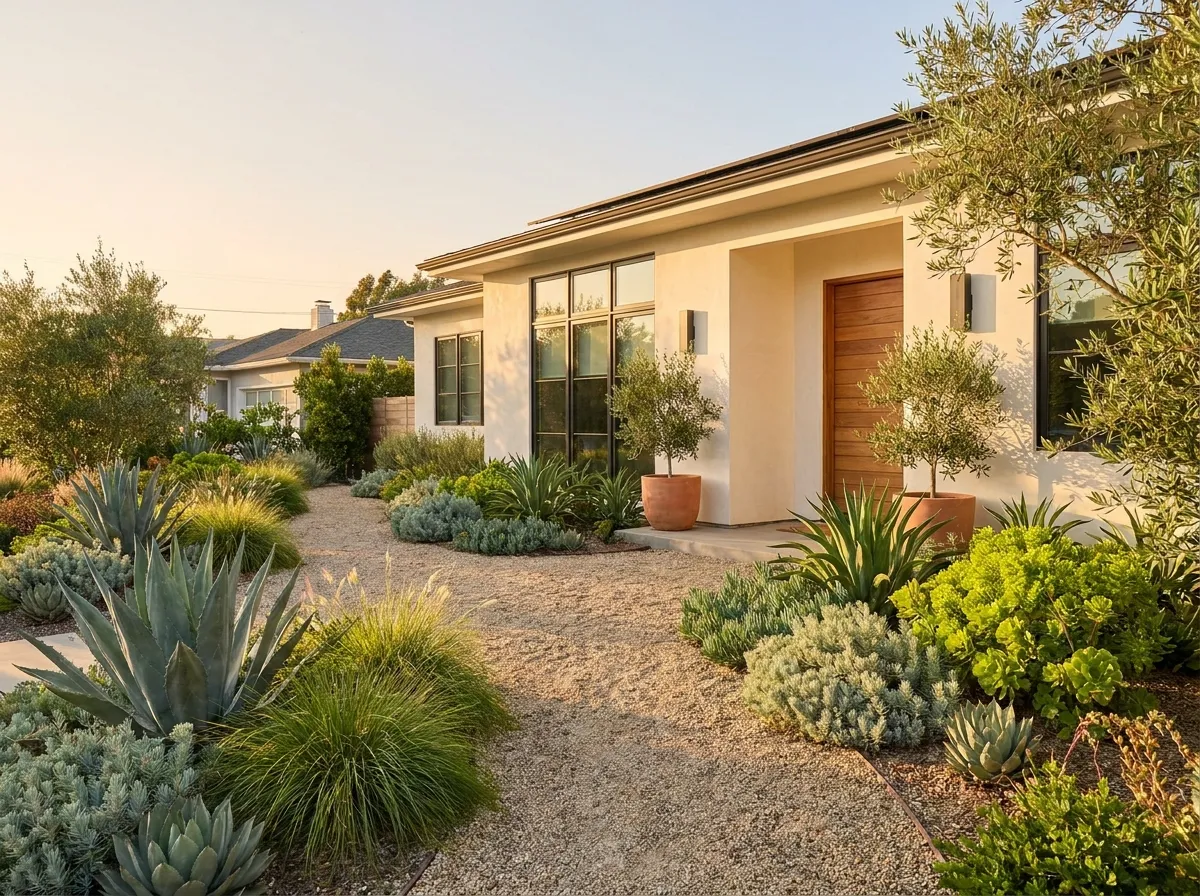
Did you know your green lawn is probably drinking more water than a family of four uses indoors all summer long?
Today, I am showing you exactly how to flip your yard into a gorgeous, drought-tolerant landscape by assessing your soil, mapping a killer low-water design, and hunting down cheap native plants.
Then, we will tackle DIY soil prep and smart drip irrigation tweaks before the 2026 summer heat slams us.
Most people skip this because they assume xeriscaping means spending thousands on pros or turning their lush yard into a boring, prickly desert.
But the secret to a high-end, water-saving oasis actually involves a few bizarre, zero-dollar community hacks that most local nurseries desperately hope you never discover.
Don’t worry, because this quick guide gives you the precise, fluff-free blueprint to save your wallet and beat the heat instantly.
Assessing Your Current Yard and Setting a Realistic Budget

Years ago, I bought a trunk full of gorgeous, pricey lavender, threw them into a soggy, clay-heavy corner of my yard, and watched them rot within a week. Talk about a painful lesson in burning cash!
It taught me that you absolutely must understand your yard’s unique personality before spending a single dollar.
Testing Your Dirt and Sun Exposure
First, grab a notebook and track your sun exposure at 9 AM, noon, and 4 PM to see where the heat really bakes.
You also need to test your soil type by filling a mason jar halfway with dirt, adding water, shaking it up, and watching how fast it settles. If it stays muddy for hours, you have heavy clay, which traps water and rots drought-tolerant plants.
Keep an eye out for drainage pain points where puddles love to sit after a heavy storm, too.
Budgeting and Scoring Free Materials
Do not try to fix the whole yard at once, or your wallet will scream. Set a strict financial boundary—even just $300—and focus strictly on high-impact areas like your front walkway.
To save big, call local tree trimming companies and ask for a chip drop; they will often dump a mountain of free mulch right in your driveway to avoid landfill fees.
You can also scour online neighborhood groups for folks giving away leftover river rock, pavers, or bricks for absolutely nothing.
Now that we know your yard’s quirks and scored some freebies, it is time to map out a killer layout that looks like a million bucks. Hit that next button below because we are diving straight into high-end design hacks on a dime!


