
Your Step-by-Step Implementation Guide to Companion Planting Success
Let me tell you something – when I first started companion planting in my raised beds, I was completely overwhelmed! I remember staring at my empty raised beds, clutching a handful of seed packets, and wondering where to even begin. After years of trial and error (and plenty of face-palm moments), I’ve developed a foolproof system that I’m excited to share with you.
Essential Getting Started Checklist
Before you dive in, let’s make sure you’ve got all your ducks in a row. Trust me, this checklist has saved me from countless headaches! Here’s what you’ll need:
- Soil testing kit (I learned this one the hard way!)
- Garden planning grid paper or a digital planning app
- Companion planting chart (I’ll share my favorite below)
- Quality seeds from reliable sources
- Basic gardening tools (trowel, pruners, gloves)
- Plant markers (you’ll thank me later)
- Organic compost or fertilizer
- Mulching materials
Raised Bed Preparation Steps
Getting your raised beds ready is crucial for successful companion planting. I once skipped proper preparation and ended up with a bed full of struggling plants – never again! Here’s my tried-and-true process:
- Clear existing vegetation and debris from your bed
- Test your soil pH and amend accordingly
- Add a 2-inch layer of organic compost
- Gently work the compost into the top 6 inches of soil
- Level the soil surface while leaving it loose
- Pre-moisten the soil thoroughly
Seasonal Planting Timeline
One of the biggest game-changers in my gardening journey was following a proper planting timeline. Here’s what works best in most climate zones:
Early Spring (March-April)
- Plant cool-season companions like peas and lettuce
- Start onion and carrot combinations
Late Spring (May)
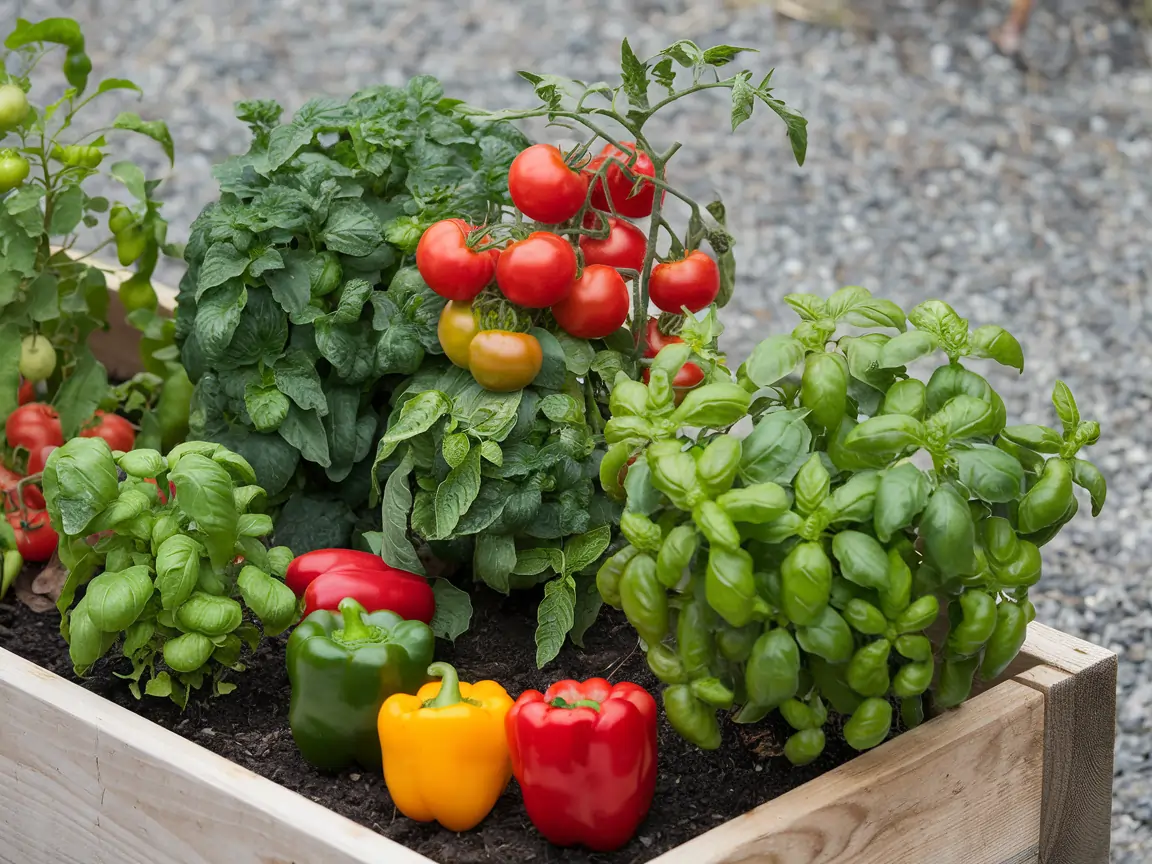
- Introduce tomato and basil partnerships
- Plant cucumber and dill combinations
Summer (June-July)
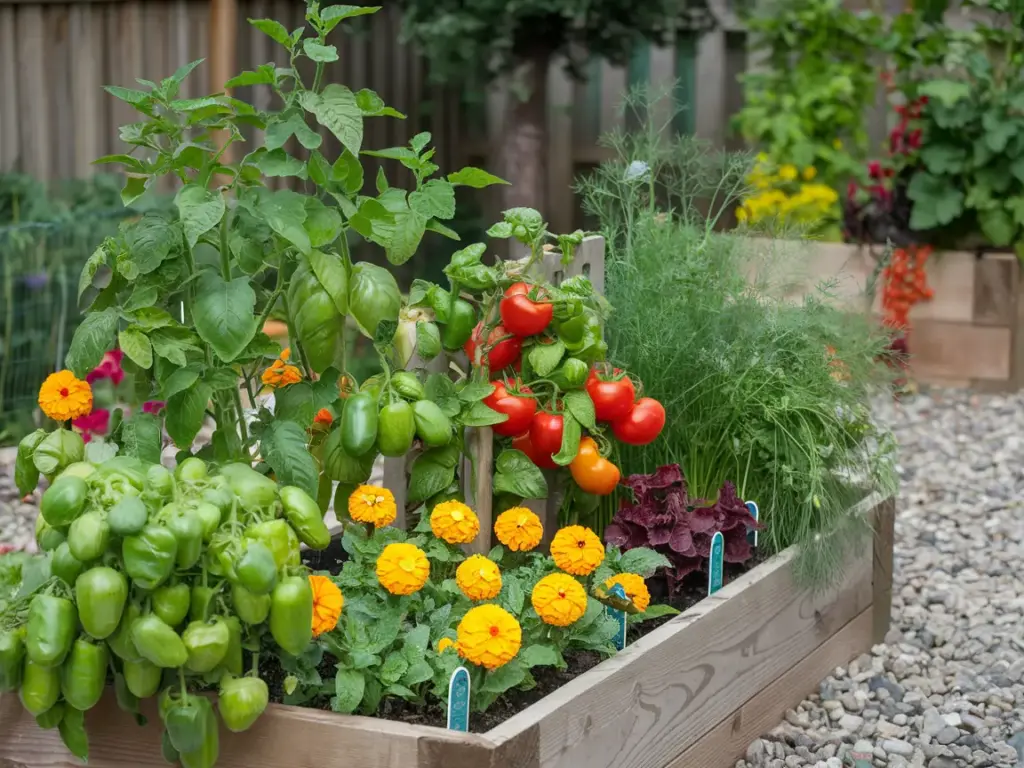
- Add heat-loving companions like peppers and marigolds
- Start succession planting of compatible herbs
Monthly Maintenance Schedule
I’ve learned that consistent maintenance is key to successful companion planting. Here’s my monthly routine:
Week 1:
- Check plant spacing
- Monitor for pest issues
- Add support structures as needed
Week 2:
- Prune companion herbs
- Check soil moisture
- Remove any failing plants
Week 3:
- Add organic fertilizer if needed
- Monitor plant relationships
- Harvest mature crops
Week 4:
- Plan next month’s companions
- Check for disease issues
- Maintain pathways between beds
Troubleshooting Common Issues
Let me share some solutions to problems I’ve encountered over the years:
Overcrowding: If plants are competing for space, don’t be afraid to thin them out. I know it feels wrong to pull out perfectly good plants, but trust me – your garden will thank you.
Nutrient Competition: When you notice yellowing leaves, it might be time to supplement with organic fertilizer. I’ve had great success with compost tea applications every two weeks.
Pest Problems: If you spot pest issues, first check if your companion plants are properly spaced. Sometimes, just adjusting the proximity of pest-deterrent companions like marigolds or nasturtiums can make a world of difference.
Conclusion
Transform your raised bed garden into a productive paradise with these perfect plant partnerships! Remember, successful companion planting is like orchestrating a garden symphony – each plant plays its unique role. Start with one or two proven combinations and watch your garden thrive. Ready to experiment? Your perfect pairs are waiting to grow!


