
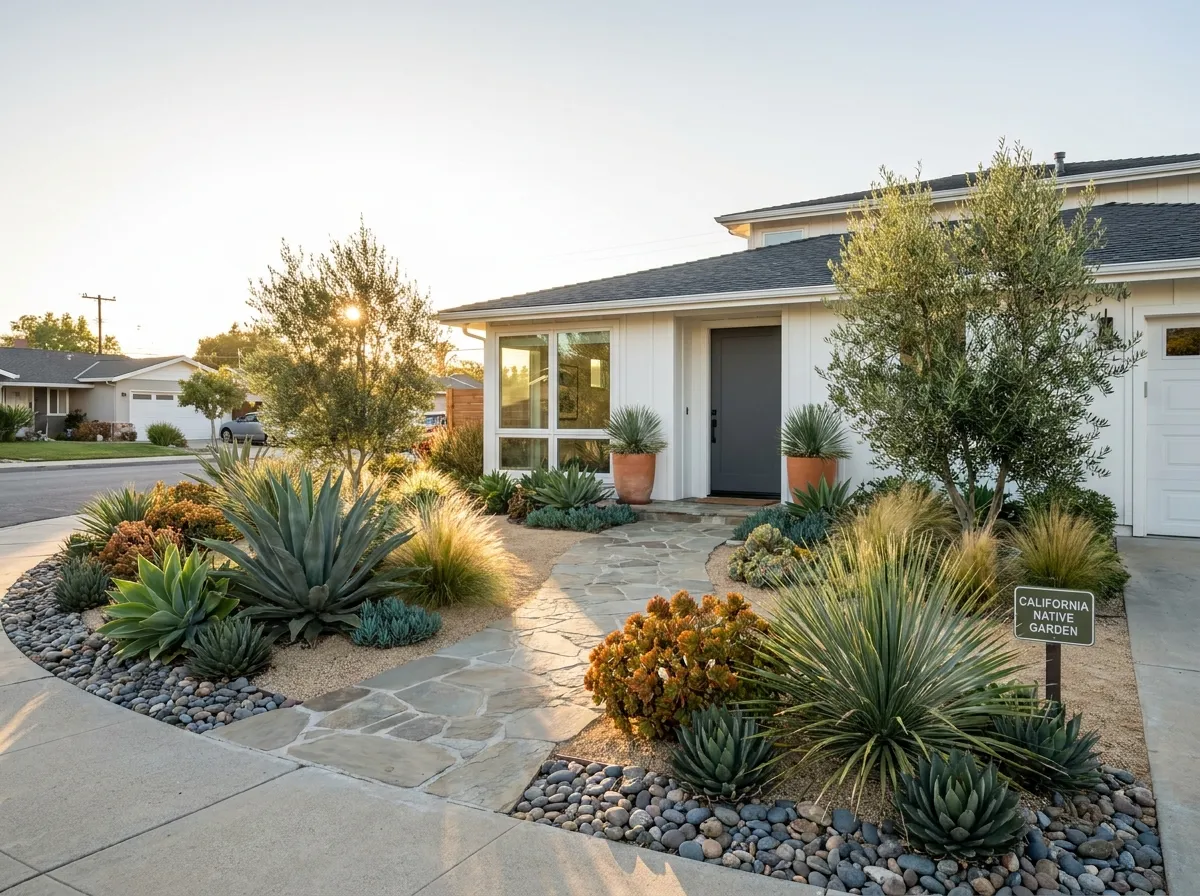
I still remember the summer my front yard looked exactly like a crunchy, sad brown welcome mat. My neighbor actually left a polite note asking if my lawn mower was broken!
Talk about a total gut punch for someone who literally teaches people how to grow things for a living. I knew I had to pivot fast to fix my dead curb appeal.
Here is the wild truth: a beautifully well-executed landscape can boost your home’s value by up to 12 percent. Yet, standard grass lawns swallow nearly 30 percent of residential water use.
That is a massive waste of cash, especially with the strict watering limits we are navigating in 2026.
Most people think a low-water yard means turning their property into a boring, depressing desert of flat grey gravel. Trust me, it does not have to be an aesthetic compromise at all.
Today, we are breaking down five unexpected, high-design DIY drought tolerant landscape fixes that bring instant texture and life back to your space. Let’s rescue your front yard together before the weekend hits!
Fix 1: The “Spill” Illusion with Gravel Dry Creeks
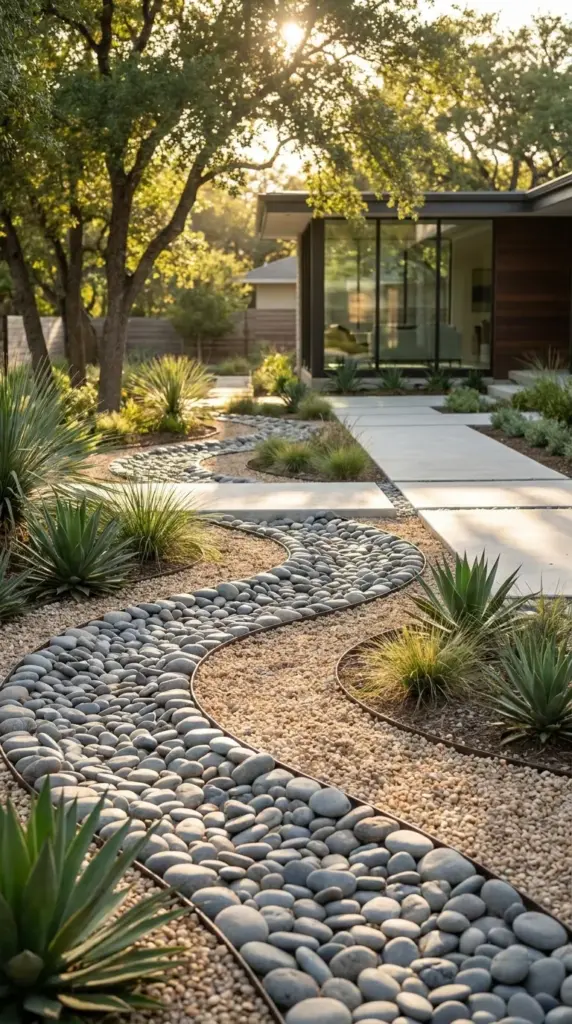
I remember my first attempt at using stone in a front yard landscaping layout. I just dumped a bunch of random white gravel in a straight line, and honestly, it looked like a mini runway for aliens.
It lacked life, movement, and any shred of real design. That is when I learned the magic of creating a winding dry creek bed to instantly save a flat, boring space.
Mimicking Natural Water Lines
The secret to a gorgeous gravel garden feature is curving the path to mimic how water actually flows through nature.
Instead of digging a straight ditch, use a flexible garden hose to lay out organic, winding S-curves across your property.
This clever design trick tricks the human eye into seeing fluid movement and immediate visual depth, even during a massive heatwave.
Just make sure the center of your dry creek is the deepest point, sloping gently upward toward the outer edges.
Layering Scales and Accent Plants
To make it look professionally installed, you absolutely cannot just use one single size of stone.
Mix large river rocks for the outer borders, medium decorative stones for structure, and fine pea gravel to fill the tiny gaps.
Then, tuck a few drought resistant plants right along the banks—like structural agave plants or tufts of ornamental grasses.
This intense contrast between rugged stone and soft foliage gives your diy garden projects that high-end look without needing constant watering.
Once you have your dry creek winding beautifully through the yard, you will need to fill out the surrounding soil with the perfect pops of low-water color, so go ahead and hit that next button below to see how mass planting can completely transform your color game.


