

How Mosquitoes Really Find You
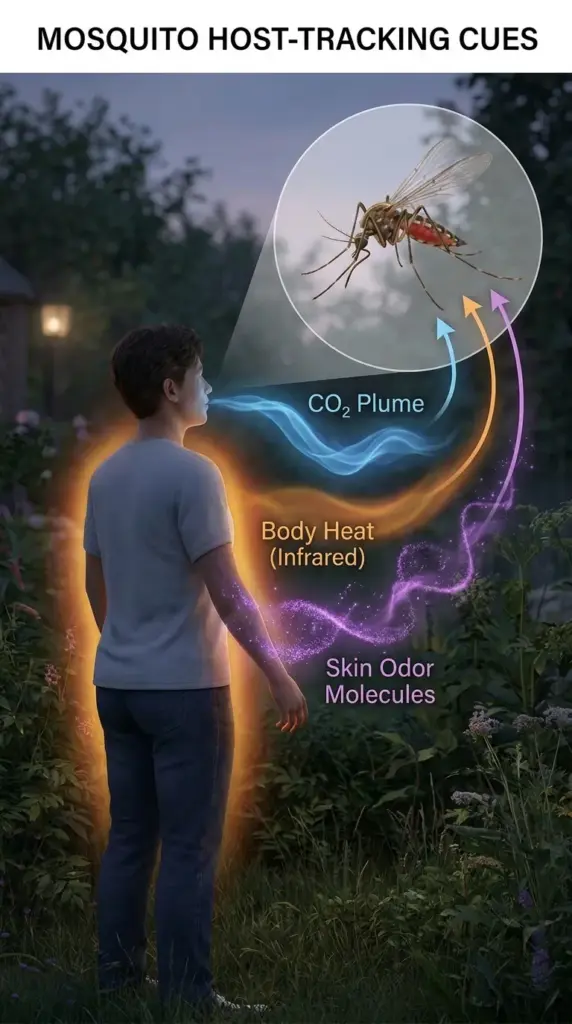
They don’t just “smell” you
Mosquitoes use a mix of cues, especially carbon dioxide and mosquitoes-related tracking, body heat, moisture, and skin odors. They are basically tiny flying heat-seeking, breath-detecting pests.
That’s why a random smell in the air usually won’t overpower all the signals your body gives off. Your exhale alone is a giant “here I am” sign.
Why some people get bitten more
Some people really do seem more attractive to mosquitoes. Genetics, skin microbes, sweat chemistry, body heat, and activity level can all affect human scent and mosquitoes interactions.
I’m one of those unlucky people. If I’m outside with friends, I’m often the buffet, and it is deeply rude.
Different mosquitoes act differently
Not all mosquitoes behave the same. Aedes aegypti and the Asian tiger mosquito are aggressive biters and often active in daytime or around dawn and dusk.
Other species may be more active at night or near standing water. So a hack that “worked” in one place may totally flop somewhere else.
Behavior matters more than internet folklore
If you don’t understand mosquito attractants, it’s easy to give credit to the wrong thing. Wind, temperature, clothing, and timing can change bite pressure fast.
Once you know that, you stop asking, “Did the dryer sheet smell strong?” and start asking, “Did it actually block the signals mosquitoes use?” Hit the next button below, because that’s where the science gets interesting.


