
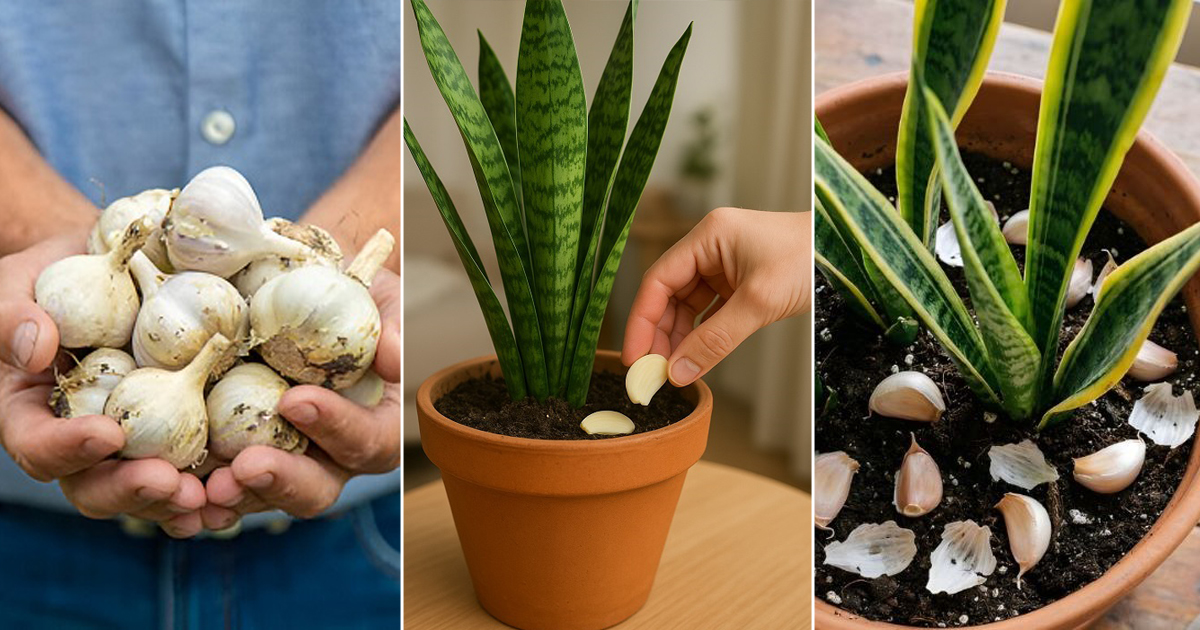
Not using garlic on snake plants? Here’s what garlic can and cannot do, how to use it safely, and the mistakes to avoid!

Snake plants have a reputation for being nearly impossible to kill. Because they are so tough, many plant owners assume they can handle almost anything. Unfortunately, that is not always true. But where does using garlic on snake plants come in? Can it solve plant problems, or is it just another gardening myth? Here’s everything you need to know!
What Garlic Does to a Snake Plant

First things first. Garlic contains sulfur-based compounds, including one called allicin. Allicin forms when fresh garlic is crushed, chopped, or damaged. This compound is the reason garlic has such a strong smell, and it is also why gardeners have been interested in garlic for decades.
Research has shown that garlic extracts have antifungal and antimicrobial properties. In simple terms, the compounds in garlic make it harder for fungi and microbes to grow.
Because of these properties, some gardeners use garlic sprays to help discourage soft-bodied pests such as aphids and mealybugs, although results can vary
It is important to understand what garlic does not do. Garlic will not make a snake plant grow faster. It will not fix poor lighting. And it will definitely not bring a dying plant back to life.
Signs Garlic May Be Worth Trying
Garlic is not something a snake plant needs as part of regular care. So how do you know when your plant needs it? Look out for these signs.
- You notice a small number of soft-bodied pests on the leaves.
- There are minor leaf issues that may be linked to microbial activity.
- You are dealing with occasional fungus gnats and are already correcting overwatering habits.
Note: Before reaching for garlic, check your watering routine. Most snake plant problems are caused by excess moisture rather than a lack of treatment.
How to Use Garlic on Snake Plants

Start with fresh garlic rather than bottled garlic products. Just crush one or two garlic cloves and place them in water. Then, allow the mixture to sit for 4-5 hours so the compounds can disperse. Afterward, strain the liquid thoroughly.
Once strained, transfer the liquid into a spray bottle and lightly mist the affected leaves rather than soaking the entire plant. You should focus on areas where pests are present, including the undersides of leaves where insects often hide. A little goes a long way; the goal is to lightly coat the leaf surface, not drench the plant.
A fine-mist spray bottle makes the job much easier. If you don’t already have one, this is the spray bottle we recommend for houseplant treatments and leaf care.
You can also spread 2-3 garlic cloves on the soil’s surface. Garlic compounds naturally break down over time, so whenever you water, your plant will reap the benefits.
The Best Time to Apply Garlic Spray

Apply garlic spray early in the morning or later in the afternoon when temperatures are cooler and sunlight is less intense. Wet leaves exposed to strong sunlight can sometimes become stressed, especially if the spray concentration is too strong.
Also, before you treat the entire plant, test the spray on a single leaf. Then wait a day or two and check for discoloration, spotting, or damage.
Pro Tip: If you’re dealing with mealybugs or other visible pests, it’s often helpful to remove heavily affected leaves before treating the plant.
A pair of sharp pruning snips makes clean cuts and helps prevent unnecessary damage to healthy growth.
Things to Avoid When Using Garlic on Snake Plants

Just resist the urge to create complicated homemade solutions. Adding ingredients such as vinegar, concentrated soaps, alcohol, or large amounts of oil can quickly turn a mild spray into something that damages leaves.
Simpler is usually safer. Go with one remedy and stick to it for at least 6-8 weeks. Also, if you’ve put garlic in the soil, best not to give your plant any fertilizer!
Did you know? Overwatering is one of the biggest causes of snake plant problems; a simple soil moisture meter can take the guesswork out of watering. It’s an easy way to check whether the soil is actually dry before reaching for the watering can.
Garlic can be a useful home remedy for snake plants when used carefully and for the right reasons. Now that you know how to do it right, time to test it out on your snake plants!


