
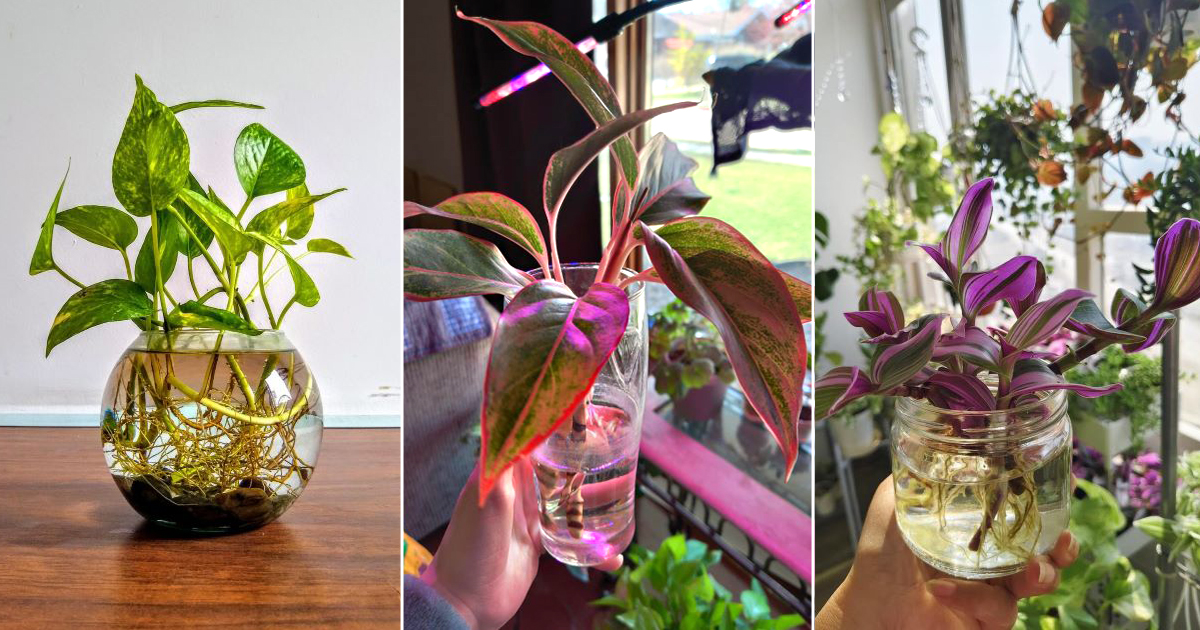
Need low-hassle, out-of-the-box indoor display ideas? Go with these indoor plants that can survive in water for years!
Many people start growing plants in water as a simple propagation project. What surprises them is that some plants never need to move into soil at all. With the right light, clean water, and a little care, these indoor plants can stay healthy and keep growing for years in just water!
Indoor Plants That Can Survive in Water for Years
Quick Note: Changing the water every 7-10 days is enough to keep the roots healthy and prevent algae, bacteria, and unpleasant odors from developing. But if the water becomes cloudy sooner, replace it right away and rinse the container before refilling.
1. Pothos

Botanical Name: Epipremnum aureum
Pothos is often considered the easiest plant to grow in water. A simple stem cutting quickly develops water roots and continues producing new leaves for years. The plant naturally adapts well here because its vines are used to growing in humid tropical environments where moisture is always available.
Just place your pothos in bright, indirect light and refresh the water every week or two. It’ll keep surviving for years!
Before you start, you’ll need a container that lets light reach the roots and makes water changes easy. These clear glass propagation vases are perfect for growing most of the plants on this list.
2. Lucky Bamboo

Botanical Name: Dracaena sanderiana
Lucky bamboo is one of the few houseplants commonly sold already growing in water. Its stems store water efficiently, allowing the plant to adapt well to aquatic conditions indoors.
Minerals and chlorine can build up over time, so filtered or distilled water often produces better results. If filtered water isn’t available, let tap water sit overnight before using it. This helps some chlorine dissipate and can be gentler on the plant.
Did you know? Lucky bamboo is not actually bamboo at all. It belongs to the Dracaena family.
3. Peace Lily

Botanical Name: Spathiphyllum wallisii
Peace lilies can transition from soil to water surprisingly well. Their roots readily adapt and continue absorbing moisture and nutrients directly from the water.
If you want yours to survive for years in water, rinse the roots thoroughly before moving the plant into a container. And keep only the roots underwater, not the crown of the plant. We have a detailed guide on it here.
4. Spider Plant

Botanical Name: Chlorophytum comosum
Spider plant babies root so easily that they almost seem eager to live in water. Once established, these plantlets can continue growing for years in a glass container.
Of course, it will grow a bit more slowly than soil-grown specimens, but it remains healthy with occasional feeding. Just keep doing these 4 things, and it’ll stay healthy!
Pro Tip: You should start with young spiderettes rather than mature plants for easier adaptation.
5. Arrowhead Plant

Botanical Name: Syngonium podophyllum
Arrowhead plants develop strong water roots and often grow surprisingly fast once established. Their attractive foliage also changes shape as the plant matures. Because this plant grows actively, it benefits from occasional liquid fertilizer. Here is a really nice option you can buy!
And here is a complete guide on growing these plants in water with ease.
6. Heartleaf Philodendron

Botanical Name: Philodendron hederaceum
This philodendron is one of the most reliable plants for long-term water culture. Its trailing stems root quickly and continue producing fresh growth throughout the year.
Heartleaf philodendron doesn’t demand constant attention. Just give it bright, indirect light and change the water as mentioned above. Simple, right?
Pro Tip: Don’t forget to trim the longer vines occasionally. Doing so will promote branching, and you’ll have a fuller plant.
7. Chinese Evergreen

Botanical Name: Aglaonema spp.
Chinese evergreen is known for its durability. Although it grows more slowly than pothos or philodendron, it adapts well to life in water and remains attractive with minimal care.
Its colorful foliage stays healthiest in medium to bright indirect light. And of course, since the growth is slower, its nutrient needs are lower than many other houseplants, so you don’t need to supplement it heavily.
8. Wandering Jew

Botanical Name: Tradescantia zebrina
Wandering Jew is famous for rooting almost instantly in water. Its purple-striped foliage continues growing rapidly once roots form, making it one of the fastest-growing plants on our list.
Water-grown cuttings often become lush cascading displays within a surprisingly short time. Here’s how you can propagate and grow a tradescantia in water.
9. Sweet Potato Vines

Botanical Name: Ipomea batata
Sweet potato vines are one of those plants that can live their whole life in water from just a single stem cutting or even with the tuber (root structure) half-suspended. There’s just one thing to keep in mind.
The tuber has to be placed with its pointy end down, with a support or a jar to prop up the top half of the tuber above water.
Pro Tip: Want a cleaner display? A glass propagation station makes it easy to grow plants in water and watch the roots develop. They’re perfect for putting up a beautiful green display!
10. Moth Orchid

Botanical Name: Phalaenopsis spp.
The key to growing orchids in water is that only the root section stays in water. Grab an orchid, gently tease the tangled roots apart, and remove any diseased or damaged roots.
Then, add enough water to cover almost half of the orchid’s roots. Just make sure the leaves are kept dry.
Pro Tip: Orchids might need supports and ties to keep their stems upright. Additionally, provide a very weak dose of fertilizer with every water change. Here is a good liquid fertilizer for orchids growing in water.
Growing indoor plants in water proves that you don’t always need pots and soil to enjoy a thriving indoor garden. With a little light, fresh water, and occasional feeding, these easy-care plants can stay healthy and beautiful for years.


