
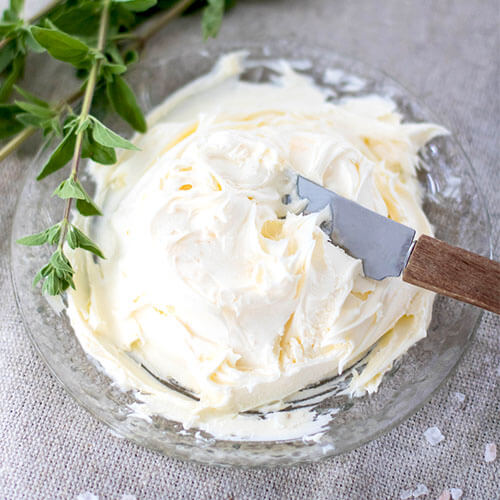
Learn to make your own cultured cream cheese, and you’ll never buy another tub from the grocery store again. It’s indulgently creamy and probiotic, plus there’s no limit to the flavors you can try! Enjoy on sourdough bagels, dolloped on homemade pancakes, or with a veggie or fruit platter!
Table Of Contents
What Is Culturing?
Cultured dairy combines milk or cream with a starter culture (also known as a mother culture), encouraging these beneficial organisms to proliferate and spread their probiotic goodness throughout the milk or cream.
The many variations on the basic culturing process determine whether you end up with sour cream, milk kefir, cultured butter, buttermilk, cheddar cheese, cottage cheese or any other cultured dairy food… including the cultured cream cheese recipe below!
Ingredients
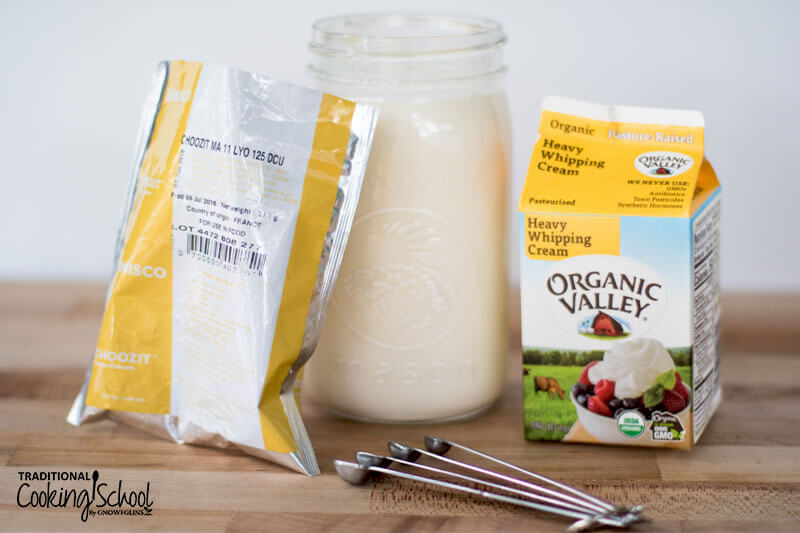
- Cream – If possible, source raw cream from a dairy farmer local to your area. However, cream from the grocery store will also work in this recipe, as long as it isn’t ultra-high pasteurized. You can use heavy cream or cream that isn’t as heavy. The heavier the cream, the less whey will drip out after culturing.
- Culture of choice – Choose a mesophilic cheese culture such as this one. Or, you can use buttermilk or sour cream with active cultures.
Supplies Needed
- Glass jar – You will need a quart-sized glass jar for culturing the cream.
- Paper towel or cloth napkin, plus rubber band – For covering the cream while it cultures.
- Cheesecloth – Choose 90-count cheesecloth. This is for dripping excess liquid out of the cream once it has cultured.
- Colander and bowl – To catch whey as it drips out of the cream cheese.
How to Make Cultured Cream Cheese
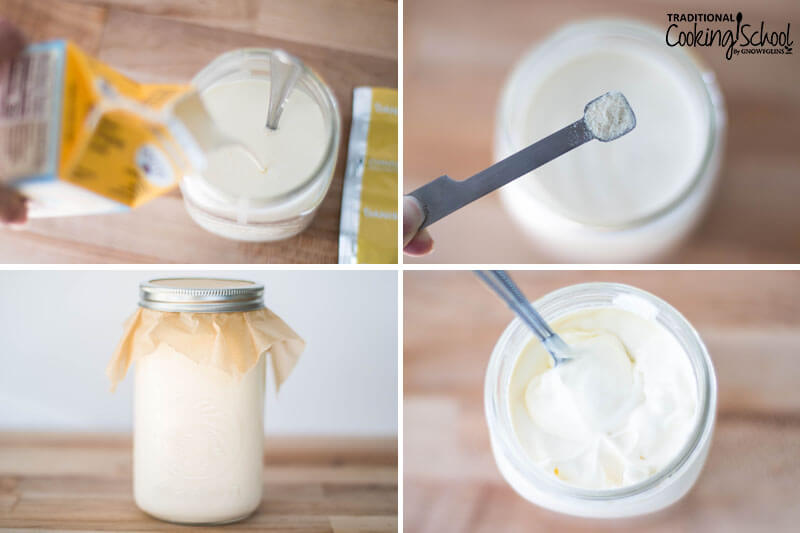
1. Combine cream and culture in a quart-sized glass jar.
2. Cover the jar with a paper towel or cloth napkin and secure with a rubber band.
3. Culture at room temperature for 8 to 24 hours until set up like firm yogurt or sour cream.
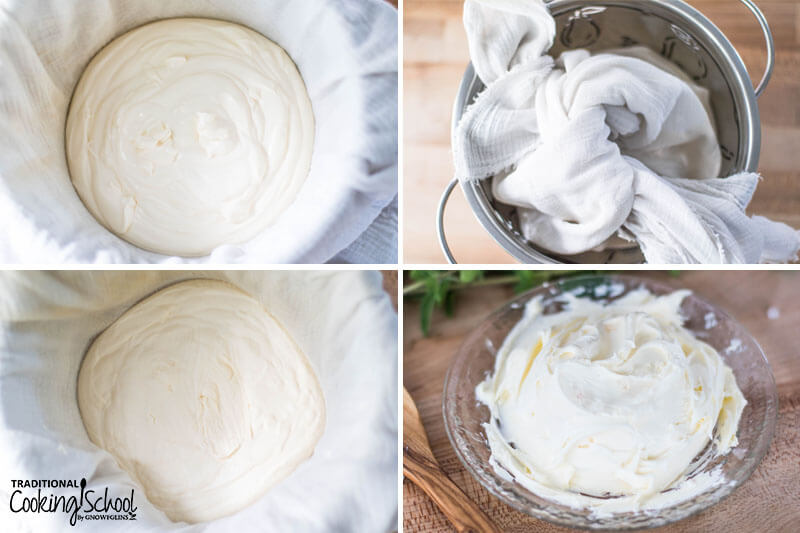
4. Drain the whey/buttermilk out of the cultured cream by hanging it in cheesecloth for 12 to 24 hours, or until the cheese is as dry as you’d like.
5. Remove the cheese from the cheesecloth and put in a jar or glass storage container. Cover with an air-tight lid. Keeps for 2 weeks in the refrigerator.
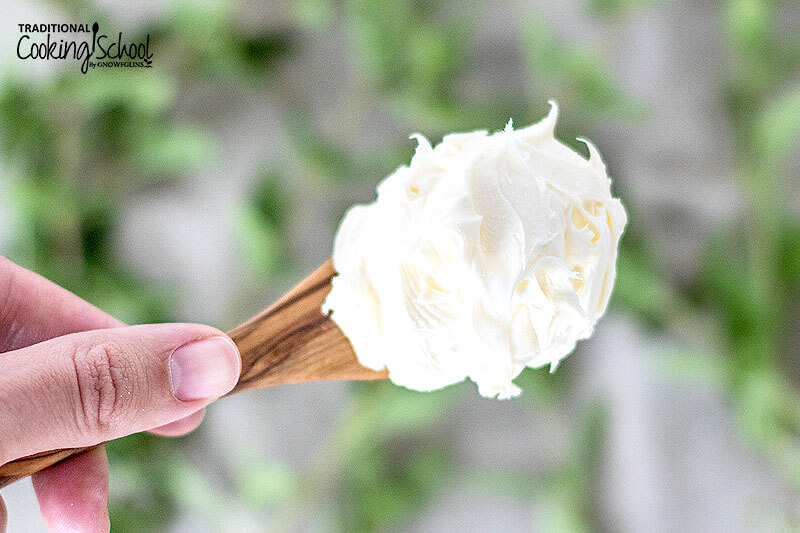
6. Enjoy plain, add sea salt to taste, or flavor (see below for ideas).
Flavored Cream Cheese
In this video excerpt from the Cultured Dairy & Basic Cheese eCourse, I show you how to make Onion-Chives or Cinnamon-Walnut homemade cream cheese.
(TCS premium members, be sure to log in and download the detailed print notes which include more flavor ideas.)
- Cinnamon Walnut – Combine 1 cup of cream cheese with 1/4 cup chopped walnuts (preferably soaked and dehydrated), 1/2 teaspoon cinnamon and 3 tablespoons of desired sweetener.
- Onion Chives – Combine 1 cup of cream cheese with 1/4 cup finely diced onions, 2 tablespoons chopped fresh chives, and 1/4 to 1/2 teaspoon sea salt.
- Spinach Onion – Mix 1 cup of cream cheese with 1/3 cup chopped, fresh spinach, 1/4 cup finely diced onion, and 1/4 to 1/2 teaspoon sea salt.
- Sun-dried Tomato Basil – Mix 1 cup of cream cheese with 1/4 cup diced, sun-dried tomatoes, 2 tablespoons chopped fresh basil, and 1/4 to 1/2 teaspoon sea salt.
- Garlic Herb – Mix 1 cup of cream cheese with 1-1/2 teaspoons of dried herbs (or a tablespoon of fresh), 1-1/2 teaspoons of crushed garlic, and 1/4 to 1/2 teaspoon sea salt.
Frequently Asked Questions
Do I need a starter culture?
You need something to inoculate and thicken the cream… however it doesn’t have to be dry powdered culture such as this one. You can also use buttermilk or sour cream with active cultures.
The advantage to using a dry powdered starter culture is, if they are new and not degraded from being stored too hot, you can ensure a better result. Having said that, either can be used in this instance and if one option is much more economical for you, you can go with that!
Where do I buy a starter culture?
I recommend this mesophilic cheese starter from Homesteader Supply!
Can I use raw milk?
Yes, you can! In fact, I recommend it as the most nutritious way of making cultured cream cheese. Raw dairy, especially once cultured, can’t be beat. 🙂
Simply skim cream from the top of your raw milk, and proceed with the recipe as written.
How long will cultured cream cheese last?
Two weeks in the fridge, or longer in the freezer.
How can I use cultured cream cheese?
Use cultured cream cheese anywhere you’d use regular, store-bought cream cheese… on English muffins or sourdough bagels, with veggies and crackers, or dolloped onto your morning pancakes!
Can I freeze cultured cream cheese?
Definitely! I like to wrap logs of cultured cream cheese in parchment or wax paper, then place individual logs in a zip-top bag for freezing, exactly the same way I store cultured butter long-term.
Other Cultured and Fermented Condiments
- Middle Eastern Kefir Cheese Balls {with free video!}
- How to Make Raw Milk Mascarpone: Soft, Probiotic Cheese
- Trim Healthy Mama Fuel Pull Cottage Cheese {homemade}
- How to Make Sour Cream
- 5-Spice Apple Chutney {lacto-fermented!}
- 43 Fermented & Probiotic-Filled Condiments
Did you make this cultured cream cheese recipe? If so, please give us a rating on the recipe card below. Then snap a photo and tag us on social media so we can see what flavors you tried!
Cultured Cream Cheese
Ingredients
-
1
quart
cream
raw or pasteurized, heavy or not heavy -
1/8
teaspoon
mesophilic culture
or 4 tablespoons buttermilk or sour cream with active cultures
Instructions
-
Combine cream and culture in a quart-sized glass jar.
-
Cover the jar with a paper towel or cloth napkin and secure with a rubber band.
-
Culture at room temperature for 8 to 24 hours until set up like firm yogurt or sour cream.
-
Drain the whey/buttermilk out of the cultured cream by hanging it in cheesecloth for 12 to 24 hours, or until the cheese is as dry as you’d like.
-
Remove the cheese from the cheesecloth and put in a jar or glass storage container. Cover with an air-tight lid. Keeps for 2 weeks in the refrigerator.
-
Enjoy plain, add sea salt to taste, or flavor (see below for ideas).
Recipe Notes
Enjoy these flavor options!
- Cinnamon Walnut – Combine 1 cup of cream cheese with 1/4 cup chopped walnuts (preferably soaked and dehydrated), 1/2 teaspoon cinnamon and 3 tablespoons of desired sweetener.
- Onion Chives – Combine 1 cup of cream cheese with 1/4 cup finely diced onions, 2 tablespoons chopped fresh chives, and 1/4 to 1/2 teaspoon sea salt.
- Spinach Onion – Mix 1 cup of cream cheese with 1/3 cup chopped, fresh spinach, 1/4 cup finely diced onion, and 1/4 to 1/2 teaspoon sea salt.
- Sun-dried Tomato Basil – Mix 1 cup of cream cheese with 1/4 cup diced, sun-dried tomatoes, 2 tablespoons chopped fresh basil, and 1/4 to 1/2 teaspoon sea salt.
- Garlic Herb – Mix 1 cup of cream cheese with 1-1/2 teaspoons of dried herbs (or a tablespoon of fresh), 1-1/2 teaspoons of crushed garlic, and 1/4 to 1/2 teaspoon sea salt.
Calories from Fat 198
This post was featured in 50 Fermented Salsas, Dips, and Spreads and 15 Easy Raw Cheese Recipes.
This post was originally published and written by Wardee Harmon on 6/3/11. It was updated and republished on 6/16/21.


