
Wondering how to get your ZZ plant to bloom? Learn what triggers flowering, why most ZZ plants never flower indoors, and care secrets!

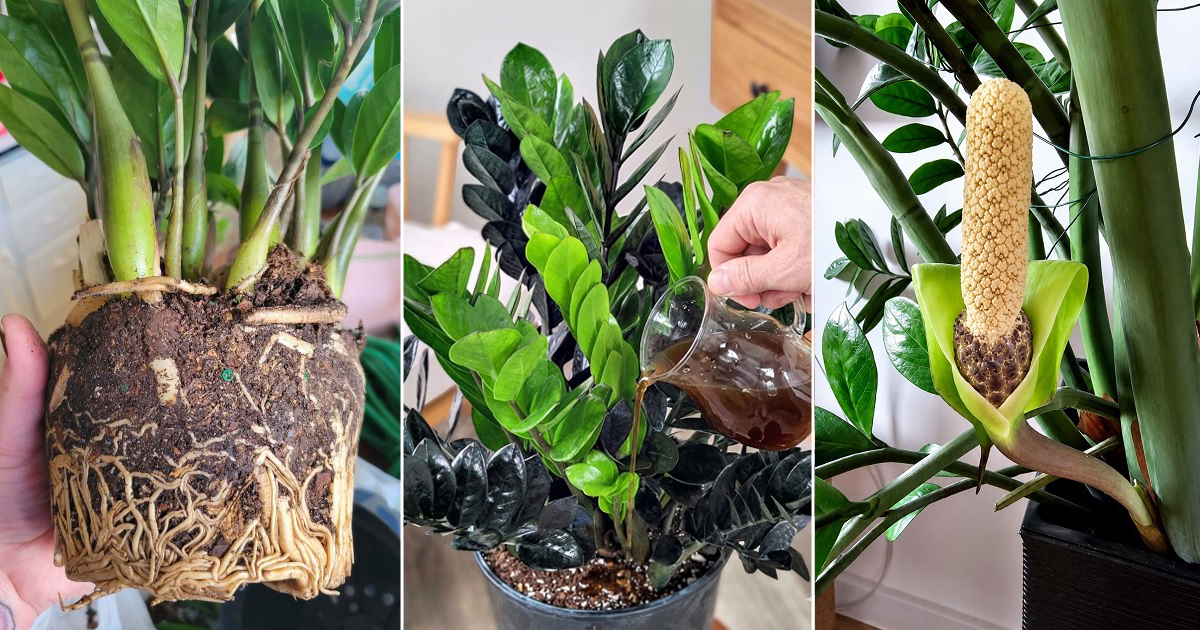
Yes, ZZ plants bloom. The surprise is that most indoor gardeners don’t realize it because the flower stays tucked near the soil and only appears when the plant reaches a high level of maturity and health. It’s not a matter of luck either. Here’s what the plant is really waiting for and how you can give it the best chance to bloom.
ZZ Plant Flower Information

Most people expect flowers to appear above the foliage, but ZZ plants do things differently. Their blooms emerge near the base of the plant, often tucked between stems and partly hidden by leaves.
Like peace lilies, philodendrons, and anthuriums, the ZZ plant belongs to the Araceae family. Instead of producing a traditional flower, it forms a spadix covered in tiny flowers surrounded by a protective spathe. The bloom is usually cream, pale green, or yellowish-white.
Did you know? In its native habitat across eastern Africa, this flower structure attracts small ground-dwelling insects rather than bees and butterflies.
The Real Reason ZZ Plants Rarely Bloom Indoors

The biggest reason ZZ plants don’t flower is age. Many indoor specimens simply haven’t reached the stage where they’re ready to reproduce. Before flowering, the plant spends years building roots, rhizomes, and energy reserves underground. Indoors, this process often takes three to five years and sometimes even longer.
A good clue is the size of the rhizomes. If the thick, potato-like structures have filled the pot and are beginning to crowd the container, the plant may be approaching flowering age.
The second reason is energy. Even mature plants won’t bloom if they’re growing in poor light or dealing with inconsistent care. Flowering requires surplus energy, and many indoor ZZ plants never accumulate enough to reach that stage.
How to Get Your ZZ Plant to Bloom
1. Give It More Light Than Most People Think

One of the biggest misconceptions about ZZ plants is that they prefer low light. Well, they can survive in dim rooms, but surviving and thriving are very different things.
If you want blooms, treat your ZZ plant like a bright-light plant rather than a low-light plant. A spot near an east-facing window or several feet back from a sunny window usually works best.
Pro Tip: If new stems appear stretched or the spacing between leaflets becomes wider, the plant is likely asking for more light. So pay attention!
2. Recreate a Natural Dry Season

In nature, ZZ plants experience changing seasons. They go through periods of warmth and rainfall followed by cooler, drier conditions. And these seasonal shifts influence the plant’s growth cycle.
On the other hand, indoors, they live in exactly the same environment all year. Constant watering, constant temperatures, and the same feeding remove the natural signals that help regulate flowering.
What to do? During late autumn and winter, reduce watering and stop fertilizing. Let the plant slow down naturally rather than forcing continuous growth.
And then, when spring arrives, gradually increase watering and resume feeding. This change often encourages stronger growth and may help trigger later-season flowering.
3. Water Deeply, Then Let the Soil Dry
The underground rhizomes of a ZZ plant act as storage tanks. They hold water and nutrients that help the plant survive drought conditions in its native environment. Because of this adaptation, frequent light watering is usually a mistake.
Instead, water thoroughly until excess moisture drains from the bottom of the pot. Then allow a significant portion of the soil to dry before watering again. Doing this promotes healthier roots, stronger rhizomes, and better long-term plant vigor, all of which support flowering.
Buy this soil moisture meter that will tell you exactly when your plant needs a drink.
4. Feed for Long-Term Health

Many gardeners reach for bloom boosters when they want flowers, but ZZ plants don’t usually respond that way. Flowering depends more on maturity and stored energy than on any special fertilizer formula.
The goal should be building a strong plant over time. Healthy foliage and robust rhizomes are what eventually create the conditions needed for flowering. Use a balanced houseplant fertilizer at half strength every 4-6 weeks during spring and summer. And avoid overfertilizing!
Choose healthy foliage for your plants with this micronutrient liquid fertilizer.
5. Keep It Slightly Root-Bound

A mature ZZ plant often performs best when it’s slightly snug in its pot. When roots and rhizomes have comfortably occupied the available space, the plant tends to focus less on expansion and more on top growth.
This is one reason older ZZ plants are more likely to flower than recently repotted ones. They have already invested years in building a strong underground system. That doesn’t mean repotting should be avoided forever. 2-4 years is the sweet spot!
A container just one or two inches wider is usually enough.
When it’s finally time to repot, choose this terracotta pot for plants that is super easy to install, and even easier to move.
6. Give It Stability

Flowering is much more likely when a plant feels settled. Stable conditions allow it to focus on growth rather than respond to stress. That means no moving it around, no repotting, and no sudden environmental changes.
Just pick a spot with stable temperatures between 65°F and 80°F (18 °C to 27 °C). And avoid placing the plant near air-conditioning vents, heaters, drafty windows, or exterior doors where temperatures fluctuate frequently.
Then leave it alone. Some of the healthiest and oldest ZZ plants bloom simply because they’ve spent years growing in the same comfortable spot without interruption.
Bonus Tip: Let Your ZZ Plant Experience Cooler Nights
One subtle trick many experienced growers use is allowing their ZZ plant to experience a slight drop in temperature at night. In its native habitat, temperatures naturally fluctuate between day and night, and these changes help signal seasonal shifts to the plant.
A difference of about 8–12 F (4–7 C) between daytime and nighttime temperatures can encourage stronger growth and help support the plant’s natural flowering cycle.
The easiest way to create this effect is by placing your ZZ plant near a bright east-facing window, a screened porch, or a covered balcony during the warmer months. These locations often warm up during the day and cool down naturally after sunset without exposing the plant to extreme conditions.
Don’t be discouraged if your ZZ plant hasn’t flowered yet. The secret isn’t a special fertilizer or trick; it’s simply giving the plant enough time to become mature, healthy, and full of stored energy.


