
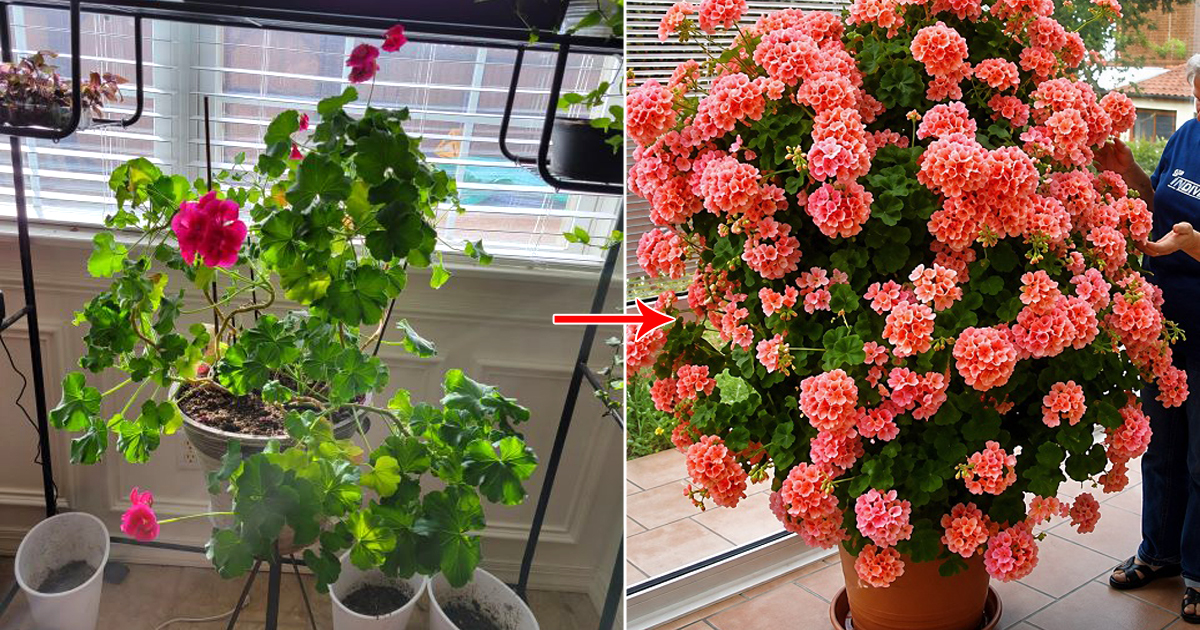
Struggling with leggy geraniums? Learn how to grow bushier geraniums and enjoy fuller plants packed with flowers!

A healthy geranium can produce a mound of colorful flowers and dense foliage, but that doesn’t happen by chance. If your plants tend to grow tall, sparse, or leggy, a few simple changes can encourage them to branch out and become much fuller. Here are the secrets to grow bushier geraniums!
How to Grow Bushier Geraniums
1. Pinch Young Stems Early

One of the most effective ways to grow bushy geraniums is to pinch the growing tips when the plant is still young. Simply remove the top inch of a stem using your fingers or clean pruning shears.
This interrupts the plant’s natural tendency to grow upward and encourages side shoots to develop from the leaf nodes below. Instead of producing one long stem, the plant starts creating several branches.
The earlier you pinch, the fuller the plant will be later in the season. Waiting until stems are already long and leggy makes it harder to create a compact shape.
You can make cleaner cuts and encourage bushier growth with these sharp pruning shears.
2. Give Your Geranium Plenty of Direct Sunlight

Geraniums need plenty of sunlight to stay compact and sturdy. You should aim for at least 6 hours of direct sunlight daily. Morning sun is especially valuable because it supports strong growth without exposing plants to the most intense afternoon heat.
And if you’re growing geraniums in containers, rotate the pot every week. It encourages balanced growth on all sides and prevents the plant from leaning in one direction.
Here’s a Tip: If your geranium has healthy leaves but very long stems, lack of sunlight is often the first thing to check. Keep it in one of these spots for best growth!
3. Don’t Use an Oversized Pot

Many gardeners assume larger pots automatically produce larger plants. With geraniums, that’s often not the case.
When a container is much larger than the root system, the plant directs more energy into root growth rather than producing new stems and flowers. As a result, top growth can become slower and less compact.
What to do? Choose a pot that’s only slightly larger than the root ball. A comfortable but not oversized container often encourages stronger growth above the soil.
This is one of the most overlooked reasons why potted geraniums fail to become dense and bushy. Here’s one you can buy which is perfect for these plants!
4. Remove Early Flower Buds on Young Plants

This technique may feel a little wrong at first, but it can pay off later in the season.
When a young geranium starts producing flowers soon after planting, it puts a significant amount of energy into blooming. Removing the first few flower buds encourages the plant to focus on developing roots and branches instead.
After a few weeks, you’ll often have a stronger, fuller plant capable of producing even more flowers than it would have otherwise.
The method works particularly well with newly purchased nursery plants that are already in bloom. But be careful, you should only remove the first round of buds. Once the plant becomes fuller, let it flower normally.
5. Water Deeply, Then Let the Soil Dry Slightly

Geraniums dislike constantly wet soil. That excess moisture weakens roots and encourages soft growth that doesn’t support a bushy plant structure.
Instead of watering lightly every day, water thoroughly and then allow the top inch of soil to dry before watering again. Roots love it! And healthy roots create a stronger foundation for the dense foliage and abundant blooms gardeners want.
Just make sure containers have drainage holes so excess water can escape freely.
Pro Tip: Feed geraniums every 2-4 weeks during active growth with a balanced, water-soluble fertilizer to support healthy foliage and flowering.
Want more blooms and healthier foliage? Feed your geraniums regularly with this quality fertilizer.
6. Thin Out Weak Growth in the Center

A geranium may appear full from the outside but still become crowded in the center. And when too many stems compete for space, light struggles to reach the plant’s interior.
Every few weeks, inspect the middle of the plant and remove weak, damaged, or crossing stems. Doing so opens the canopy and allows light and air to reach lower growth points. Plus, dormant buds become more likely to produce fresh shoots, creating a fuller plant from top to bottom rather than just around the edges.
7. Refresh Leggy Plants with a Mid-Season Cutback

Even well-maintained geraniums can become stretched later in the growing season. When that happens, a moderate cutback can help restore their shape.
Trim roughly one-third of the longest stems and remove any weak or sparse growth. Within a few weeks, the plant will respond by producing new shoots from dormant buds along the remaining stems.
These fresh shoots create a denser, more compact appearance and often lead to a new flush of flowers. It works really well for older geraniums that have started to look woody or tired.
Pro Tip: Avoid heavy pruning during extreme heat. Light trimming is easier for the plant to recover from.
Bonus Trick: Follow the “One Stem Rule”

Keep an eye out for stems that suddenly grow much taller than the rest of the plant. When one stem is allowed to race ahead, the rest of the geranium can become less productive, leading to an uneven and leggy appearance.
Trimming that dominant stem back to the height of the surrounding growth encourages the plant to spread its energy more evenly.
Remember, the sooner you pinch or trim a dominant shoot, the easier it is to maintain a naturally bushy plant.
Many experienced gardeners use this simple technique throughout the growing season to maintain a rounded, compact shape without needing major pruning later. You should also give it a bit of baking soda; here’s what will happen!
Before you try this baking soda method, make sure you have some on hand.
Growing bushy geraniums comes down to encouraging branching early and maintaining good growing conditions throughout the season. With consistent care, even leggy plants can develop into compact mounds covered in flowers.


