
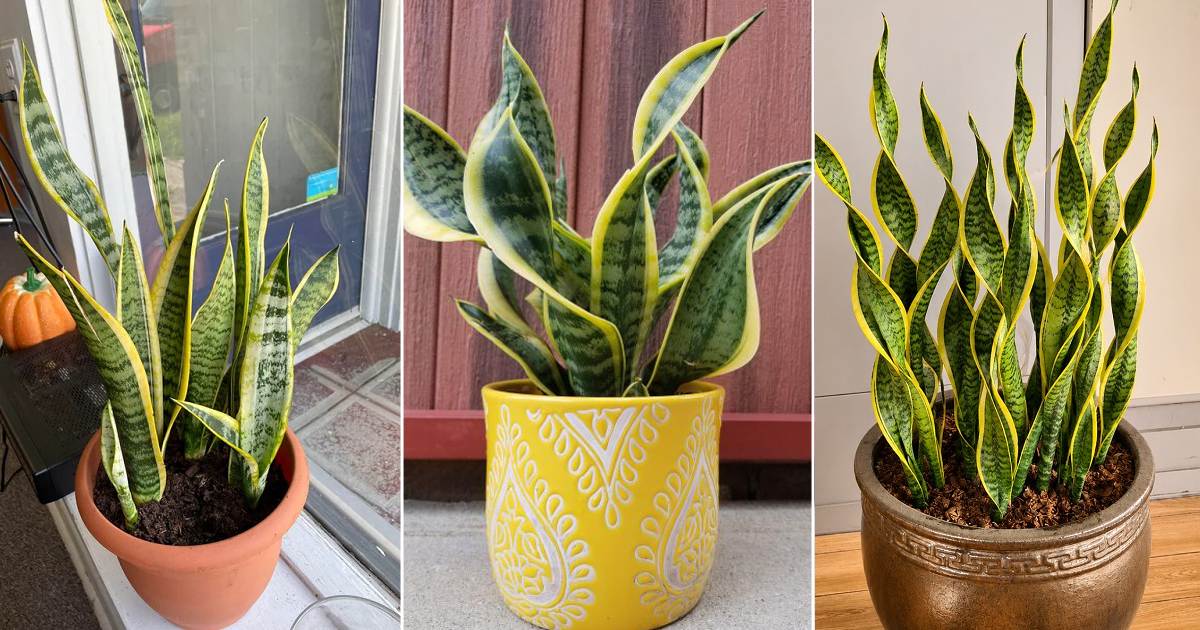
Wondering how to grow a curvy snake plant? Here are techniques growers use to encourage arched and sculptural sansevierias!

Most snake plants are known for their upright, sword-like leaves, but some can develop beautiful curves, twists, and arches when grown under the right conditions. Those sculptural snake plants you see in garden centers and plant collections are rarely the result of chance. Here’s how to grow a curvy snake plant like that!
How to Grow a Curvy Snake Plant
1. Start With the Right Snake Plant Variety

Some snake plants have stiff, upright foliage that resists training, but others produce leaves that are far more flexible and responsive.
Look for varieties such as Sansevieria cylindrica, Starfish Snake Plant (Boncel), or ‘Twisted Sister.’ These cultivars are commonly used by growers because their foliage naturally develops curves, fans, or twists. If you purchase a standard snake plant with rigid vertical leaves, creating dramatic curves becomes much more difficult.
Remember, younger plants are often easier to train than older, fully mature specimens because their new foliage remains flexible longer.
2. Choose the Right Pot and Soil Mix

Start with a container that is only slightly larger than the root system. Snake plants prefer being somewhat root-bound.
A heavy terracotta pot or ceramic container works especially well because it provides stability. As leaves begin to curve outward, the plant’s weight distribution changes. So lightweight plastic pots become top-heavy and tip over as the plant grows.
Next up is the soil. Fill the pot with a fast-draining succulent mix. A combination of potting soil, perlite, pumice, coarse sand, or small lava rock creates the drainage that snake plants need. Here are some more recipes you can try!
Many gardeners focus entirely on the leaves, but healthy root development often determines how successful training efforts will be later.
3. Give It Bright Indirect Light and Use Directional Sunlight

Snake plants naturally grow toward their primary light source, and you can use that behavior to guide the direction of new growth.
Just place your plant near a bright east-facing window or a south-facing window with filtered light. Plants grown in dim locations typically show slower growth and a reduced response to shaping techniques. That’s why it shouldn’t be in one of these spots!
Pro Tip: Instead of rotating the plant every week, allow it to face the same direction for several weeks at a time. New leaves will gradually lean toward the available light. Once a gentle curve begins forming, you can rotate the container slightly to continue guiding future growth.
If you’ve ever noticed a snake plant leaning toward a nearby window, you’ve already seen this technique in action.
4. Train Young Leaves With Stakes and Soft Plant Ties

Insert a bamboo stake into the pot near the developing leaf and use soft plant ties, Velcro garden tape, or orchid clips to gently secure the foliage. The goal is not to force a bend immediately. Instead, gradually encourage the leaf to follow a new direction over several weeks.
This is where you’ll have to pay attention. Make small adjustments as the leaf grows. A good rule is to adjust the tie only slightly every couple of weeks. Small changes are less stressful on the leaf and often produce smoother, more natural-looking curves.
As we said, new leaves are far easier to shape than mature ones. If a leaf has already reached its full height and hardened off, it will usually keep its existing form. Focus your efforts on leaves that are still actively growing from the center of the plant.
5. Water Correctly to Keep Leaves Strong

Curved snake plant leaves should be firm, healthy, and able to support their own weight. That’s where watering comes in.
Water thoroughly until moisture drains from the bottom of the container, then allow the soil to dry almost completely before watering again. Snake plants store moisture in their leaves and roots, so they can tolerate dry conditions much better than constantly wet soil. You can refer to our snake plant watering guide for more info.
Pro Tip: A simple rule many experienced growers follow is to check the soil before every watering rather than relying on a fixed schedule. Push your index finger into the soil to the first or second knuckle; if it feels dry, it’s time to water; if it’s still damp, check it the next day.
Healthy new growth gives you more opportunities to shape and train your plant. During spring and summer, apply a balanced liquid houseplant fertilizer at half strength about once a month. Maybe a bit of garlic too; here’s what it will do!
6. Maintain Warm Growing Conditions
 See, snake plants grow most actively when temperatures stay between 65 F and 85 F (18 C to 29 C). And even the best training methods produce limited results if the plant is struggling under poor temperatures.
Keep your plant away from cold drafts, air-conditioning vents, and chilly windows during winter. Temperature stress often slows growth dramatically, reducing the number of new leaves available for training.
Consistent warmth also helps the root system remain active. A healthy root system supports healthy foliage, and healthy foliage responds better to shaping.
Pro Tip: If a trained leaf starts looking creased or stressed, loosen the support and give it time to recover. A gentle curve always looks better than a damaged leaf.
7. Be Patient and Shape New Growth Over Time

The biggest secret to growing a curvy snake plant is patience. Mature leaves rarely change shape significantly once they have hardened.
Check the plant every few weeks and make small adjustments to the stakes or ties as needed. New leaves may take several months to reach their final size, so gradual corrections usually produce the most natural-looking results.
A little patience goes a long way here. The key is to allow the plant to grow at its own pace rather than forcing quick results.
Note: Depending on the variety and growing conditions, you may start noticing subtle curves within a month or two, but more dramatic arches often take an entire growing season to develop.
Growing a curvy snake plant is all about working with the plant’s natural growth habits instead of fighting them. The process takes time, but the finished result is well worth the effort.


