
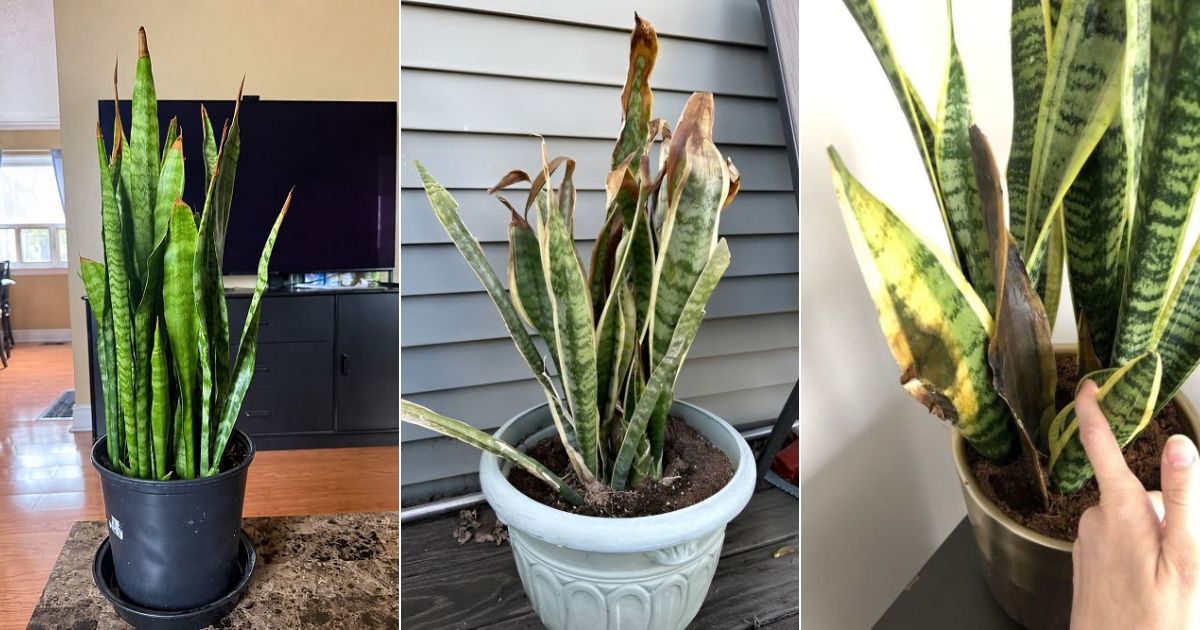
Got brown tips and leaves on a snake plant? Here are the reasons behind them and how you can fix them one by one!

Snake plants are one of those houseplants that’s supposed to thrive on minimal care and maintenance. That’s why spotting brown tips or crispy edges on its otherwise sturdy leaves can be alarming! The good news is that brown tips are usually easy to fix once you identify the cause. Here’s how!
How to Fix Snake Plant Brown Tips and Leaves
1. Not Watering It Right

Snake plants store water in their thick and fleshy leaves, and so they do not like to sit in damp soil for a long time. On the other hand, letting the soil stay bone dry for weeks isn’t ideal either.
When the plant runs out of stored water, the leaf tips are the first thing to dry out and turn crispy brown!
The fix? Just check the soil by pushing your finger into it a couple of inches, or even a wooden chopstick! If the soil still feels damp, wait for a couple more days.
If the soil is dry, feel the leaves; if the top tips are brittle and crinkly, water immediately!
When you water, do it thoroughly and completely, and allow the excess water to drain out. You can find more info in our snake plant watering guide!
2. It Might Be the Water Itself

If your watering routine is good but your snake plant still has brown leaf tips, the culprit may be the tap water!
Tap water contains fluoride, chlorine, and dissolved mineral salts, and over time, these compounds build up in your plants’ soil. Snake plants happen to be quite sensitive to these minerals, which is why brown tips often appear even when everything else seems perfectly fine!
Here’s what to do! Water your plants with rainwater, distilled water, or filtered RO water. And if tap water is the only option, let it sit overnight before watering and flush the soil every few months to wash out the chemical buildup!
3. Too Much Direct Sun is Scorching the Leaves

Snake plants handle bright conditions well, but prolonged exposure to intense direct sun can scorch their leaves and tips. This is especially common near south or west-facing windows where the afternoon sun is strongest.
You may first notice faded or bleached patches on the side facing the window before the tips and edges begin turning brown. That’s why we recommend never placing your snake plant in one of these spots.
Solution: Move your snake plant to a location with bright indirect light, or filter the sunlight with a sheer window curtain.
An east-facing window is often ideal because it provides gentle morning sun without exposing the leaves to the harsher rays later in the day. Or if you don’t have a bright window, consider using a full-spectrum LED grow light.
4. Dry Indoor Air is Stressing the Leaf Tips

Overly dry indoor air also causes the leaf tips to turn brown and crispy on snake plants. This is most common during winter when heating systems run for long periods and pull moisture from the air, or in summer if you live in a hot climate.
Unlike overwatering, the damaged areas usually feel dry and papery rather than soft or mushy. That’s how you can identify the reason and fix it accordingly.
What to do? If your home feels dry, try placing a humidifier nearby or grouping several houseplants together to create a slightly more humid microclimate. Also, keep the plant away from heating vents and radiators, which can dry out the foliage even faster.
Pro Tip: If brown tips appear during winter, check for cold drafts before changing your watering routine. Snake plants prefer temperatures between 65 F and 85 F (18 C and 29 C) and become stressed when exposed to sudden temperature drops.
5. Excess Fertilizer is Burning the Roots

More fertilizer doesn’t mean faster growth. In fact, snake plants need surprisingly little feeding. Plus, applying fertilizer too often or using it at full strength causes excess salts to accumulate in the soil.
These salts burn the roots, making it difficult for the plant to absorb water properly.
One of the earliest signs is browning along the tips and edges of otherwise healthy-looking leaves.
The fix? Feed your snake plant only during spring and summer using a balanced liquid fertilizer diluted to half strength. If you suspect fertilizer burn, flush the pot thoroughly with clean water to help wash away excess salts.
After that, wait a few weeks before feeding again and stick to a lighter schedule going forward. Here are some decent snake plant fertilizer options!
6. Pests and Diseases May Be Damaging the Leaves

Pests such as spider mites, mealybugs, and thrips feed on leaf sap and can leave behind brown, dry patches that slowly spread. Fungal problems can also develop in consistently damp soil, often appearing as brown spots, soft areas, or discolored patches on the leaves.
So, grab a flashlight and inspect the leaves closely, especially near the base and in the crevices where the leaves meet.
Here’s what to do: If you spot pests, treat the plant with insecticidal soap or neem oil. For fungal issues, remove affected leaves with sterilized scissors, improve air circulation, and allow the soil to dry properly between waterings to prevent the problem from returning.
7. The Damage May Have Happened Weeks Ago

Snake plant leaves do not repair themselves like human skin. If a leaf was bent, dropped, scraped against a wall, chewed by a pet, or damaged during transport, the injured area may gradually turn brown days or even weeks later.
The solution: Take a close look at the affected leaves. If the browning follows a crease, dent, or scratch mark, physical damage is often the cause.
The good news is that the problem isn’t spreading or harming the rest of the plant. New growth should emerge normally as long as the plant remains healthy.
Bonus Tip: Follow the Pattern, Not the Brown Tip

One brown tip can be misleading, but the pattern of damage rarely is. Check where the browning appears and which leaves are affected.
Damage on the window-facing side often suggests sun scorch, damage near vents or drafty areas can point to temperature or wind-related stress, and browning across several leaves at once is usually linked to a care issue affecting the entire plant.
Experienced growers often diagnose problems this way before making any changes. A quick inspection of the pattern can save you from guessing and from treating the wrong problem.
Can Brown Snake Plant Tips Turn Green Again?

Unfortunately, once a leaf tip turns brown, that tissue is permanently damaged and won’t turn green again. Brown tips are made up of dead plant cells, so the plant cannot restore their original color.
The good news is that correcting the underlying problem usually prevents further damage. If the brown tips bother you, trim the dead portion with clean, sharp scissors, following the leaf’s natural shape.
Brown tips may not look great, but they’re often one of the easiest snake plant problems to fix. Give your plant the right conditions, and its next leaves should emerge healthy, firm, and beautifully green.


