
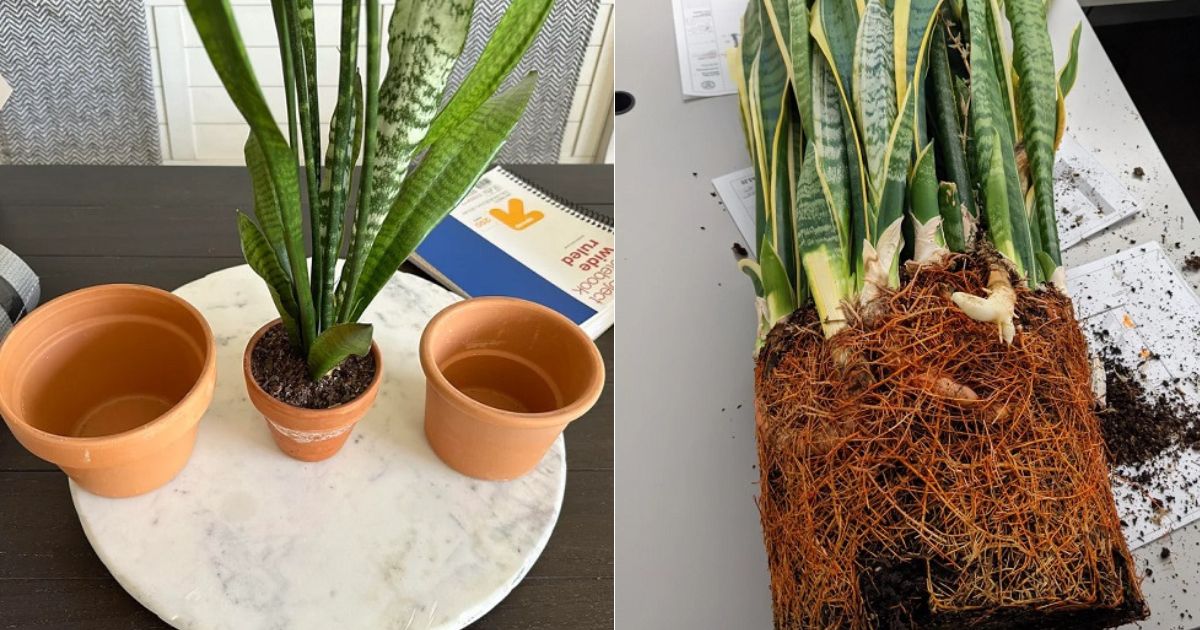
Learn how to repot your snake plant on time like a master gardener so that you can keep it healthy and thriving for years to come!

Repotting a snake plant might sound tricky because of its sturdy leaves and thick roots, but it’s easier than you think. This simple task of giving your plant fresh soil and a little more room does wonders for its health.
Its timing is also very important as it can reduce or increase the chances of Sansevieria pups and flowers!
Is Repotting Snake Plants Necessary?

Snake plants are slow growers, but once they mature, their thick rhizomes spread quickly beneath the soil. If you leave them in the same pot for too long, these rhizomes can crack the container or strangle the roots, stunting growth.
Here’s where repotting comes in. It gives roots more room and allows you to refresh the growing medium, which is crucial for healthy growth. Plus, if you don’t repot, the old soil will lose nutrients and become compacted over time, which leads to drainage issues. So don’t skip it. In fact, it’s great for all kinds of succulents!
But timing matters, because Mother-in-Law’s Tongue plant loves to be in a root-bound state. If you repot it frequently or house it in a big pot (bigger than 2 inches in diameter of its root ball), it will grow slowly, won’t produce pups heavily, and reduce flowering.
Here’s a tip: When removing the plant from its old pot, always grip the leaves near the base so you don’t accidentally bend or snap them. Snake plant leaves can crease easily, and damaged leaves never fully recover.
When to Repot a Snake Plant?

Now you know that snake plants don’t demand frequent repotting and, in fact, they are happiest when slightly root-bound, there are still clear signs that tell you it’s time to repot.
If you see roots circling tightly or peeking out of drainage holes, pups crowding the mother plant, or the pot is about to break, this is the time when your plant needs a bigger container or pups need to be shifted to a new pot..
Quick Repotting Tip: If your pot feels extremely heavy and water seems to linger on the surface, that’s a sign the soil is compacted, and it’s time to refresh it.
You might also witness thick rhizomes exerting enough pressure to crack ceramic pots over time, but don’t wait for that to happen. There are also some health signs, such as slowing down growth, that indicate it is time to repot.
If roots are tightly tangled when you take the plant out, gently tease them apart with your fingers. This helps them spread into the fresh soil instead of continuing to grow in circles.
Best Time To Repot Your Snake Plant
The factor is also crucial here, which is why you must choose the best time to repot. The months of spring through mid-summer are when the plant is in its active growth phase, and that is when you should go for repotting.
Avoid repotting in late fall or winter unless you live in a hot climate, as the plant enters dormancy and might struggle to adjust.
How to Repot a Snake Plant Like a Pro?

The process is simple, but snake plants need a bit more care because of their heavy leaves and sensitive roots. You should start by watering the plant a day before, which will moisten the soil, making it easier to slide the plant out without breaking roots.
Gently tilt the pot and tap the sides to loosen the root ball. Then check for any soft or mushy roots and snip them off with sterilized scissors. Rotten roots often have a foul smell, so discard them immediately.
If the old soil smells bad, moldy, or feels soggy, replace all of it instead of mixing it with the new soil. Old, soggy soil often contains bacteria or fungi that can infect roots again.
Here comes the main part! Choose a pot one size bigger than the current one and ensure it has proper drainage holes. You can even plant it in the same pot, once the pups are removed and transplanted into other pots.
Snake plants prefer tight spaces, so avoid going too big as oversized pots hold extra moisture, which can cause rot.
Don’t forget to fill the bottom with a gritty, well-draining mix (cactus or succulent soil works best) and place the plant upright in the center in the same depth as it was in the previous pot.
Before topping off with the final layer of soil, tap the sides of the pot so the mix settles naturally into gaps around the roots. This avoids hidden air pockets that can dry out roots.
Pro Tip: For tall, heavy plants, add a layer of pebbles on top of the soil to stabilize the pot and prevent tipping.
Post-Repot Care

Your snake plant may look a little stressed after repotting, and that’s normal. Avoid watering for the first week and keep it out of direct sunlight or intense indirect daylight. Once you see new growth or the plant looks settled, resume your regular watering schedule and light fertilization.
We suggest using a diluted liquid fertilizer (at 1/4 strength) after 4–6 weeks to boost recovery and encourage strong, upright leaves.
Don’t forget to rotate the pot every few weeks so all sides of the plant get equal light, which helps it grow evenly without leaning to one side. And if you don’t want the hassle, why not try something new like snake plant kokedama?
Repotting isn’t just a chore; it’s a quick refresh that keeps your snake plant looking its best. A few careful steps today can give you years of strong, healthy growth.


