
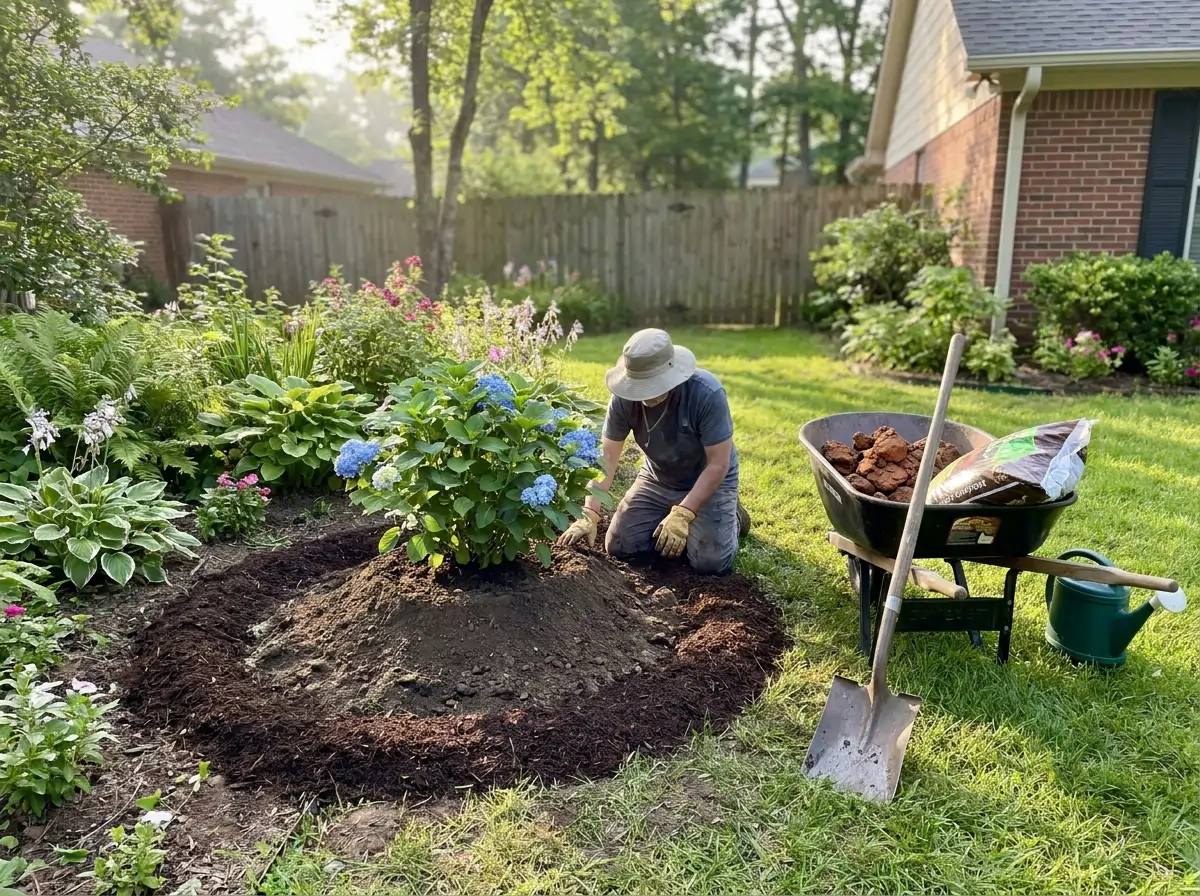
Watering After Planting Without Re-Creating the Problem
Start With Deep, Infrequent Watering
Right after planting, water thoroughly so moisture reaches the full root ball. After that, switch to deep watering only when the soil actually needs it.
I’d rather water well and wait than sprinkle a little every day. Frequent shallow watering encourages surface roots and soggy crowns.
Follow a Simple First-Month Rhythm
For the first couple weeks, check soil every day or two. In cool weather, a new hydrangea may need water just a few times a week, while hot or windy weather can change that fast.
This is why rigid calendars fail. Plants do not read our schedules.
Use a Meter or Finger Test
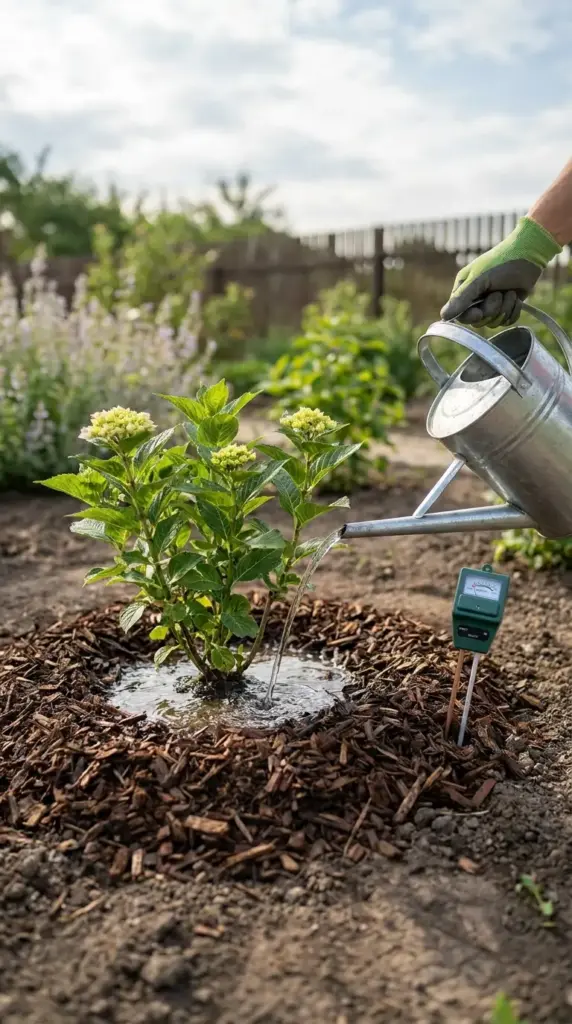
A soil moisture meter can help if you’re nervous, but your finger works too. Check 2 to 4 inches down before watering.
If it’s damp down there, wait. If it’s dry and the shrub is still settling in, water slowly at the base.
Mulch Helps More Than People Realize
Mulching hydrangeas with 2 to 3 inches of shredded bark helps regulate soil temperature and reduce wild moisture swings. Just don’t pile it against the stems like a volcano.
And if your hydrangea is already established and sitting in a soggy bed, don’t panic yet, because the next button below takes us to the easiest rescue options.


