
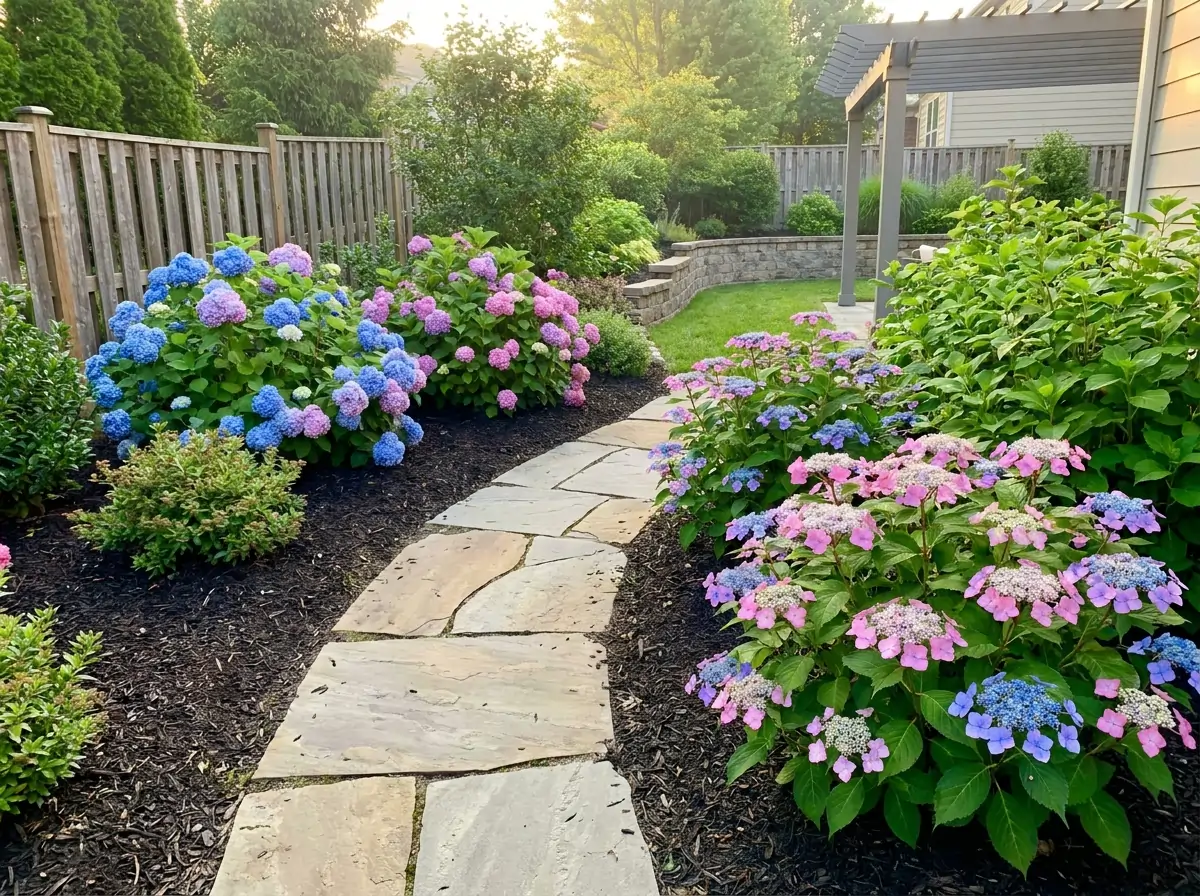
Rain, Wind, and Summer Heat: Which Performs Better?
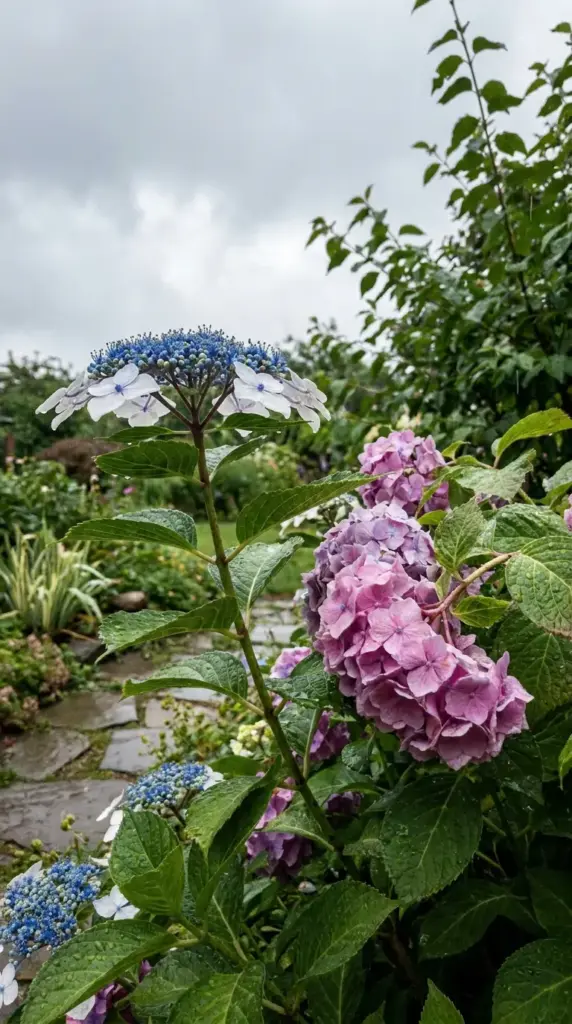
Lacecaps Often Handle Weather Better
In rough weather, lacecap hydrangeas usually have an edge. Their flatter blooms catch less rain, and that means less weight pulling stems downward.
If you live in a humid region with summer storms, that can make a real difference by July and August.
Mopheads Can Struggle With Heavy Blooms
Mopheads are not weak plants, but their giant flower heads can get battered by wind or soaked by rain. In rich soil with lots of nitrogen, you may get extra leaf growth and even softer stems.
I’ve definitely babied a mophead after a thunderstorm like it was a Victorian fainting lady. No shame.
Heat Stress Is More About Placement Than Type
Both types can wilt in afternoon sun, especially during hot spells above 90°F. That dramatic midday droop is often temporary if the roots are moist, but repeated stress can reduce bloom quality.
The sweet spot is usually morning sun afternoon shade, plus mulch and consistent water. Hit the next button below, because placement, soil, and watering habits matter even more than bloom type once the plant is in the ground.


