
6. Raised Bed Border Garden: Transform Your Fence Line Into a Stunning Display
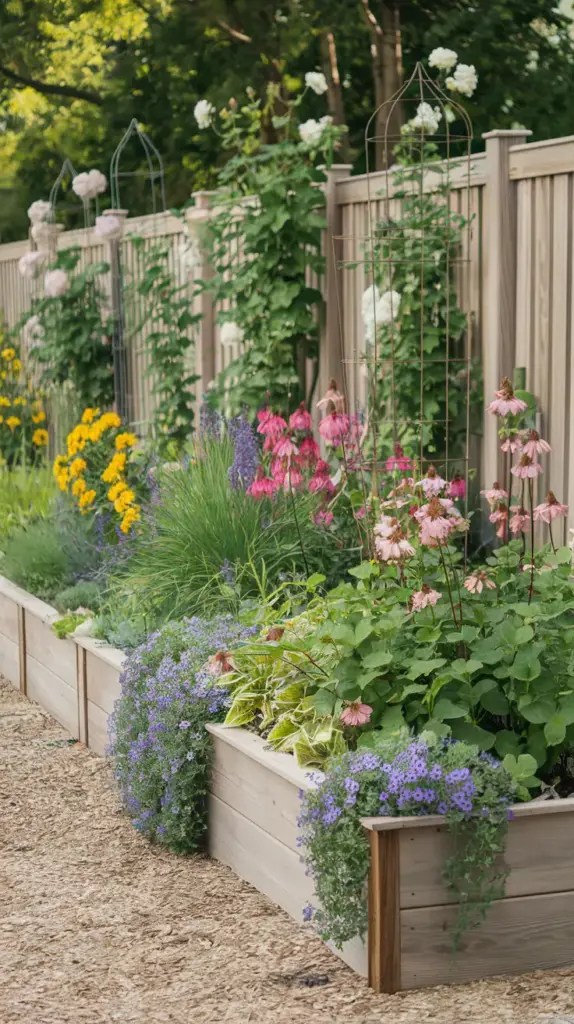
Let me tell you about my journey with raised bed border gardens – it’s been quite the learning experience! After years of struggling with poor soil and drainage issues along my fence, I finally discovered the magic of raised beds, and I’m excited to share everything I’ve learned.
Getting Started with Construction
The first thing I learned (the hard way!) is that proper construction is absolutely crucial. I started by building narrow beds about 12-18 inches wide along my fence line. The key is to keep them narrow enough that you can easily reach across for maintenance. For materials, I’ve found that cedar works beautifully – it’s naturally resistant to rot and looks gorgeous as it ages.
One mistake I made early on was not securing the beds properly. Trust me, you’ll want to anchor these babies down! I use galvanized stakes every few feet to ensure they stay put, even during heavy rains.
Mastering Drainage Solutions
Speaking of rain, let’s talk about drainage – probably the most critical aspect of raised bed success. I learned this lesson after losing an entire season’s worth of plants to root rot! Now, I always start with a layer of crushed gravel at the bottom, followed by a layer of landscape fabric.
The secret to perfect drainage is creating a slight slope away from your fence. I aim for about a 1-inch drop for every 8 feet of bed length. This might seem minor, but it makes a huge difference during heavy rainfall.
Plant Selection and Arrangement
Here’s where the fun really begins! I’ve found that the most successful approach is to think in terms of layers:
- Back layer (against fence): Climbing roses, clematis, or tall perennials
- Middle layer: Medium-height plants like salvias and coneflowers
- Front layer: Creeping phlox or other low-growing plants
- Add some trailing plants like sweet alyssum to soften the edges
Adding Architectural Interest
Don’t forget to add some vertical elements! I love using small obelisks and decorative trellises to create visual interest. These elements not only add height but also provide support for climbing plants. I learned that spacing these features about every 6-8 feet creates the perfect rhythm along the fence line.
One of my favorite tricks is to incorporate solar-powered garden lights around these architectural elements. They create such a magical atmosphere in the evening!
Ready to discover another amazing fence garden idea? Click the “next” button below to learn about creating a serene Japanese-inspired Zen border that will transform your outdoor space into a peaceful retreat. I’ll share some fascinating tips about incorporating traditional Japanese elements and creating that perfect balance of simplicity and sophistication!


