
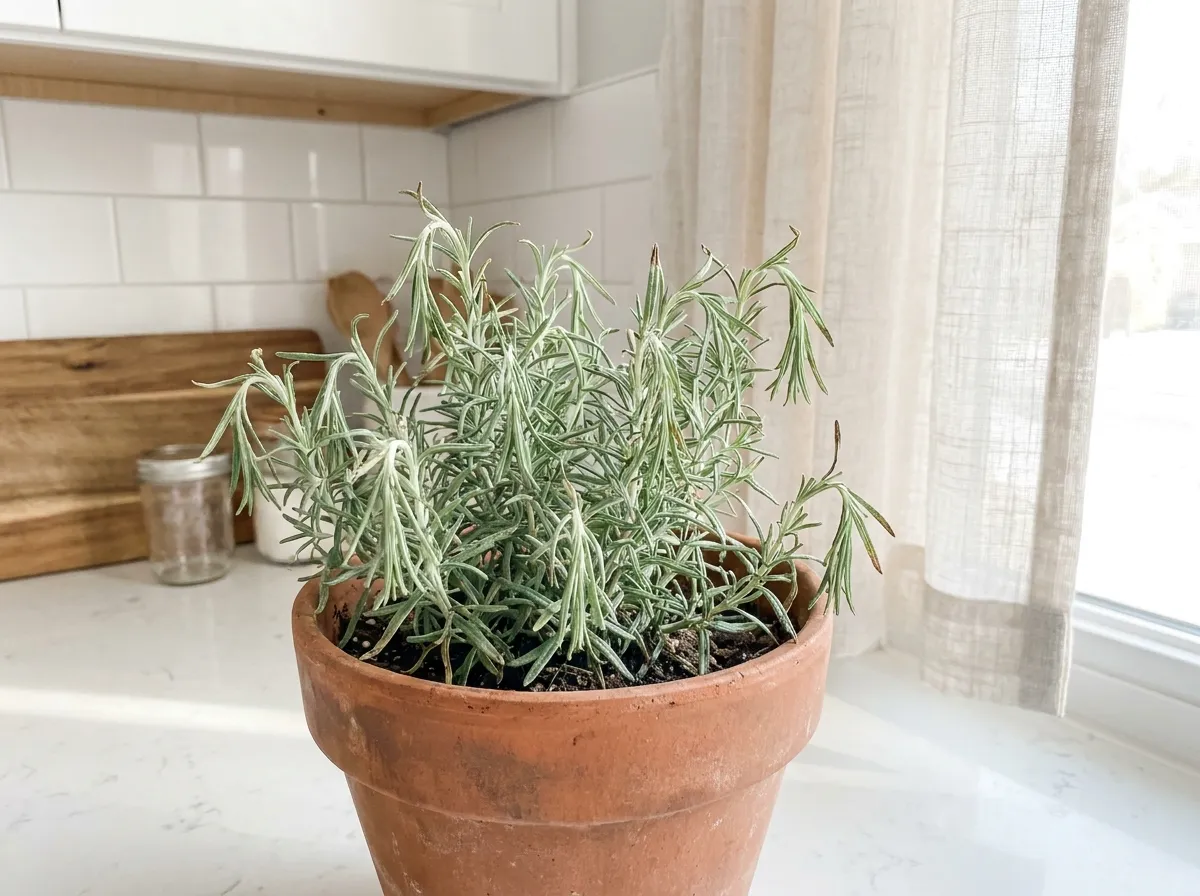
I remember looking at my rosemary one morning and noticing it looked totally sad and droopy. I did what any panicked plant lover does—I poured a giant glass of water right into the pot, completely sealing its doom.
Red Flag Signs Your Rosemary is Suffocating
Decoding the Leaf Texture Trick
When a rosemary plant is genuinely thirsty, its needle-like leaves will feel brittle, dry, and crispy to the touch.
But if it is drowning from excessive moisture, the yellowing leaves will actually feel soft, limp, and weirdly pliable. Both issues make the plant look wilted, but touching the foliage tells you the real story.
The Definitive “Sniff and See” Test
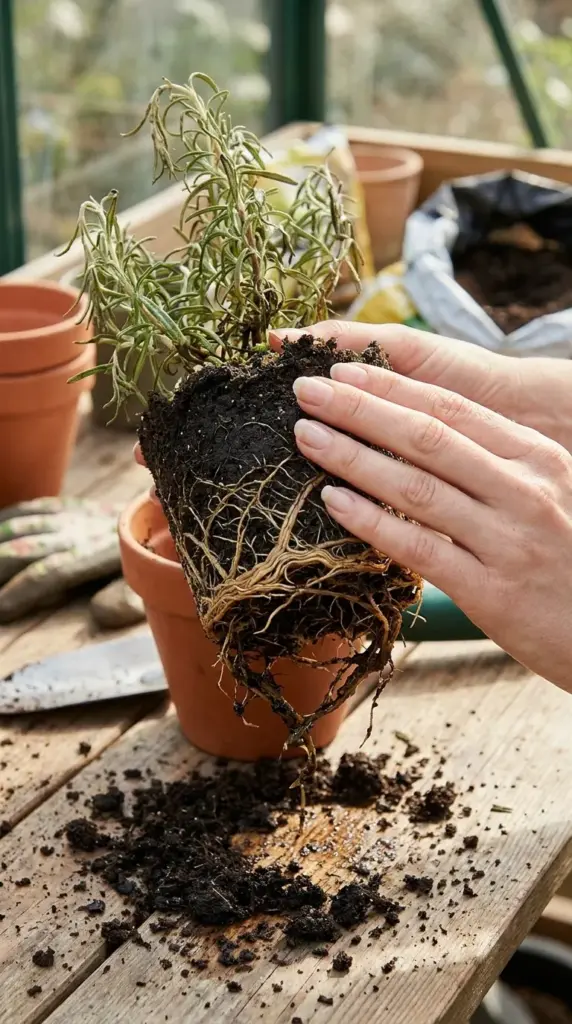
If your plant is failing and you aren’t sure why, it’s time to gently slide it out of its pot to inspect the root health.
Healthy rosemary roots are firm, fibrous, and a nice light tan or clean white color.
Suffocated roots look like dark, slimy, mushy noodles and give off a distinctly foul, sour smell.
Finding those gross, smelly roots is definitely a total bummer, but do not throw your herb friend into the compost bin just yet! Smash that next button below right now because I am going to walk you through my step-by-step emergency room rescue protocol.


