
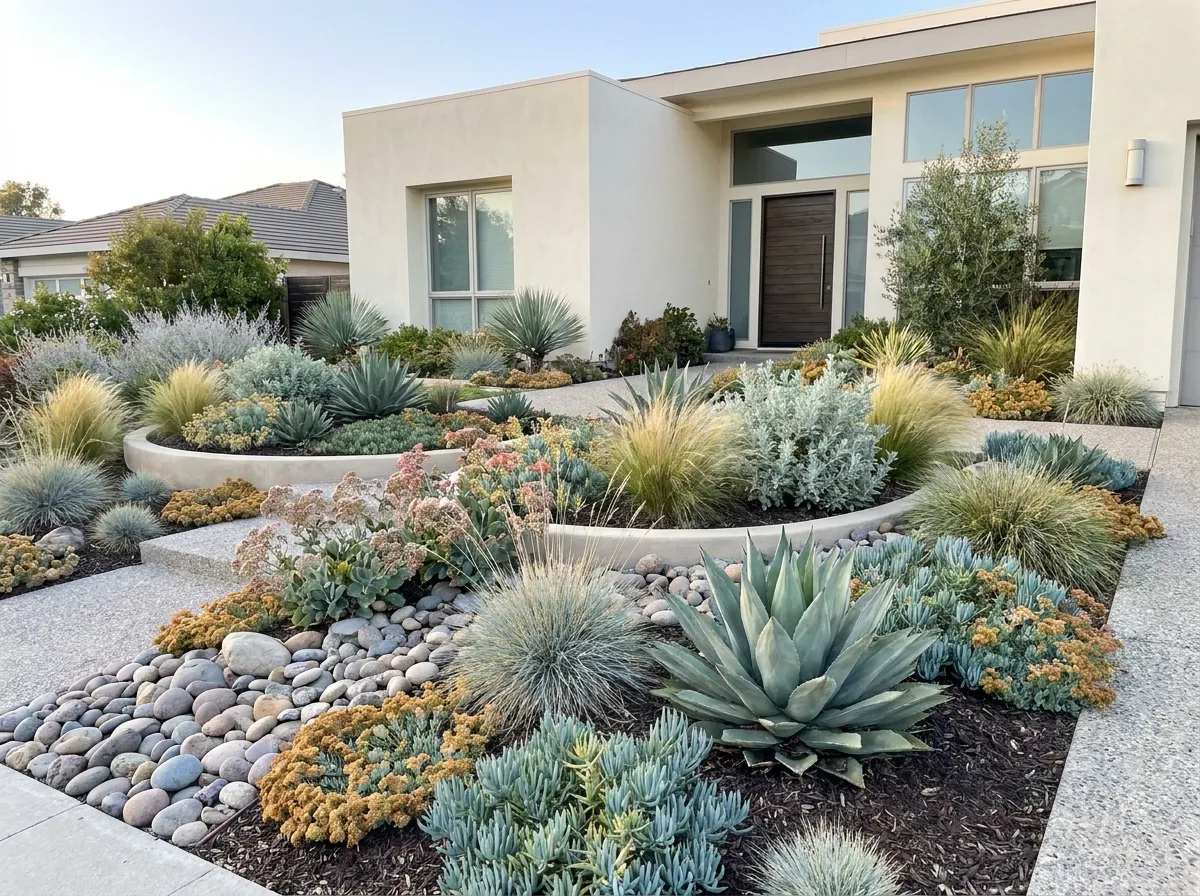
I still cringe thinking about my first attempt at saving water in my front yard about a decade ago. I dumped a truckload of cheap gray gravel over some weeds and plopped a solitary cactus right in the center.
It didn’t look modern or eco-friendly; it looked like a sad, abandoned gas station parking lot. My poor neighbors literally avoided eye contact with me for a solid month, and honestly, I couldn’t even blame them.
But here is the real kicker that nobody tells you. Did you know that properties with professionally designed water-wise landscaping can actually boost their home value by up to 15%?
Yet, nearly 80% of people still assume that a low-water front yard design means settling for a barren, dusty wasteland. We are completely busting that myth today.
I’m finally sharing the exact, interior-design-inspired secrets luxury designers use to build lush, deeply layered, and expensive-looking xeriscape spaces on a totally normal budget. Get ready to take some notes, because your curb appeal is about to get a major promotion.
The Secret Design Formula for a High-End Xeriscape
When I first mapped out my yard revamp, I went completely wild at the local nursery. I bought one of absolutely everything because I thought variety equaled luxury, which left my front yard looking like a chaotic botanical clearance rack.
The 60-30-10 Rule for Rocks and Texture
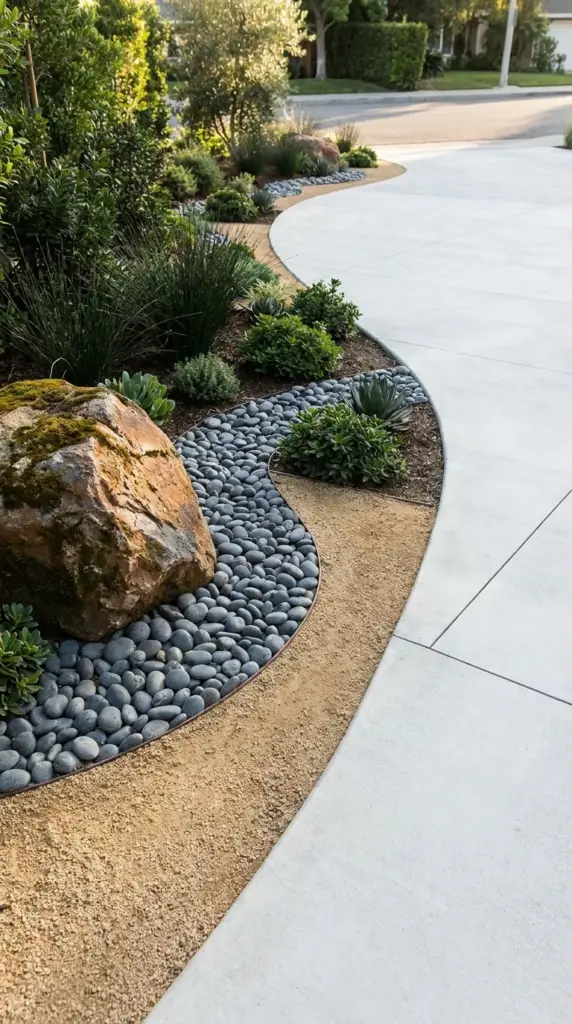
High-end designers never just throw random rocks onto a lawn and call it a day. They rely heavily on a strict 60-30-10 color and texture rule to keep the ground plane visually cohesive and intentional.
To nail this look, use a fine ground material like decomposed granite for 60% of your open surface space. Then, dedicate 30% to a medium river rock to mimic natural dry creek beds, and save the final 10% for massive, dramatic feature boulders that anchor the entire space.
Escaping the “Rock Salad” Trap with Layered Heights
Another major mistake that screams amateur DIY is planting everything on the exact same flat horizontal plane. To replicate an estate-style landscape, you have to build deep vertical layers using varying plant heights.
Always place your tall, striking architectural plants like structural agaves or multi-trunk desert trees at the very back of your vision line. Layer soft, flowing ornamental grasses in the middle, and finish the border with low-profile, colorful succulents to give the space that organic, expensive movement.
Once you have your design layout dialed in, it’s time to talk about the physical groundwork before you even touch a shovel. Go ahead and tap that next button below so we can make sure your yard’s foundation doesn’t end up looking like a lumpy mess.


