

How Fabric Suffocates Your Soil and Starves Microorganisms
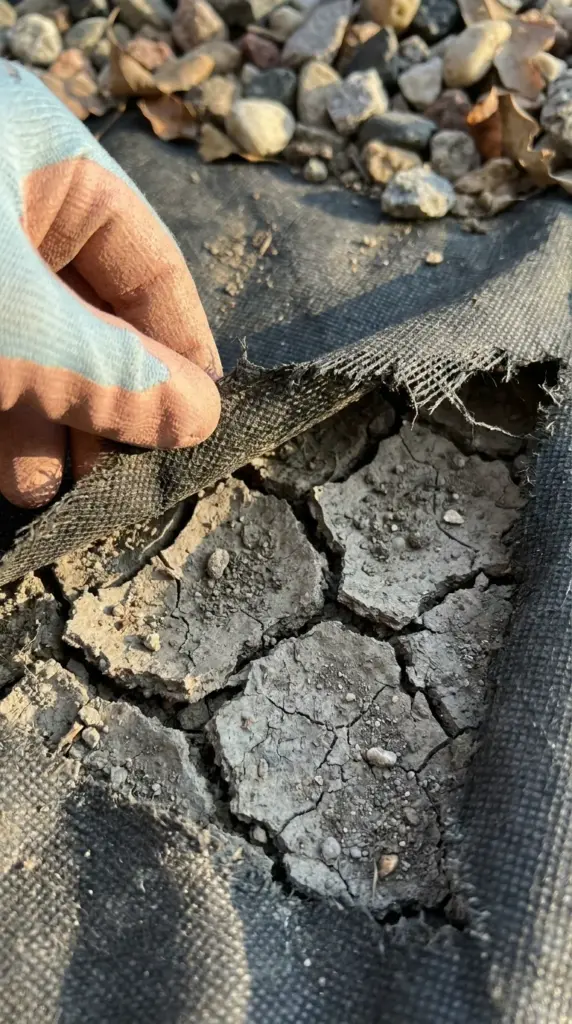
I’ll never forget the day I scraped back my expensive river rock to check on my struggling blue agave plants. I cut a small slit into that plastic mesh, expecting rich dirt, but instead, a horrible, sour smell wafted up.
The earth underneath was completely gray, bone-dry, and hard as an actual sidewalk brick. My poor soil was literally suffocating, and I had caused it by trying to be clever with weed control.
Clogging the Soil’s Lungs
Healthy underground ecosystems need constant air circulation to thrive. When you roll out plastic barriers or woven meshes, you are basically wrapping the earth in tight saran wrap.
Over time, fine dust particles, clay, and decomposing mulch wash down into the tiny woven pores. This creates an airtight seal that causes massive soil compaction and cuts off oxygen to the roots.
The Death of the Underworld
Without fresh air and organic matter drifting down, your soil microbiome completely collapses. Beneficial microbes and earthworm populations either pack their bags and leave or die off completely.
This lack of biological activity turns your garden bed into a dead zone called a hardpan layer. This compacted layer actively repels water, meaning your drought tolerant plants can’t drink the precious little rainfall they actually get.
It completely broke my heart to see how a simple roll of plastic could starve the very life out of my yard. But trust me, the soil choking out is just the tip of the iceberg, so click that next button right now because things get even weirder when your plant roots start fighting back against the plastic.


