

The Root Entanglement Nightmare in Xeriscapes
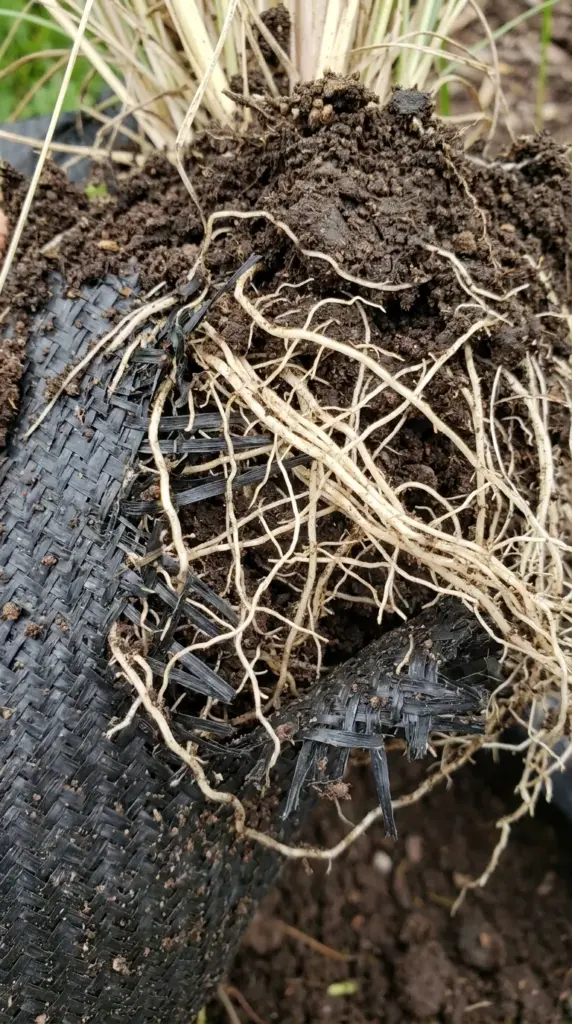
I learned this lesson the hard way when I tried to relocate a gorgeous, established little-leaf cordgrass. I dug down, pulled hard, and heard this awful rrriiiippp sound that made my stomach drop.
The poor plant had literally woven its root system right into the plastic fibers of the landscape fabric. I ended up destroying half the root ball just trying to free it from its synthetic prison.
Stitched Into the Mesh
Our favorite drought tolerant plants and native grasses are evolutionary rockstars because they grow incredibly deep, aggressive root systems to find moisture. When you put a woven barrier in their way, they don’t just stop growing.
Instead, their tiny root hairs poke through the microscopic holes in the fabric weave looking for nutrients. As those roots mature and thicken, they lock onto the plastic fibers like an industrial-strength zipper.
The Destruction of Removal
When the fabric eventually shifts due to heavy rains or ground settling, it yanks on those embedded roots. This movement can snap delicate feeder roots or strangle major root systems, causing sudden, mysterious plant death.
Worse yet, removing old landscape fabric later on becomes an absolute nightmare that requires a sharp utility knife and hours of backbreaking labor. You often have to choose between leaving the toxic plastic in the ground or tearing up your prize specimens’ root systems just to get it out.
It was a total disaster that left me exhausted, frustrated, and down a few beautiful plants. But wait until you hear about the absolute biggest scam of all—the total myth that this stuff even stops weeds in the first place—so click that next button right now because we’re busting that wide open.


